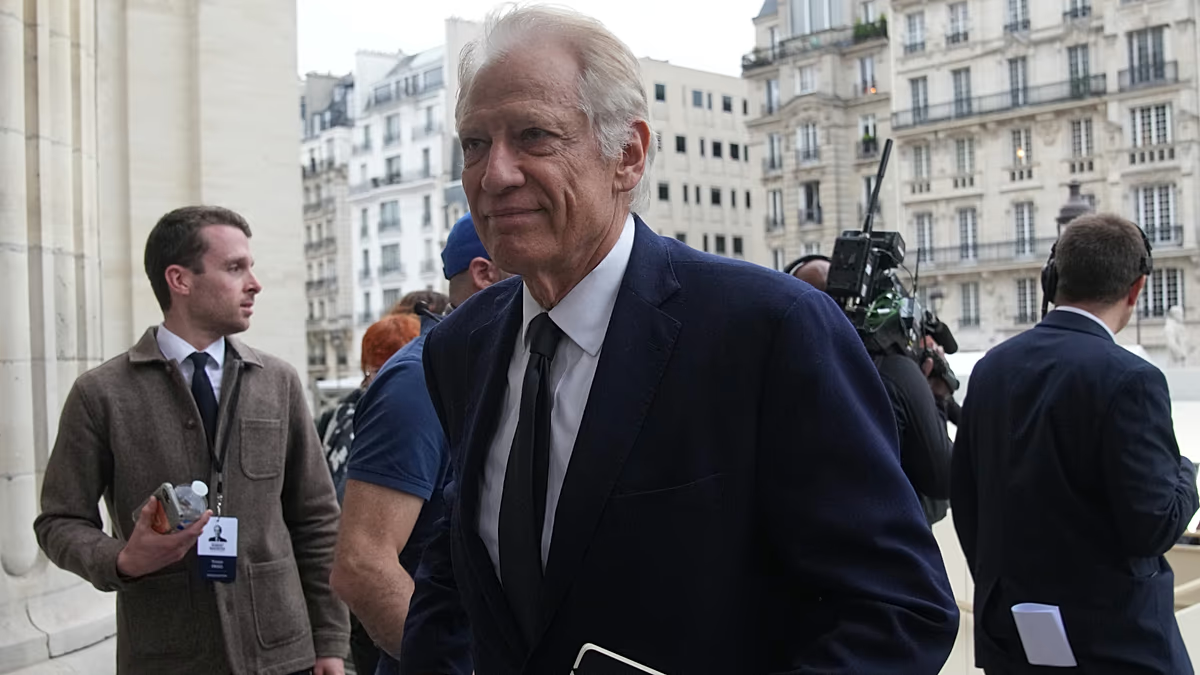

Former French Prime Minister Dominique de Villepin has cautioned against foreign intervention in Iran, stating that the current unrest represents a popular uprising against the ruling clerical establishment. His remarks, made on Euronews’ “Europe Today” program, come as protests continue across the country following a period of heightened tension and government crackdowns. De Villepin emphasized the need for a nuanced approach to avoid exacerbating the situation.
Speaking with Euronews’ Méabh Mc Mahon, de Villepin argued that a shift is occurring within Iran’s leadership, and external involvement risks undermining potential progress. He specifically warned that intervention could provide the regime with justification for increased repression, potentially leading to a more volatile and chaotic environment. The protests were initially sparked by the death of Mahsa Amini in September 2022, but have broadened to encompass wider grievances about economic hardship and social restrictions.
Understanding the Current Unrest in Iran
The ongoing demonstrations in Iran are among the most significant challenges to the Islamic Republic’s authority in years. Reports from human rights organizations indicate a severe response from security forces, with over 500 protesters reportedly killed and thousands arrested since the unrest began. A recent internet and communications blackout imposed by authorities further restricted information flow and the ability to organize.
De Villepin suggested that applying “strong pressure” through unofficial channels, alongside dialogue and increased awareness, could be a more effective strategy. He pointed to the limited success of interventionist policies in other countries, such as Venezuela, as a cautionary tale. Human Rights Watch provides ongoing coverage of the situation in Iran, detailing the government’s response and the impact on civilians.
The Risks of External Involvement
The former Prime Minister specifically addressed concerns about the United States becoming further involved in the region. He argued that the U.S. is already heavily engaged in numerous international issues and that adding another complex conflict, particularly in the Middle East, would be irresponsible given the potential for unforeseen consequences.
Additionally, de Villepin highlighted the potential for escalating regional tensions. Iran maintains close ties with various actors in the Middle East, and any direct intervention could draw in other countries, creating a wider and more dangerous conflict. This concern is amplified by the ongoing geopolitical instability in the region, including the war in Ukraine and tensions surrounding Syria.
However, the international community continues to debate the appropriate response to the situation in Iran. Some advocate for stronger sanctions and diplomatic isolation, while others, like de Villepin, prioritize dialogue and support for the Iranian people’s aspirations for change. The European Union has already imposed sanctions on Iranian officials accused of human rights abuses.
De Villepin founded a new political party, Humanist France (La France Humaniste, LFH), earlier this year, signaling his continued engagement in French politics. His stance on Iran reflects a broader foreign policy approach that emphasizes diplomacy and multilateralism, a position he famously adopted during his time as Prime Minister when opposing the 2003 invasion of Iraq. This experience informs his current assessment of the situation, advocating for a cautious and measured response.
The situation in Iran remains fluid and unpredictable. The government’s response to the protests, the potential for further escalation, and the role of external actors will all be critical factors in determining the future of the country. Monitoring developments in Iran and the international response will be crucial in the coming weeks and months. For further updates, consider following reporting from Reuters on Middle East affairs.
As the protests continue, understanding the complexities of the situation and the potential ramifications of different courses of action is paramount. Stay informed about this evolving crisis and its impact on regional and global stability.