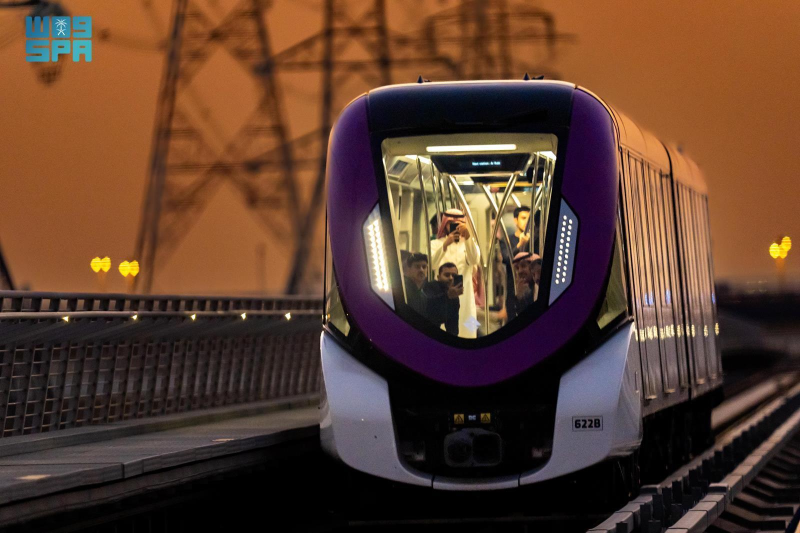

Saudi Arabia’s rail network saw significant usage in the final quarter of 2025, transporting approximately 46.7 million passengers and over 4 million tons of freight, according to the Transport General Authority (TGA). The figures highlight the Kingdom’s ongoing investment in rail infrastructure and its increasing importance for both domestic travel and logistical operations. This surge in ridership and cargo volume demonstrates a growing reliance on rail as a key component of Saudi Arabia’s transportation system.
The TGA announced the data on Tuesday, detailing a breakdown of passenger and freight traffic across urban and intercity lines. The report covers the period from October 1st to December 31st, 2025, and provides a snapshot of rail activity throughout the country. These numbers are crucial for assessing the success of Vision 2030 initiatives focused on diversifying transportation options and boosting economic growth.
Growth in Saudi Arabia’s Rail Passenger Traffic
Urban rail systems were the primary driver of passenger numbers, accounting for a substantial 43.8 million riders during the quarter. This indicates a strong preference for rail travel within major cities, likely due to convenience and reduced congestion compared to road transport. The Kingdom has been rapidly expanding its urban rail networks in recent years, aiming to provide efficient public transportation for its growing population.
Riyadh Metro Leads the Way
The recently completed Riyadh Metro spearheaded this urban rail usage, serving 32.1 million passengers. This makes it the busiest rail system in the country by a considerable margin. The metro’s extensive network and modern facilities are attracting a large number of commuters and leisure travelers.
Following Riyadh, the automated people mover at King Abdulaziz International Airport in Jeddah transported 10.6 million passengers. This system facilitates seamless connections between the airport terminals and the city center, enhancing the overall travel experience. The high volume suggests a significant demand for airport connectivity via rail.
The automated transit system at Princess Nourah bint Abdulrahman University also demonstrated robust usage, carrying over 982,000 passengers. This highlights the role of rail in serving specific communities and institutions within Saudi Arabia’s urban areas.
Intercity Rail Demand
Intercity rail services also experienced notable demand, though at a lower volume than urban systems. The Haramain High Speed Railway, connecting the holy cities of Makkah and Madinah via Jeddah, carried approximately 2.9 million passengers. This railway is particularly important for facilitating religious tourism, a key sector of the Saudi economy.
The Eastern Railway Line, linking Riyadh with Dammam and the Eastern Province, transported around 367,000 passengers. This line serves a vital economic corridor, supporting trade and industry between the capital and the oil-rich Eastern Province. Meanwhile, the Northern Railway Line, extending from Riyadh towards the Jordanian border, recorded approximately 234,000 passengers.
Freight Transport via Rail
Beyond passenger transport, Saudi Arabia’s railways are increasingly utilized for freight movement. The TGA reported that over 4 million tons of minerals and goods were transported by rail during the fourth quarter of 2025. This demonstrates the potential of rail to alleviate pressure on road networks and reduce transportation costs for businesses.
The Northern Railway Line dominated freight traffic, handling 3.5 million tons of materials. This is likely due to the presence of significant mining operations in the region. Efficient transportation of these resources is crucial for supporting Saudi Arabia’s industrial diversification efforts.
The Eastern Line carried approximately 439,000 tons of goods, alongside 218,000 standard containers. This indicates the line’s importance for handling both bulk commodities and manufactured products, supporting the import and export activities of the Eastern Province. The increasing use of containers suggests a growing integration of Saudi rail with global logistics networks.
These figures align with the Kingdom’s broader strategy to develop a comprehensive and integrated transportation infrastructure. Investments in rail are seen as essential for reducing reliance on oil, promoting sustainable development, and enhancing connectivity across the country. The expansion of the rail network is also expected to create new economic opportunities and improve the quality of life for residents.
Looking ahead, the TGA is expected to release full-year data for 2025 in the coming months, providing a more comprehensive picture of rail performance. Further expansion of the rail network, including new lines and increased capacity on existing routes, is planned under Vision 2030. The success of these projects will depend on factors such as funding availability, project management efficiency, and continued demand from both passengers and freight operators. Monitoring ridership and freight volumes will be key to assessing the long-term impact of these investments on Saudi Arabia’s transportation sector and overall economic development.
The ongoing development of the rail infrastructure is also expected to influence urban planning and regional development patterns across Saudi Arabia.