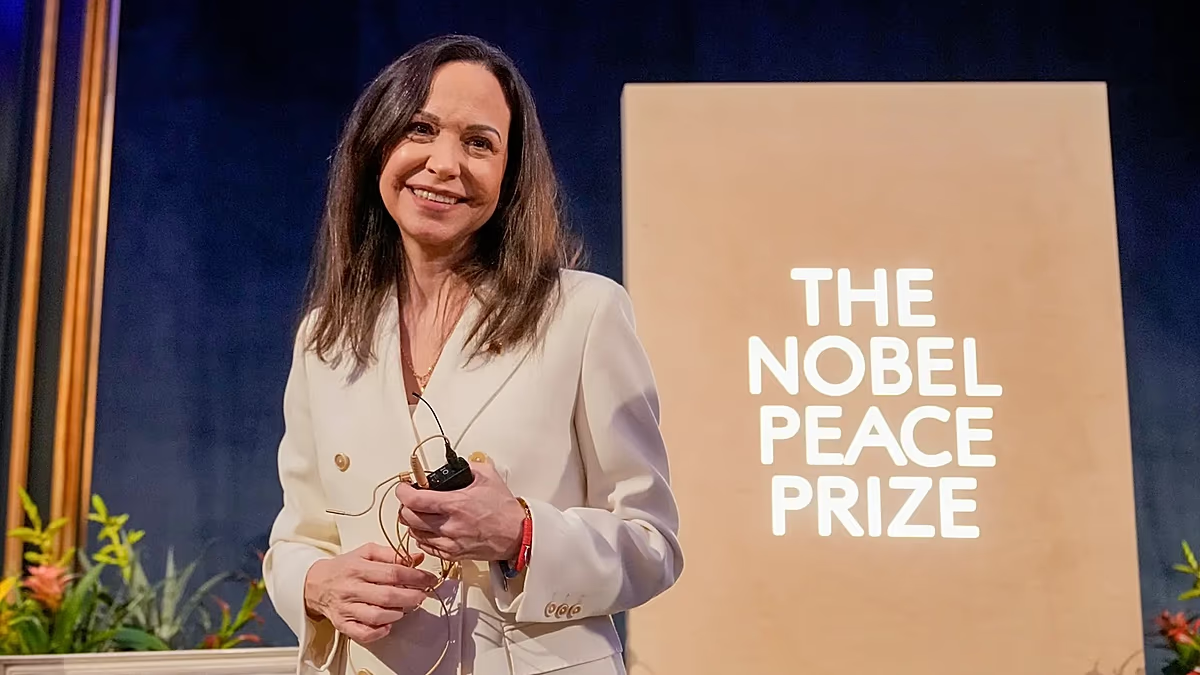

The possibility of former US President Donald Trump receiving the Nobel Peace Prize has resurfaced following comments by Venezuelan opposition leader Maria Machado. Machado, recently awarded the prize for her work promoting democracy in Venezuela, publicly offered to share her award with Trump after the US government’s capture of Venezuelan President Nicolás Maduro on January 3rd. This offer has sparked debate and a clarification from the Nobel Committee regarding the transferability of the prestigious award.
The situation unfolded after Machado met with Trump in the United States. While initially questioning Machado’s influence within Venezuela, Trump appeared to soften his stance after the offer to share the prize, calling it a “great honour.” The exchange highlights the ongoing political complexities in Venezuela and Trump’s continued interest in international affairs.
The Nobel Peace Prize and the Current Situation
The Nobel Committee swiftly addressed the possibility of sharing a prize, stating in a release on January 9th that once a Nobel Prize has been awarded, the decision is final and cannot be revoked, shared, or transferred. This is based on the stipulations outlined in Alfred Nobel’s will, which established the prizes and their conditions.
According to the Nobel Prize website, the prize is to be awarded to the person who has “done the most or the most meritorious work for fraternity between nations, for the abolition or reduction of standing armies and for the holding and promotion of peace congresses.” The Nobel Peace Prize has a long and storied history, with past recipients including Martin Luther King Jr. and Nelson Mandela.
Trump’s Previous Nominations and Claims
This isn’t the first time Trump has publicly discussed the possibility of winning the Nobel Peace Prize. Throughout 2025, during his second term, he repeatedly claimed to have ended eight wars, a statement contested by numerous war and foreign policy experts.
Despite not winning, Trump has been nominated for the award in the past. Other US presidents have also been honored with the prize, most recently Barack Obama in 2009 for his efforts in international diplomacy. Trump has been a vocal critic of Obama’s award, questioning the merits of his selection.
Machado’s offer, while symbolic, appeared to influence Trump’s perception of her potential role in a future Venezuelan government. He suggested her willingness to share the prize could positively impact her standing. This raises questions about the potential for political considerations to influence future nominations and the overall integrity of the selection process.
The capture of Maduro, while lauded by some as a step towards restoring democracy in Venezuela, remains a contentious issue. The US government’s involvement has drawn criticism from other nations and international organizations, raising concerns about sovereignty and interventionism. The situation is further complicated by the ongoing humanitarian crisis in Venezuela and the country’s deep political divisions.
The concept of peace negotiations and the restoration of democratic processes are central to the Nobel Peace Prize’s criteria. While Trump’s administration has been involved in various international efforts, the extent to which these actions align with the prize’s founding principles is a matter of ongoing debate. The situation in Venezuela, and any potential role Trump might play in its future, will likely be scrutinized through this lens.
Looking ahead, the Norwegian Nobel Committee will continue to receive and evaluate nominations for the 2027 prize. While Trump is theoretically eligible, his chances of winning remain uncertain. The committee’s decision will undoubtedly be influenced by the evolving political landscape in Venezuela and the broader international context. Stay informed about developments in Venezuela and the annual Nobel Prizes as the selection process unfolds.