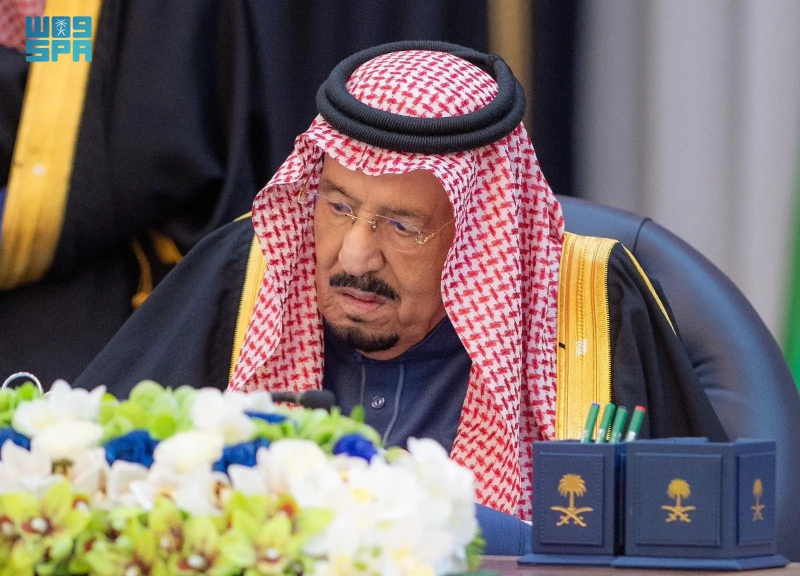

The Saudi Council of Ministers convened in Riyadh on Tuesday, reaffirming the Kingdom’s commitment to a ceasefire in the Gaza Strip and its support for Somalia’s sovereignty. The Cabinet session, led by King Salman, also addressed recent economic partnerships and approved several memoranda of understanding aimed at bolstering regional and international cooperation. These decisions signal Saudi Arabia’s continued focus on both immediate crisis management and long-term strategic alliances.
The meeting took place as regional tensions remain high and international efforts to mediate a lasting peace in Gaza continue. Discussions also centered on the Kingdom’s role in fostering stability across the Horn of Africa, particularly concerning the situation in Somalia, and expanding economic ties with key partners like Japan, Canada, Poland, Kuwait, Singapore, Oman, and Qatar.
Saudi Arabia’s Stance on the Gaza Conflict
The Council of Ministers reiterated the Kingdom’s central position on the Palestinian cause, emphasizing the necessity of a ceasefire in the Gaza Strip to allow for the exercise of Palestinian self-determination. This support aligns with longstanding Saudi foreign policy objectives, which advocate for a two-state solution based on the 1967 borders with East Jerusalem as the capital. According to the Minister of Media, Salman Al-Dossary, the Kingdom continues to actively engage in diplomatic efforts to achieve this outcome.
Regional Security Concerns
Beyond the situation in Palestine, the Cabinet firmly rejected any attempts to undermine Somalia’s unity and territorial integrity. This statement followed an extraordinary meeting of the Organization of Islamic Cooperation (OIC) in Jeddah focused on Somalia, the outcomes of which were welcomed by the Saudi government. The Kingdom has historically played a significant role in mediating conflicts and providing humanitarian aid within the Horn of Africa, and this stance underscores its continued commitment to the region’s stability.
The successful completion of the Gulf Shield 2026 joint military exercise was also highlighted. This exercise, involving the air and air defense forces of the Gulf Cooperation Council (GCC) and the GCC Unified Military Command, demonstrates a commitment to enhanced regional defense cooperation and collective military readiness, according to official statements. The exercise is intended to improve interoperability and response capabilities among member states.
Expanding Economic Partnerships
Saudi Arabia is actively diversifying its economy and forging new international partnerships. The Cabinet reviewed recent high-profile economic events, including the Saudi-Japan Ministerial Investment Forum and the Saudi-Canadian Business and Investment Forum. These forums resulted in multiple memoranda of understanding (MoUs) spanning crucial sectors like space, cybersecurity, information and communication technology (ICT), manufacturing, education, finance, water, and agriculture.
These agreements represent a significant step in the Kingdom’s Vision 2030 plan, which aims to reduce reliance on oil revenue and develop a more sustainable and diversified economy. The focus on technology and innovation, particularly in areas like space and cybersecurity, suggests a strategic effort to position Saudi Arabia as a regional leader in these emerging fields. Foreign investment is a key component of this strategy.
Additionally, the Cabinet approved several specific MoUs. These included agreements with Canada for political consultations, and with Poland for cooperation in agricultural fields. Further agreements were reached with Kuwait regarding cooperation in housing and civil service affairs, and with Singapore and Oman for collaboration in public health and statistics, respectively.
In a move to streamline business practices, the Council also approved exemptions from certain requirements of the Franchise Law for qualifying franchisors and franchisees. This decision, according to the Ministry of Commerce, is intended to attract more international franchise businesses to the Kingdom and promote economic growth. This is part of a broader effort to improve the investment climate in Saudi Arabia.
The Kingdom also formally acceded to the Makkah Convention of the Organization of Islamic Cooperation on Anti-Corruption Law Enforcement Cooperation. This demonstrates a commitment to transparency and accountability, and a willingness to collaborate with other Islamic nations in the fight against corruption. A related MoU was also approved with Qatar’s Administrative Control and Transparency Authority to further these efforts.
Looking ahead, the implementation of these MoUs and the continued pursuit of diplomatic solutions to regional conflicts will be key areas to watch. The success of Vision 2030 and the Kingdom’s ability to attract sustained economic development will depend on its ability to navigate these complex challenges and maintain its position as a leading voice in the region and beyond. Further details regarding the specific terms and timelines of the agreements are expected to be released by the relevant ministries in the coming weeks.