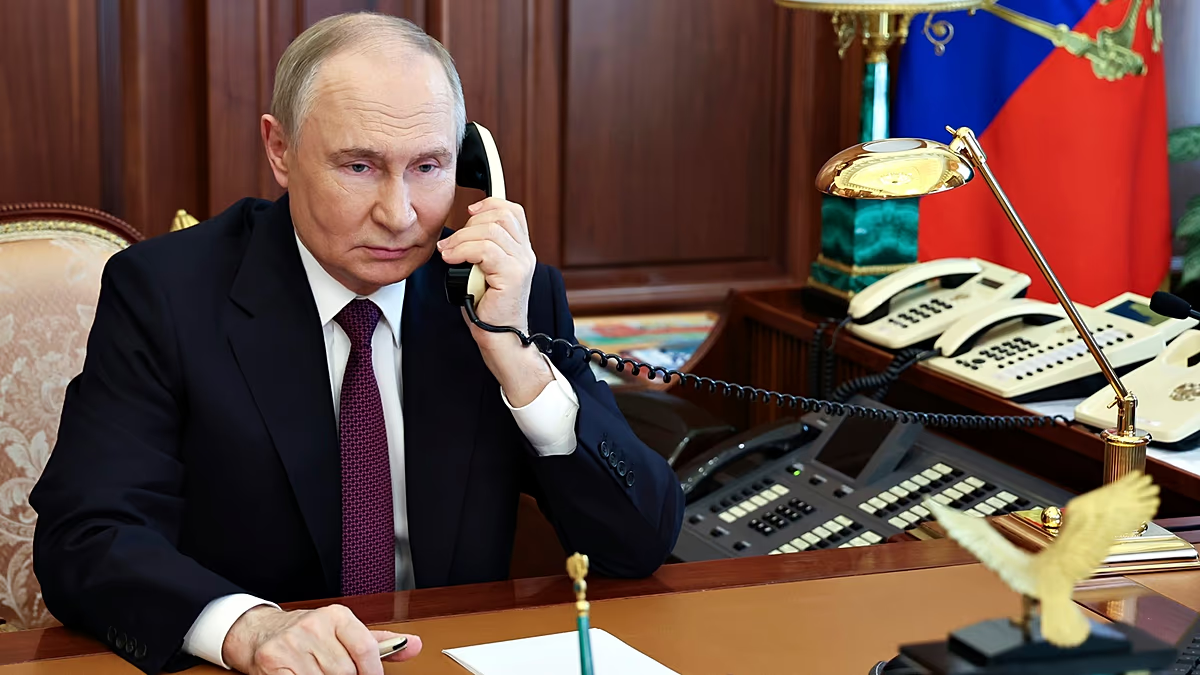

The European Commission has signaled a potential shift in strategy regarding the war in Ukraine, publicly acknowledging the necessity of direct talks with Russian President Vladimir Putin to achieve a lasting peace. However, officials stress that current conditions, marked by continued Russian bombardment, preclude such discussions. This development comes amid growing calls from several European leaders for a more proactive diplomatic role for the EU.
European Commission Considers Direct Talks with Putin
Speaking on Monday, Paula Pinho, the chief spokesperson for the European Commission, stated that peace in Ukraine ultimately depends on President Putin. She acknowledged that while talks with Putin are inevitable “at some point,” they are not feasible given the ongoing aggression. Pinho emphasized that the Commission is actively working towards peace but reiterated that Putin has not shown any willingness to engage in meaningful negotiations, particularly a face-to-face meeting with Ukrainian President Volodymyr Zelenskyy.
A Change in Tone
This represents a notable departure from the Commission’s previous policy of focusing on isolating Russia through diplomatic and economic sanctions. For over two years, the EU has largely maintained a unified front in condemning Russia’s actions and supporting Ukraine. However, recent statements suggest a growing recognition that a purely punitive approach may not be sufficient to end the conflict.
The shift in tone follows a meeting hosted in Paris by French President Emmanuel Macron, where he argued for re-establishing dialogue with Putin “as soon as possible.” Italian Prime Minister Giorgia Meloni subsequently backed Macron’s proposal, suggesting the EU appoint a special envoy to lead negotiations with Russia. Meloni warned against a fragmented approach, stating that disorganization would ultimately benefit Putin.
European Frustration with US-Led Negotiations
The desire for a more direct European role in negotiations also stems from a perceived lack of influence in the US-led diplomatic efforts. While Europeans are collaborating with Washington to develop security guarantees for a post-war Ukraine, the White House currently maintains the primary communication channel with the Kremlin. This has left some European nations feeling sidelined and eager to contribute more directly to the peace process.
However, reviving dialogue with Russia remains deeply controversial. Recent attacks, such as the launch of an intermediate-range hypersonic ballistic missile targeting infrastructure in Lviv, have fueled outrage across the EU. High Representative Kaja Kallas argued that Russia’s response to diplomacy is further escalation, and that continued military support for Ukraine is crucial to breaking this cycle.
Currently, only a few EU leaders, notably Hungary’s Viktor Orbán and Slovakia’s Robert Fico, maintain open lines of communication with Putin, and both have been critical of Western support for Kyiv. This complicates the prospect of a unified European approach to negotiations.
The situation is further complicated by the ongoing conflict in Ukraine and the challenges of finding common ground between the warring parties. The Kremlin has consistently framed its actions as a response to NATO expansion and Western interference, while Ukraine seeks to restore its territorial integrity and sovereignty.
Looking ahead, the possibility of direct talks between the European Commission and Vladimir Putin remains contingent on a change in Russia’s behavior. The EU will likely continue to coordinate closely with the United States and other international partners while monitoring the situation for any signs of a willingness from Moscow to engage in genuine peace negotiations. Observers should watch for further statements from European leaders regarding a potential special envoy and the conditions under which direct dialogue might become feasible.