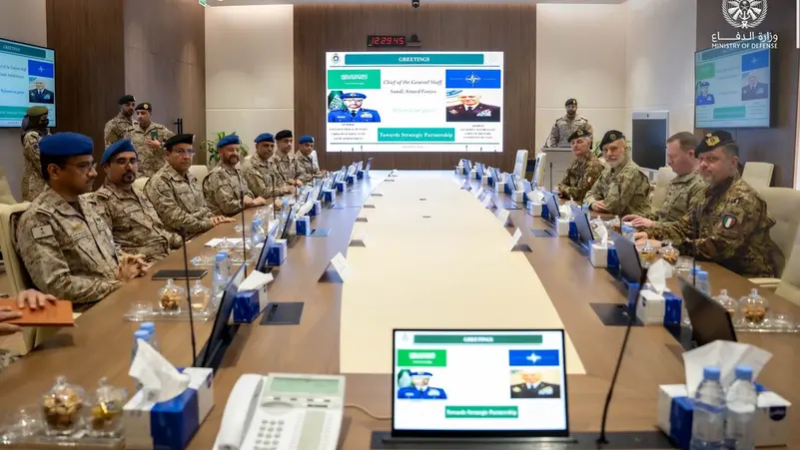

RIYADH — Saudi Arabia and the North Atlantic Treaty Organization (NATO) held high-level talks in Riyadh on Sunday, focusing on regional security and military cooperation. Saudi Chief of the General Staff Gen. Fayyad Al-Ruwaili met with NATO Military Committee Chairman Admiral Giuseppe Cavo Dragone to discuss matters of mutual defense interest, particularly concerning the evolving geopolitical landscape of the Middle East. This Saudi Arabia NATO relations meeting underscores growing collaboration between the Kingdom and the alliance.
The discussions took place at the headquarters of the Saudi Presidency of the General Staff, the command responsible for coordinating all branches of the Saudi Arabian Armed Forces. While specific details of the conversation were not released, the meeting’s timing suggests a focus on recent developments impacting stability in the region, including ongoing conflicts and maritime security concerns. The meeting represents a significant diplomatic event for both parties.
Strengthening Saudi Arabia NATO Relations Amidst Regional Shifts
Saudi Arabia has been actively pursuing stronger international partnerships, including with NATO, as it navigates a complex regional environment. This increased engagement reflects the Kingdom’s desire to bolster its defense capabilities and contribute to broader security efforts. The meeting with Admiral Dragone is part of a series of ongoing dialogues aimed at enhancing interoperability and addressing shared threats.
The Saudi Presidency of the General Staff plays a crucial role in modernizing the Saudi military. According to the Ministry of Defense, the presidency oversees the training, equipping, and rapid deployment of all Saudi armed forces – encompassing the Army, Navy, Air Force, Air Defense, and Strategic Missile Force. It operates with an independent budget, allowing for agile response to emerging security needs.
Focus on Joint Operations and Training
A key aspect of the Saudi-NATO relationship centers on joint military exercises and training programs. These initiatives aim to improve the readiness and effectiveness of Saudi forces while fostering closer ties with NATO member states. The report indicates that discussions likely included potential expansions of these programs to address new challenges.
Additionally, cooperation extends to areas such as counter-terrorism, cybersecurity, and maritime security. The Red Sea, a vital shipping lane, has seen increased instability in recent years, prompting collaborative efforts to safeguard maritime traffic. Saudi Arabia’s strategic location and NATO’s naval presence make this a natural area for partnership.
Regional Implications and Geopolitical Context
The meeting between Al-Ruwaili and Dragone occurred against a backdrop of heightened tensions in the Middle East, stemming from conflicts and growing competition between regional powers. The evolving security situation in Yemen, Syria, and Iraq was likely discussed. Further discussion may have revolved around risk mitigation and de-escalation strategies.
However, Saudi Arabia’s relationship with NATO is not without nuance. While the Kingdom shares common security interests with the alliance, it also maintains independent foreign policy objectives. Balancing these priorities is a key consideration in shaping the future of defense cooperation between Riyadh and Brussels.
In contrast to past decades, Saudi Arabia is increasingly proactive in seeking external security partnerships. This shift is driven by a desire to diversify its security arrangements and reduce reliance on any single external actor. The Kingdom’s “Vision 2030” plan also emphasizes the development of a robust domestic defense industry.
The Role of the Saudi Presidency of the General Staff
The Saudi Presidency of the General Staff serves as the central coordinating body for the Kingdom’s armed forces. It is responsible for ensuring that all branches are adequately equipped, trained, and prepared to respond to a range of threats. This centralized command structure is essential for effective regional security and rapid deployment capabilities.
The presidency’s independent budget allows it to pursue long-term modernization plans without being constrained by broader government spending cycles. This financial autonomy is a critical factor in the Kingdom’s ability to maintain a modern and capable military. The Ministry of Defense has consistently highlighted the importance of this funding.
Meanwhile, the Kingdom continues to invest heavily in advanced military technologies, including air defense systems, naval vessels, and cyber warfare capabilities. This modernization effort is aimed at enhancing Saudi Arabia’s ability to deter aggression and protect its national interests. The pursuit of these technologies is a key component of its overall security strategy.
The strengthening of military ties between Saudi Arabia and NATO is also viewed by some analysts as a signal to other regional actors. It demonstrates the Kingdom’s commitment to maintaining stability and its willingness to work with international partners to achieve that goal. This positioning is crucial in a volatile geopolitical climate.
Looking ahead, further discussions are expected to take place between Saudi and NATO officials in the coming months. These talks will likely focus on concrete steps to enhance cooperation in areas such as intelligence sharing, joint training exercises, and the development of advanced defense technologies. The timeline for any major new agreements remains uncertain, but continued dialogue is anticipated. The evolving situation in the region will undoubtedly shape the agenda and priorities of these future engagements.
What to watch for includes any announcements regarding increased NATO presence in the region, joint military exercises, or the transfer of advanced defense technologies to Saudi Arabia. The impact of these developments on the broader regional balance of power will also be a key area of observation.