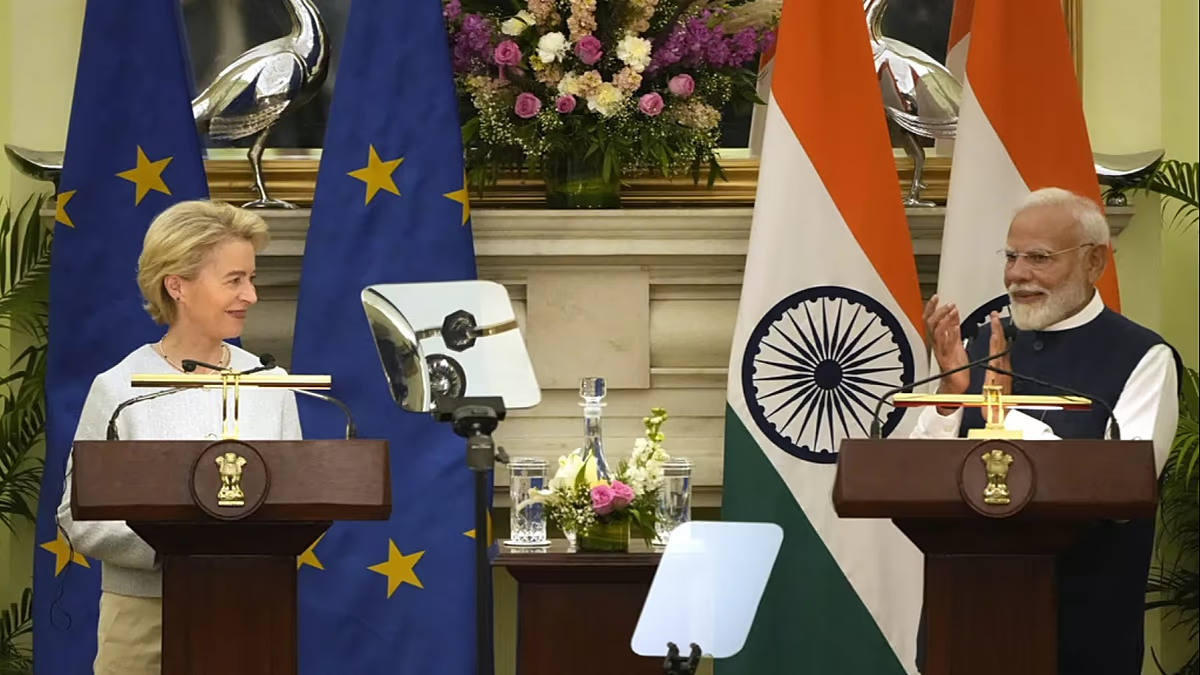

European Union leaders are poised to finalize a free trade agreement with India, potentially by the end of January, according to German Chancellor Friedrich Merz. The announcement, made during a visit to India on Monday, signals a continued push by the EU to diversify its trade relationships amid growing protectionist policies from the United States and China. This potential deal follows recent backing for the Mercosur trade pact, highlighting a strategic shift in the EU’s global trade approach.
Merz indicated that European Commission President Ursula von der Leyen and European Council President Antonio Costa are expected to travel to New Delhi to sign the agreement. This move comes after intensified negotiations in late 2025, which, while promising, did not result in a deal by the year’s end. The Chancellor emphasized India’s importance as the fastest-growing economy within the G20 and a key partner in the Indo-Pacific region.
EU-India Free Trade Agreement: A Response to Global Trade Shifts
The pursuit of this free trade agreement is largely driven by escalating trade tensions with both the US and China. The US has implemented increased tariffs on various trade partners, while China is reportedly leveraging its control over raw materials and technology. According to reports, both India and the EU are seeking to reduce their reliance on these two major economic powers.
However, reaching a consensus hasn’t been without challenges. Negotiations surrounding the sustainability chapter have proven particularly difficult, the European Commission informed EU lawmakers last September. A key point of contention is the establishment of a dispute settlement mechanism linked to environmental standards.
Additionally, India has expressed concerns regarding the EU’s Carbon Border Adjustment Mechanism (CBAM), adopted in 2023. The CBAM aims to prevent “carbon leakage” by imposing a fee on imports from countries with less stringent climate policies. Indian officials have argued the mechanism could disproportionately impact its exports.
Political Fallout from EU Trade Deals
The EU’s broader trade agenda, including the Mercosur agreement, is currently causing significant political friction within France. French President Emmanuel Macron faces a potential vote of no confidence as opposition parties, both on the far-right and far-left, protest the potential impact of increased imports on French farmers.
Von der Leyen is scheduled to sign the Mercosur deal in Paraguay on January 17th, as reported by Euronews. This signing is expected to further exacerbate tensions in France, where concerns about agricultural competition are high.
Despite these internal challenges, Merz remains optimistic. He believes the EU-India talks are in their final stages and that a signed agreement would send a positive signal about the bloc’s commitment to free trade. The agreement is expected to cover a wide range of areas, including tariffs, intellectual property rights, and investment.
The potential for a comprehensive free trade agreement between the EU and India represents a significant development in global trade dynamics. It underscores the growing importance of diversifying trade partnerships and navigating a landscape increasingly defined by protectionist measures.
Looking ahead, the coming weeks will be crucial as negotiators work to resolve remaining issues and finalize the details of the deal. Stakeholders on both sides will be closely watching for any further developments and assessing the potential impact of this landmark agreement on their respective economies. Stay informed about the evolving situation and its implications for international commerce.