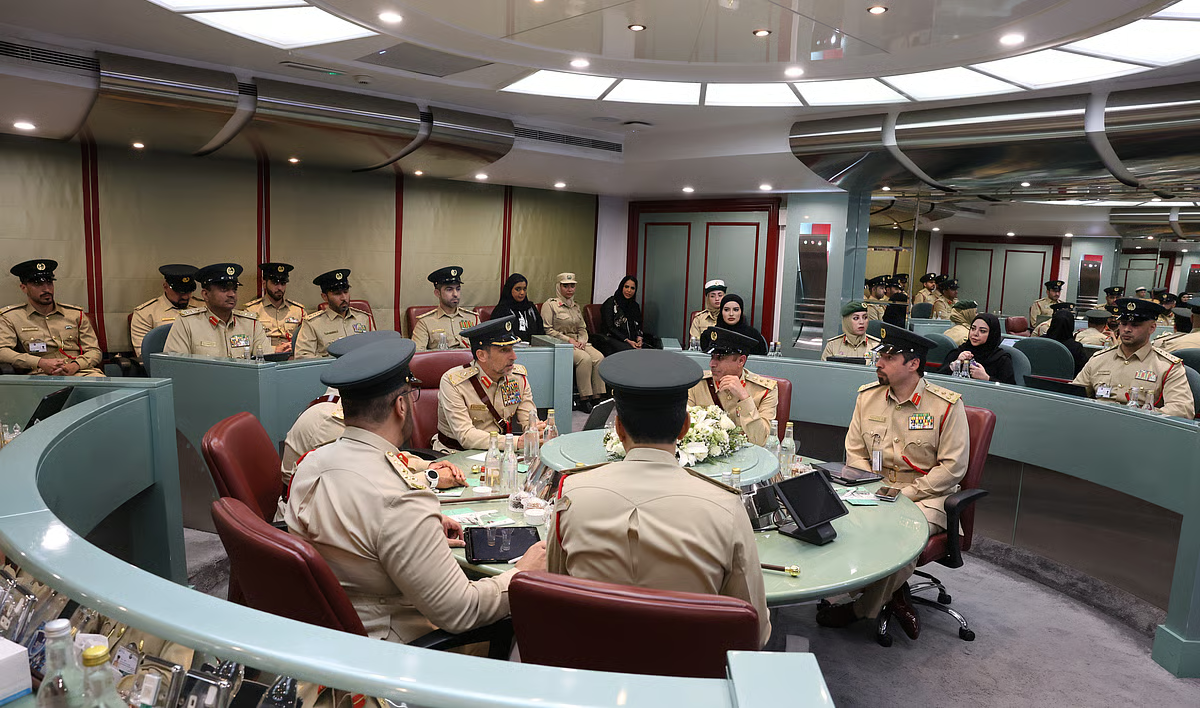

Dubai Police have affirmed their commitment to human rights, achieving a significant milestone in integrating these principles into all facets of their security operations. Commander-in-Chief Lieutenant General Abdulla Khalifa Al Marri highlighted the progress during a recent inspection of the General Department of Human Rights, emphasizing the UAE’s dedication to justice, equality, and dignity. This focus on human rights is increasingly important for modern policing strategies globally.
Dubai Police Strengthen Human Rights Framework
The inspection, part of an annual review of police departments and stations, assessed the department’s 2025 inspection results, strategic planning, and ongoing initiatives. Lieutenant General Al Marri stated the achievements demonstrate a “solid institutional journey” embedding human rights within comprehensive security practices. The review process aims to ensure alignment with the UAE leadership’s vision for a just and equitable society.
Strategic Planning for the Future
A key component of the department’s work is the Human Rights Strategy 2025–2033. This strategy prioritizes the protection of rights and freedoms, alongside providing humanitarian assistance and tackling issues like human trafficking. It also emphasizes the importance of strengthening partnerships both domestically and internationally, and leveraging digital transformation for more efficient and sustainable services.
Combating Human Trafficking and Protecting Workers
Dubai Police have launched several flagship initiatives demonstrating their proactive approach to vulnerable populations. Notably, a specialized program to combat human trafficking, the first of its kind in the Arab region, was implemented in 2024. The program, developed in collaboration with national and international partners, trained 761 participants from 12 countries in identifying and responding to trafficking cases.
Significant progress has also been made in workers’ rights. The Workers’ Corridors program, running from 2022 to 2024, successfully addressed 100% of reported labor cases, benefiting 11,725 workers. The program focused on providing support to priority cases and restoring workers’ rights, reinforcing the UAE’s commitment to fair labor practices. This initiative reflects a broader trend of increased attention to labor welfare in the region.
Further bolstering protections within the justice system, the Your Rights Are Protected program focuses on enhancing human rights procedures in correctional facilities. The program reached 1,025 individuals through awareness campaigns and delivered seven specialized training courses for personnel.
Proactive Labor Dispute Resolution
The Early Intervention program has yielded substantial results in preventing labor disputes from escalating. Between 2022 and 2024, the program handled 24,874 labor-related cases, recovering Dh68.7 million for workers. This intervention reduced the number of non-compliant establishments by 51.4% and decreased escalated cases by 28%, demonstrating a preventative approach to labor challenges.
Focus on Humanitarian Aid and Youth Empowerment
Beyond law enforcement, Dubai Police are actively involved in humanitarian efforts. The Azir (Support) program provides assistance to individuals facing special medical or humanitarian hardships. More than 14 beneficiaries have received support, including medical devices and specialized treatment, through a transparent and accountable process.
Recognizing the importance of preventative education, the Safety Ambassadors initiative empowers children with awareness and self-protection skills. The program has trained 1,308 Safety Ambassadors from 177 schools, who have subsequently led 25 activities and participated in 11 forums to share their knowledge with peers. This initiative highlights the growing emphasis on child protection strategies.
The department also acknowledges the importance of investing in its personnel. Lieutenant General Al Marri emphasized the need for continuous professional development and the integration of modern technologies, including artificial intelligence, to enhance human rights work and community safety.
Looking ahead, the General Department of Human Rights will continue to implement its 2025-2033 strategy, with a focus on expanding international collaborations and refining its use of technology. The success of these initiatives will likely be measured by ongoing inspection results and reported impacts on vulnerable populations. Further developments in legislation related to human rights and worker protections are also anticipated in the coming years, and their integration into police practices will be a key area to watch.