






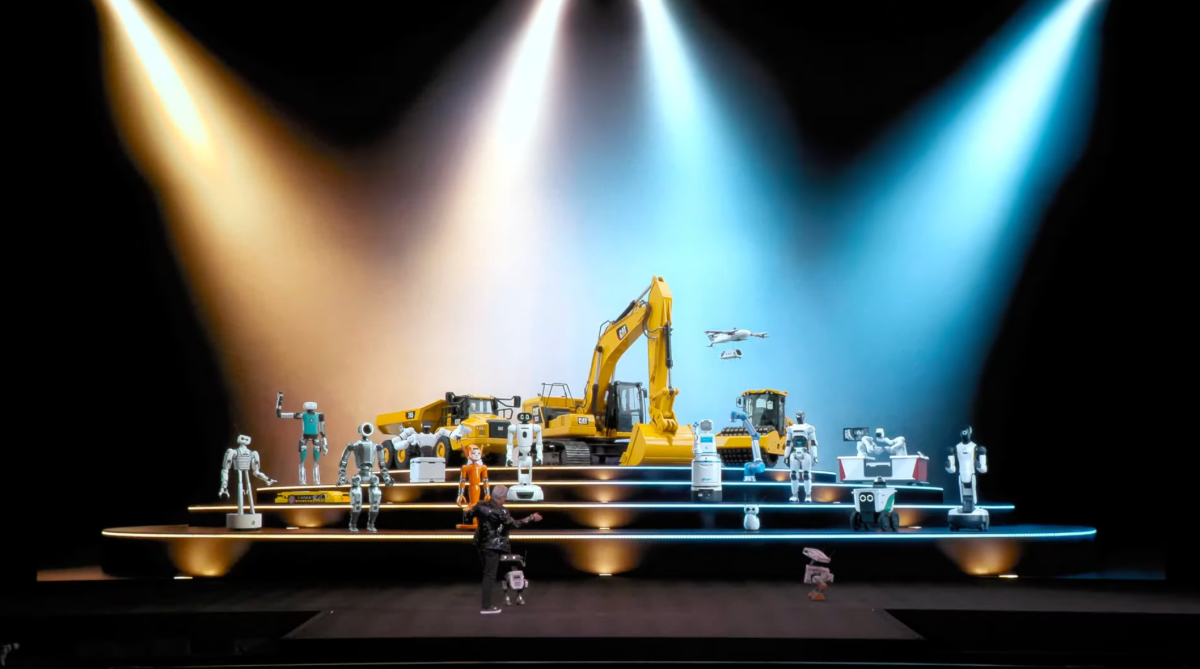

Las Vegas is bracing for a dramatically different Consumer Electronics Show (CES) in January 2026, with early indicators pointing to a pervasive integration of what’s being termed “physical AI” – artificial intelligence not just powering software, but embedded directly into the hardware of everyday objects. The annual tech trade show, held at the Las Vegas Convention Center, is expected to showcase a shift from AI as a cloud-based service to AI operating autonomously on devices ranging from home appliances to automobiles. This trend represents a significant evolution in the field, promising increased efficiency, personalization, and responsiveness.
While artificial intelligence has been a prominent theme at CES for several years, the 2026 event is anticipated to be the first where the majority of new product announcements will feature on-device AI processing capabilities. Experts predict this will move beyond simple voice assistants and into areas like predictive maintenance, advanced robotics, and hyper-personalized user experiences. The change is driven by advancements in chip technology and a growing demand for data privacy.
The Rise of Physical AI at CES 2026
The term “physical AI” encapsulates the move of AI computation from centralized servers to the edge – meaning directly onto the devices themselves. This is made possible by the development of Neural Processing Units (NPUs) and other specialized AI chips that are becoming increasingly powerful and energy-efficient. These chips allow devices to perform complex AI tasks without relying on a constant internet connection.
Several factors are converging to accelerate this trend. Increased bandwidth costs and concerns about latency are pushing companies to process data locally. Additionally, growing consumer awareness regarding data security and privacy is fueling demand for devices that can operate independently. This shift also aligns with broader industry goals of creating more sustainable and resilient technology ecosystems.
Impact on Home Appliances
Home appliances are expected to be a major showcase for physical AI at CES 2026. Manufacturers are developing refrigerators that can analyze food spoilage and suggest recipes, washing machines that optimize cycles based on fabric type and soil level, and ovens that learn cooking preferences. These advancements rely on on-device image recognition and sensor data analysis.
According to a recent report by the Consumer Technology Association (CTA), the market for smart home devices with integrated AI is projected to reach $150 billion by 2027. This growth is expected to be significantly bolstered by the capabilities offered through physical AI, allowing for more proactive and personalized home management.
Automotive Innovations
The automotive industry is already heavily invested in AI, and CES 2026 is likely to demonstrate substantial progress in on-device processing for autonomous driving features. Vehicles will increasingly rely on NPUs to process data from cameras, radar, and lidar sensors in real-time, enabling faster reaction times and improved safety.
Beyond self-driving capabilities, physical AI will also enhance in-cabin experiences. Systems capable of monitoring driver alertness, personalizing climate control, and providing context-aware entertainment are all expected to be on display. The integration of edge computing in vehicles is seen as crucial for handling the massive data streams generated by modern automotive sensors.
Robotics and Industrial Automation
Robotics is another area poised for significant disruption through physical AI. Industrial robots equipped with on-device AI can adapt to changing environments, perform more complex tasks, and collaborate safely with human workers. This is particularly important in sectors like manufacturing and logistics, where flexibility and efficiency are paramount.
The development of more sophisticated and affordable AI chips is making it possible to deploy robots in a wider range of applications. We can expect to see demonstrations of robots capable of performing tasks such as quality control, assembly, and even delicate surgical procedures, all powered by machine learning algorithms running locally.
Challenges and Considerations
Despite the potential benefits, the widespread adoption of physical AI faces several challenges. Developing and integrating specialized AI chips into devices requires significant investment and expertise. Furthermore, ensuring the security and reliability of on-device AI systems is critical, as vulnerabilities could have serious consequences.
However, the issue of data governance is also central. While on-device processing enhances privacy, it also complicates data collection for model training and improvement. Companies will need to find innovative ways to leverage anonymized or synthetic data to continue refining their AI algorithms. The ethical implications of increasingly autonomous devices will also be a key discussion point.
Another consideration is the potential for increased complexity in device manufacturing and maintenance. Integrating AI capabilities adds another layer of hardware and software that needs to be tested and supported. This could lead to higher costs and longer lead times for new products. The need for skilled technicians capable of diagnosing and repairing AI-powered devices will also grow.
In contrast to the current reliance on cloud-based AI, physical AI necessitates a different approach to software updates and model deployment. Over-the-air updates will be crucial for ensuring that devices remain secure and up-to-date with the latest AI advancements. However, these updates must be carefully managed to avoid disrupting device functionality.
The move towards physical AI also has implications for the semiconductor industry. Demand for NPUs and other specialized AI chips is expected to surge, creating opportunities for chipmakers to develop new and innovative products. This competition will likely drive down costs and improve performance, further accelerating the adoption of on-device AI. The development of artificial neural networks is a key component of this progress.
Looking ahead, the success of physical AI at CES 2026 will depend on the ability of companies to demonstrate tangible benefits to consumers and businesses. The focus will be on showcasing how on-device AI can solve real-world problems and improve people’s lives. The CTA is expected to release a detailed report on the trends observed at the show in February 2026, providing further insights into the evolution of this technology. The long-term impact of this shift remains uncertain, but it is clear that physical AI is poised to become a defining feature of the next generation of electronic devices.