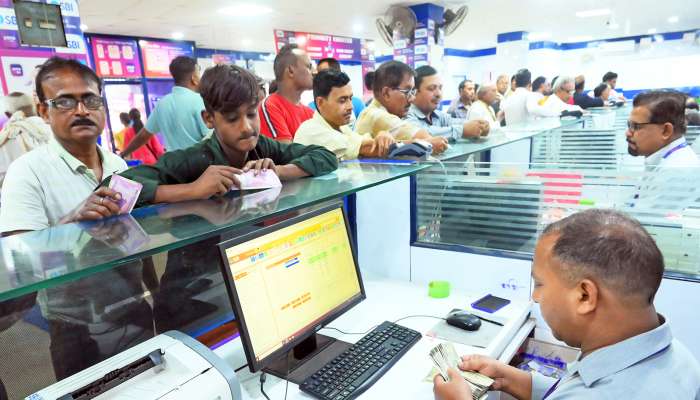

The Indian financial landscape experienced a year of robust growth and significant reform in 2025, according to a recent year-end review by the Department of Financial Services (DFS). This progress, driven by initiatives focused on banking reforms, digital payments, and financial inclusion, has solidified the nation’s financial stability and improved governance. The report highlights substantial improvements across key indicators, signaling a positive trajectory for the Indian economy.
Significant Progress in Banking Reforms in 2025
The DFS, operating under the Ministry of Finance, has been instrumental in driving a series of impactful changes within the banking sector. Building on existing programs like the ‘Your Money, Your Right’ campaign and the Banking Laws (Amendment) Act, 2025, the sector has witnessed a marked improvement in performance. The EASE program, now rebranded as EASE₹ise, continued to be a cornerstone of these efforts, focusing on enhanced operational efficiency and customer service.
Strengthening Asset Quality & Resilience
A key achievement of 2025 was the substantial improvement in asset quality within Indian banks. The Gross Non-Performing Asset (GNPA) ratio for Scheduled Commercial Banks fell to a commendable 2.22% by March 2025. Public Sector Banks (PSBs) also demonstrated significant progress, recording a GNPA ratio of 2.58%. This decline in NPAs is a strong indicator of improved risk management and lending practices.
Furthermore, the Provision Coverage Ratio rose to 93.14%, demonstrating a heightened ability of banks to absorb potential losses and bolstering the overall resilience of the sector. This increased coverage provides a crucial buffer against future economic shocks.
The Rise of Digital Payments & Financial Inclusion
The DIGIDHAN Mission continued to spearhead the growth of digital payments across India. Transaction volumes surged to 22,831 crore in FY 2024-25, representing a remarkable 41% Compound Annual Growth Rate (CAGR) from 2,071 crore in FY 2017-18. The value of these transactions also experienced substantial growth, increasing from Rs 1,962 lakh crore to Rs 3,509 lakh crore.
Innovations like ‘Credit Line on UPI’ and ‘Hello! UPI’ – an AI-voice-enabled payment feature – have further broadened access and convenience for users. These advancements are crucial in fostering a cashless economy and promoting financial literacy.
Meanwhile, initiatives aimed at financial inclusion continued to expand their reach. Programs like the Pradhan Mantri Jan Dhan Yojana, PM Mudra Yojana, and Atal Pension Yojana have provided vital financial services to millions, particularly those from marginalized communities. As of December 2025, Jan Dhan accounts exceeded 57 crore, holding deposits of over Rs 2.8 lakh crore.
Record Profits for the Banking Sector
The positive impact of these reforms is clearly reflected in the financial performance of Indian banks. Public Sector Banks collectively posted their highest-ever net profit, reaching Rs 1.78 lakh crore in FY 2024-25. Scheduled Commercial Banks also achieved record profits of Rs 4.01 lakh crore during the same period.
This impressive performance is attributed to a combination of factors, including improved credit growth, reduced stress levels, and enhanced operational efficiency. These profits will allow banks to further strengthen their capital base and support economic growth.
Strengthening Governance and Protecting Financial Assets
The government has actively worked to strengthen governance within the financial sector through legislative measures. The Banking Laws (Amendment) Act, 2025, has provided a more robust legal framework for banking operations. Additionally, reforms in the insurance sector, including raising the Foreign Direct Investment (FDI) limit to 100%, are expected to attract greater investment and promote innovation.
The “Your Money, Your Right” campaign has also proven highly successful in returning unclaimed financial assets to their rightful owners. Over Rs 4,500 crore in such assets were successfully repatriated, demonstrating a commitment to consumer protection and financial awareness. This initiative highlights the importance of proactive measures to safeguard citizens’ financial interests.
In conclusion, 2025 marked a pivotal year for the Indian financial sector. The concerted efforts towards banking reforms, the rapid adoption of digital payments, and the expansion of financial inclusion have collectively contributed to a more stable, resilient, and inclusive financial system. The positive trends observed across key indicators suggest a promising outlook for the future of Indian finance. Further investment in these areas, alongside continued vigilance and proactive regulation, will be crucial to sustaining this momentum and unlocking the full potential of the Indian economy. Readers interested in learning more about specific initiatives can explore resources on the Ministry of Finance website and the DFS portal.