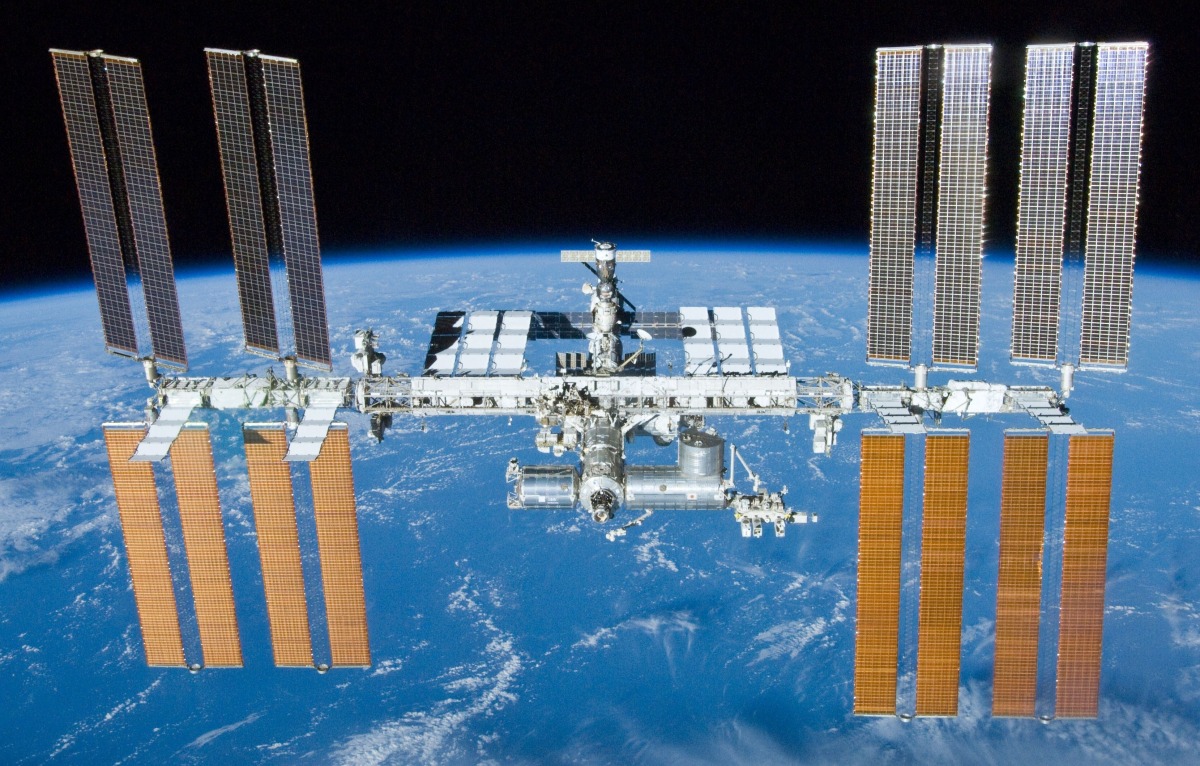

Doha, Qatar – Residents of Qatar will have a brief opportunity to view the International Space Station (ISS) as it passes overhead this evening, January 11, 2026. The Qatar Calendar House announced the sighting, which will be visible to the naked eye for approximately six minutes. This event offers a unique chance for skywatchers to observe human spaceflight without the aid of telescopes.
The ISS will become visible at 5:24 PM local time, appearing from the southwest horizon. It will then track across the sky, disappearing towards the northeast at 5:30 PM, according to the Qatar Calendar House. The station’s path places Qatar directly within its flight path, making the viewing opportunity readily accessible.
Spotting the International Space Station
The International Space Station isn’t like a typical star. Observers should look for a bright, fast-moving point of light that resembles an aircraft, but without the blinking or flashing lights associated with airplanes. Its brightness is due to sunlight reflecting off its large solar panels. However, visibility can be affected by weather conditions, such as cloud cover.
Understanding ISS Visibility
The ISS orbits Earth at an average altitude of approximately 400 kilometers (250 miles), traveling at roughly 28,000 kilometers per hour (17,500 miles per hour). This speed allows it to circle the globe approximately 16 times a day. Consequently, the timing and duration of ISS sightings vary depending on the observer’s location and the station’s orbital path.
Additionally, the ISS is a collaborative project involving five participating space agencies: NASA (United States), Roscosmos (Russia), JAXA (Japan), ESA (Europe), and CSA (Canada). It serves as a microgravity and space environment research laboratory where international crews conduct experiments in various fields, including biology, physics, astronomy, and meteorology.
Tools for Tracking the ISS
For those interested in tracking the International Space Station and receiving alerts for future sightings, several resources are available. NASA’s “Spot the Station” website (https://spotthestation.nasa.gov/) allows users to enter their location and receive email or text notifications about upcoming flyovers. Similarly, the ISS Detector app, available for both Android and iOS devices, provides real-time tracking and flyover predictions. These apps utilize orbital data to accurately forecast when the station will be visible from a specific location.
Meanwhile, amateur astronomers and space enthusiasts often utilize online resources like Heavens-Above (https://www.heavens-above.com/) to generate detailed ISS tracking information, including elevation and azimuth angles. Understanding these angles can help observers pinpoint the station’s exact location in the sky.
In contrast to traditional satellite observations, the ISS is large enough to be seen with the naked eye under favorable conditions. This makes it a particularly accessible astronomical event for the general public. The opportunity to witness this symbol of international cooperation in space is a compelling experience for many.
Looking ahead, the Qatar Calendar House will continue to monitor the ISS’s orbit and provide updates on future viewing opportunities. The frequency of visible passes will vary throughout the year, depending on the station’s orbital inclination and Qatar’s geographical position. Skywatchers should consult the aforementioned resources for the most current information and predictions regarding space station visibility.
Future ISS operations will focus on continued scientific research and the preparation for upcoming missions, including those related to lunar exploration. The long-term viability of the station remains a topic of ongoing discussion among the participating space agencies, with potential decommissioning dates currently projected beyond 2030.