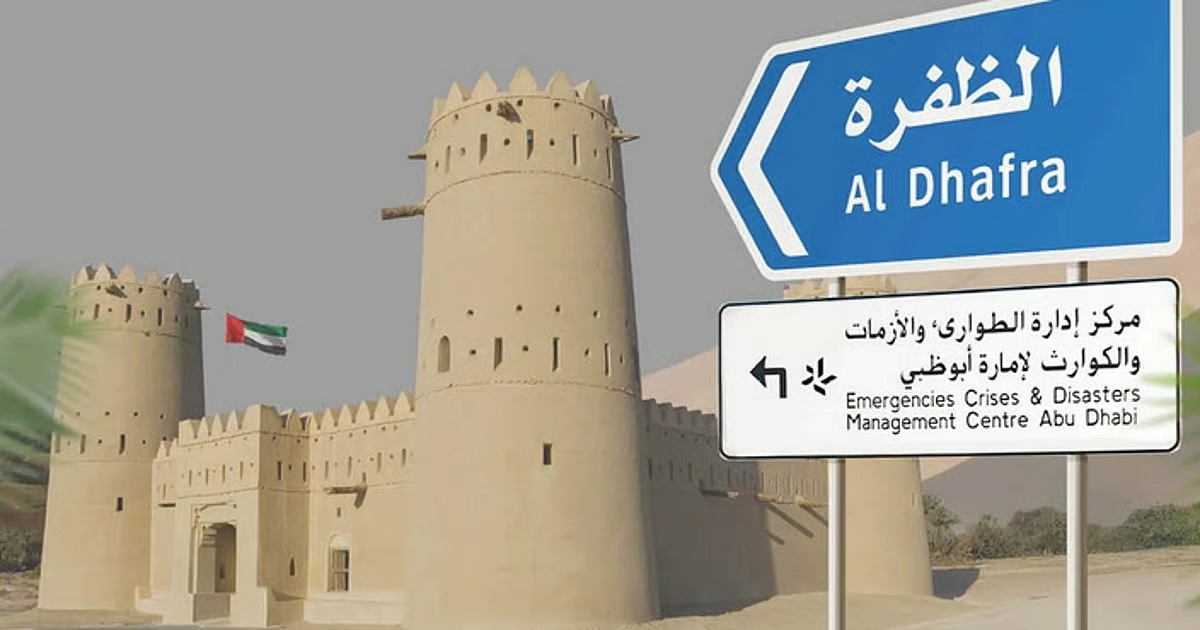

Abu Dhabi’s emergency preparedness infrastructure received a significant boost with the activation of a new Coordination and Follow-up Centre in the Al Dhafra Region. This initiative, announced by the Abu Dhabi Civil Defence and Crisis Management Centre (ADCMC), aims to bolster crisis readiness across the expansive and ecologically diverse region. The centre’s launch underscores the emirate’s commitment to a comprehensive and integrated emergency response system.
The new centre, operational as of this week, will serve as a central hub for coordinating responses to emergencies and disasters within Al Dhafra. Dr. Abdullah Hamrain Al Dhaheri, Executive Director of the Response and Recovery Sector at ADCMC, emphasized the strategic importance of this location due to its unique geographical and economic characteristics. The Al Dhafra Region encompasses a substantial portion of Abu Dhabi’s landmass and features varied terrain, including desert landscapes and coastal areas.
Enhancing Crisis Readiness in Al Dhafra
The establishment of the Coordination and Follow-up Centre directly addresses the challenges posed by Al Dhafra’s size and environmental complexity. According to ADCMC officials, a dedicated regional centre allows for more focused and efficient resource allocation during emergencies. This is particularly crucial given the region’s growing economic activity, including agriculture, tourism, and industrial development.
Strategic Importance of the Region
Al Dhafra’s strategic importance extends beyond its economic contributions. The region shares borders with Saudi Arabia and Oman, necessitating robust security and emergency response capabilities. Furthermore, its remote location and sparse population density present unique logistical challenges for emergency services. The new centre aims to mitigate these challenges through improved coordination and communication.
The ADCMC’s move aligns with broader efforts by the Abu Dhabi Government to strengthen its overall emergency management capabilities. Recent years have seen increased investment in advanced technologies, training programs, and infrastructure upgrades to enhance the emirate’s resilience to various threats, including natural disasters, industrial accidents, and public health emergencies. This proactive approach reflects a growing global emphasis on preventative measures and preparedness.
However, effective disaster response requires more than just physical infrastructure. Collaboration between various government agencies, private sector organizations, and community stakeholders is equally vital. The ADCMC has been actively fostering such partnerships through regular exercises and workshops designed to improve interagency coordination and communication protocols. These exercises simulate real-world scenarios to identify potential gaps and refine response strategies.
Meanwhile, the centre will focus on several key areas of operation. These include real-time monitoring of potential hazards, rapid deployment of emergency response teams, and effective communication with the public. The centre will also serve as a platform for data analysis and risk assessment, enabling authorities to identify vulnerabilities and develop targeted mitigation strategies. This data-driven approach is expected to improve the accuracy and effectiveness of future emergency responses.
In contrast to a centralized emergency management system, a regional approach allows for a more nuanced understanding of local conditions and needs. Al Dhafra’s unique environmental characteristics, such as its susceptibility to sandstorms and flash floods, require specialized response protocols. The new centre will be staffed by personnel with expertise in these areas, ensuring a more tailored and effective response to local emergencies.
The activation of the centre also supports the UAE’s broader national strategy for risk management and resilience. The country has been actively investing in initiatives to diversify its economy, reduce its reliance on fossil fuels, and promote sustainable development. These efforts are intertwined with emergency preparedness, as economic diversification and environmental sustainability can enhance a nation’s ability to withstand and recover from shocks.
Additionally, the ADCMC is working to enhance public awareness of emergency preparedness measures. This includes disseminating information on evacuation procedures, first aid, and other essential skills. Empowering citizens to take proactive steps to protect themselves and their families is considered a crucial component of a comprehensive emergency management system. Public education campaigns are regularly conducted through various channels, including social media, community events, and school programs.
The long-term success of the Coordination and Follow-up Centre will depend on ongoing investment in training, technology, and interagency collaboration. The ADCMC has indicated that it will continue to evaluate the centre’s performance and make adjustments as needed to ensure its effectiveness. Regular drills and simulations will be conducted to test the centre’s capabilities and identify areas for improvement.
Looking ahead, the ADCMC plans to integrate the Al Dhafra centre into a wider network of regional coordination hubs across Abu Dhabi. A timeline for the establishment of these additional centres has not yet been announced, but officials suggest that the rollout will be phased based on regional needs and priorities. The ultimate goal is to create a fully integrated and resilient emergency management system that can effectively respond to any challenge. Further details regarding the centre’s operational budget and staffing levels are expected to be released in the coming months.