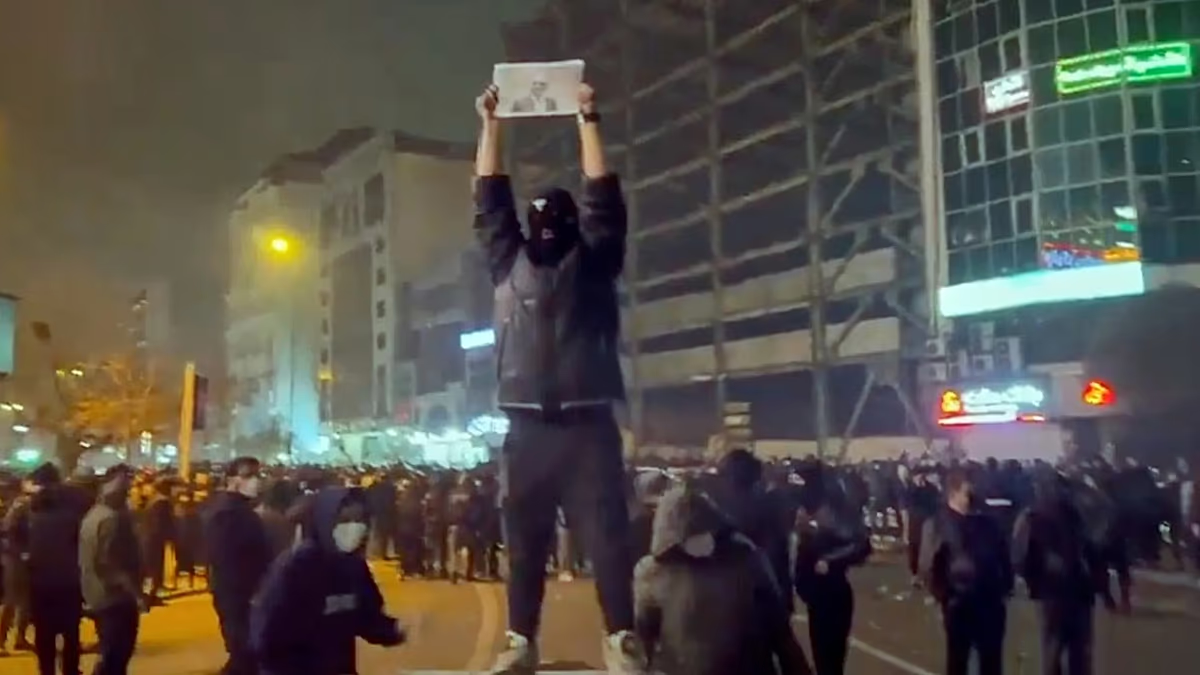

Iran is currently experiencing a near-complete internet blackout, now exceeding two days, severely restricting communication for citizens and obscuring the events unfolding within the country. This disruption comes amidst widespread protests, raising significant concerns about human rights and the potential for escalating violence. The blackout is dramatically limiting the ability of Iranians to share information with the outside world, and observers indicate the lack of connectivity is intensifying the urgency and risk for those involved.
Prior to the widespread connectivity loss, reports and circulating videos showed protesters repeatedly chanting “We are no longer afraid. We will fight.” Many Iranians believe this sentiment isn’t a sudden development but rather the culmination of decades of perceived repression, economic hardship, and stifled dissent. Supporters of the protests emphasize this is a generation demanding dignity and a future, urging the international community to listen.
The Impact of the Iran Internet Blackout
Analysts point out that periods of communication disruption historically coincide with increased danger. The suppression of images, testimonies, and independent reporting reduces public scrutiny of authorities’ actions. Human Rights Watch has documented similar tactics employed during previous periods of unrest in Iran.
The coming hours are critical and could determine several key outcomes: whether the protests broaden or are forcefully subdued, if security forces will escalate or restrain their response, and whether international attention will influence the situation. Past events in Iran suggest enforced silences have often been followed by escalations in violence, and observers are carefully monitoring potential turning points.
Creative Resistance in the Face of Censorship
Despite the internet blackout, Iranians are demonstrating resilience through creative forms of resistance. Symbolic acts, such as using a white dove to represent freedom and replacing the Islamic Republic’s emblem with the historical Lion and Sun, are gaining prominence. Perhaps most powerfully, tributes have emerged honoring a man who sat unarmed facing security forces on the first day of the protests.
A circulating image depicts security forces sitting down alongside this protester in a moment of unexpected alignment. While this image may seem incongruous given an official army statement reaffirming loyalty to the Supreme Leader, it highlights the unpredictable nature of the unfolding events.
Divisions Within Iranian Security Forces?
A key question is whether the protests could fracture the unity of Iran’s security forces. Statements of support from US President Donald Trump, alongside unconfirmed reports of security force retreats, have fueled speculation about potential divisions. The economic hardships impacting civilian populations also affect soldiers and their families, potentially creating empathy with the protesters.
However, other analysts caution against drawing conclusions too quickly. The Islamic Revolutionary Guard Corps (IRGC) might opt for a full-scale intervention to regain control, even at the risk of internal instability. A regional analyst noted, “The system may choose prolonged repression over collapse, even if that leads to long-term instability.” Unverified reports of the involvement of Iranian proxy forces, including members of Iraq’s Popular Mobilization Forces, in suppressing protests are also raising concerns.
Reza Pahlavi’s Call to Action and Potential for Strikes
The public response to calls for action from Reza Pahlavi, the Crown Prince and son of Iran’s last monarch, represents another significant development. He has urged Iranians to occupy city centers and is seeking international support. He is also appealing to crucial economic sectors, such as oil and energy, to participate in nationwide strikes – a strategy reminiscent of the period preceding the 1979 revolution. Such efforts, if successful, could represent significant civil unrest in Iran.
This strategy resonates deeply with many Iranians who recall the role of strikes in weakening the state during the 1978-79 period. Whether a similar approach can succeed under current security conditions remains uncertain, but Pahlavi’s call indicates a belief that the situation has reached a critical point.
In the current political climate, many activists highlight the importance of international response to what is happening in Iran. They contend that silence is interpreted as acceptance of the ongoing repression and that visible pressure and concrete measures are essential.
The situation in Iran is evolving rapidly. Any resolution, or escalation, will likely have significant regional and global consequences, impacting stability, migration, and energy markets. Staying informed about the developments and advocating for unhindered access to information will be crucial in the days ahead.