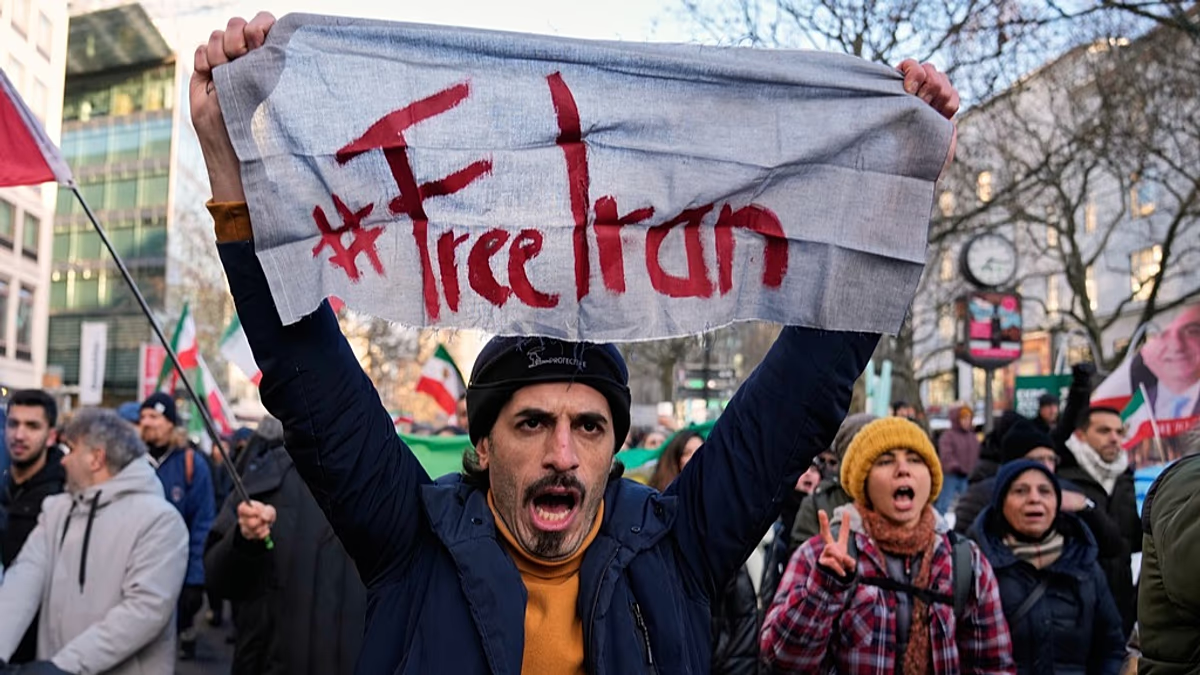

Demonstrations erupted across major European cities on Saturday as protesters voiced solidarity with ongoing Iran protests sparked by worsening economic conditions and a severe food price crisis. Rallies took place in cities including The Hague and Berlin, with participants expressing concern for the safety of loved ones in Iran and condemning the Iranian government’s response to the unrest. The protests represent a significant challenge to the Islamic Republic’s authority.
The demonstrations follow weeks of escalating unrest within Iran, initially triggered by rising fuel prices and quickly broadening into wider grievances against the government. Reports of security forces using lethal force against demonstrators have fueled international concern and prompted calls for restraint. Many protesters, particularly those of Iranian descent living abroad, feel a duty to support the movement from afar.
Growing International Support for Iran Protests
In The Hague, protesters gathered at the Malieveld, expressing their anguish over the situation in Iran and the difficulty in contacting family and friends due to communication blackouts. One woman at the rally stated her desire to contribute to raising awareness, emphasizing that even from a distance, their hearts are with the Iranian people. Another protester highlighted the lack of freedom and economic hardship faced by those living in Iran, citing soaring inflation and limited opportunities.
Meanwhile, a similar demonstration unfolded in Berlin, with participants describing the current unrest as one of the most substantial challenges to the Iranian government since the 1979 Islamic Revolution. Azadeh, a protester in Berlin, noted a growing sense of desperation among Iranians, suggesting a shift in attitude where people are less fearful of the consequences of challenging the regime. She believes this time feels different, with a heightened level of anger and determination.
Calls for International Intervention
Protesters in Berlin voiced hope that their activism will encourage European and American nations to provide assistance to Iranians seeking to overthrow the current government. Farshad Doustipour emphasized the ongoing violence perpetrated by the Iranian government and urged Western powers to recognize the inevitability of the regime’s downfall, advocating for support in facilitating that transition. The sentiment reflects a growing desire for external pressure on the Iranian authorities.
The economic situation in Iran has been deteriorating for years, exacerbated by international sanctions and internal mismanagement. The World Bank reports significant economic contraction and high inflation rates, contributing to widespread discontent. This economic hardship is a key driver of the current protests, alongside long-standing grievances regarding political and social freedoms.
US Response to the Unrest
US President Donald Trump was among the first world leaders to publicly address the Iran protests, issuing a strong statement on his social media platform, Truth Social. He expressed optimism about the potential for change in Iran and offered US assistance, without providing specific details. This follows an earlier warning to the Iranian government to cease the use of lethal force against protesters or face potential consequences from Washington.
However, the nature and extent of potential US involvement remain unclear. The Biden administration has taken a different approach to Iran, focusing on diplomatic efforts to revive the 2015 nuclear deal. The current situation presents a complex challenge for US foreign policy, balancing support for Iranian aspirations with concerns about regional stability and the potential for escalation.
The situation in Iran remains volatile and unpredictable. The protests show no signs of abating, and the government’s response continues to be a major concern. International observers are closely monitoring developments, and further escalation could have significant regional and global implications. Continued pressure on the Iranian government, coupled with humanitarian assistance and diplomatic efforts, will be crucial in the coming weeks and months as the Iran protests continue to unfold.