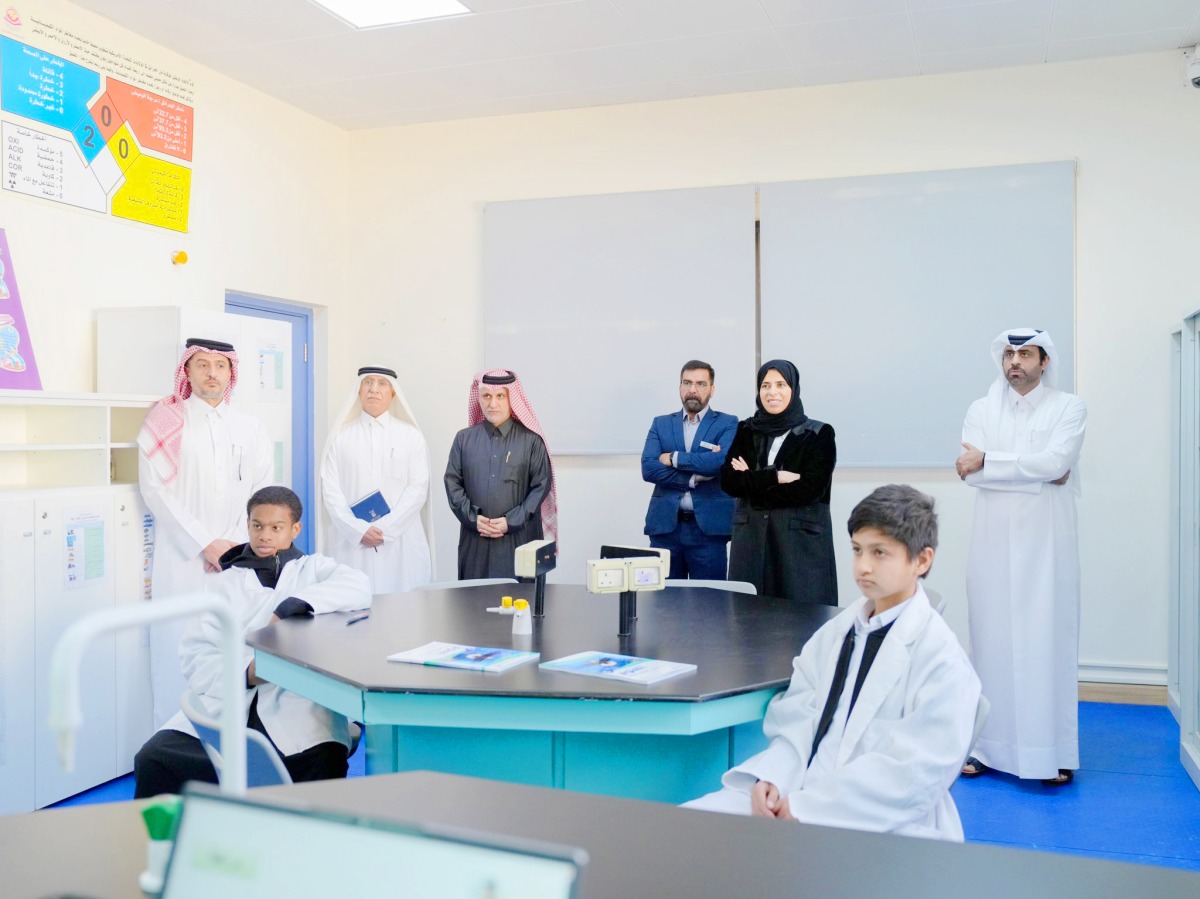

Doha, Qatar – Minister of Education and Higher Education H.E. Lolwah bint Rashid bin Mohammed Al Khater recently visited the Audio Education Complex to assess the support systems in place for students with hearing disabilities. The visit, which included key leaders from Qatar’s higher education sector, underscores the Ministry’s dedication to inclusive education and ensuring equitable access to learning opportunities for all students. This initiative focuses on strengthening the transition of these students into higher education.
The inspection took place on January 9, 2024, and involved discussions with administrators and a review of the complex’s educational programs. Accompanying the Minister were Assistant Undersecretary for Higher Education Affairs Dr. Hareb Mohammed Al Jabri, University of Doha for Science and Technology (UDST) President Dr. Salem Al-Naemi, and Community College of Qatar (CCQ) President Dr. Khalid Al-Horr, along with Director of the Special Education and Inclusive Education Department Fatima Al-Saadi.
Strengthening Support for Students in Higher Education
The primary goal of the visit was to gain a comprehensive understanding of the educational experience at the Audio Education Complex and identify areas for improvement in supporting students with hearing impairments. According to the Ministry, this includes enhancing academic and rehabilitative services to facilitate a successful continuation of studies at the post-secondary level. The focus is on creating a seamless pathway for these students to pursue their academic goals.
Qatar has been actively investing in special education initiatives, recognizing the importance of inclusivity in its educational system. This has led to increased resources and specialized programs designed to meet the unique needs of students with disabilities. However, challenges remain in ensuring consistent quality and effective transition support across all educational institutions.
Review of Programs and Coordination
The delegation reviewed the curriculum and support services currently offered at the Complex, which are designed to cater specifically to students with auditory processing challenges. Discussions centered on how to better align these programs with the requirements of university and college-level coursework.
A key aspect of the visit involved exploring ways to improve coordination between the Audio Education Complex and Qatar’s higher education institutions. This collaboration is deemed crucial for developing tailored support systems, such as assistive technologies, specialized tutoring, and accessible learning materials. The Ministry emphasized the need for a unified approach to address the diverse needs of students.
The visit also highlighted the importance of early identification of learning needs and providing appropriate interventions. It’s believed that proactive support from an early stage can significantly improve a student’s academic trajectory and confidence. Additionally, officials emphasized the role of teacher training in effectively supporting students with hearing disabilities.
Addressing Accessibility and Equity
Ensuring equitable access to inclusive education is a central tenet of Qatar’s National Vision 2030. This visit represents a tangible step toward realizing that vision by focusing on the specific needs of students with hearing impairments. The Ministry aims to create an environment where all students, regardless of their abilities, have the opportunity to thrive academically and professionally.
The discussion extended to the broader issue of accessibility within higher education institutions. This includes ensuring that classrooms, libraries, and online learning platforms are fully accessible to students with hearing disabilities. The report indicates a commitment to ongoing assessment and improvement of accessibility features.
Furthermore, the Ministry stressed the importance of raising awareness among faculty and staff about the challenges faced by students with hearing impairments and providing them with the necessary training to offer effective support. This includes understanding communication strategies and utilizing appropriate assistive technologies.
The Ministry of Education and Higher Education is expected to announce a follow-up plan based on the findings of the inspection visit within the next quarter. This plan will likely outline specific measures to enhance coordination, improve support services, and promote accessibility for students with hearing disabilities pursuing further studies. Stakeholders will be watching for concrete timelines and resource allocation details to support these initiatives.
Ongoing monitoring and evaluation of these programs will be essential to ensure their effectiveness and address any emerging challenges. The success of this initiative relies on continued collaboration between the Ministry, educational institutions, and the community of students with hearing disabilities.