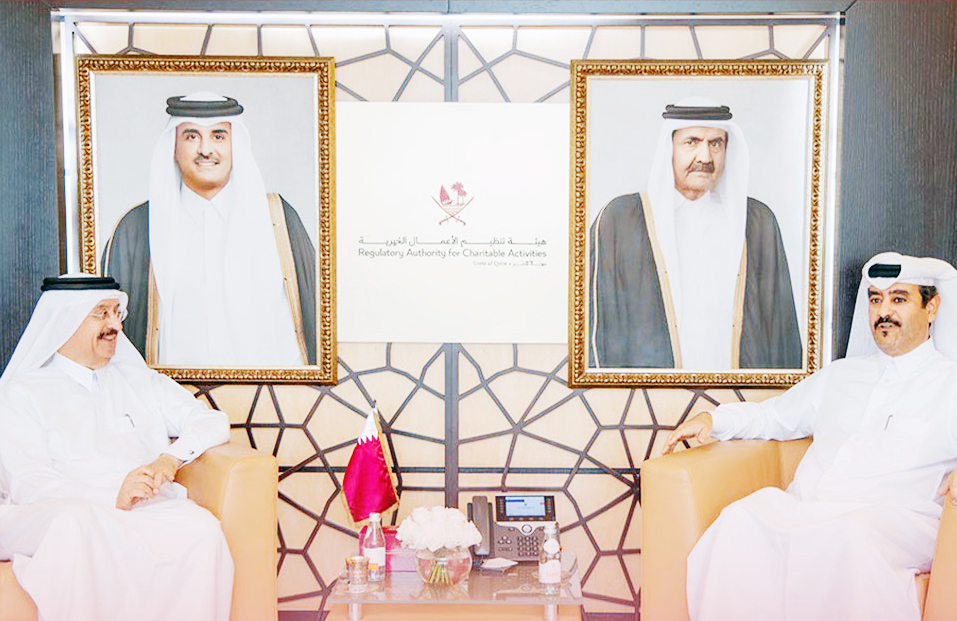

Doha, Qatar – The Regulatory Authority for Charitable Activities (RACA) and the Regional Network for Social Responsibility (RNSR) convened in Doha to discuss enhanced collaboration in the realm of social responsibility and charitable giving within Qatar. The meeting focused on creating stronger partnerships to improve social initiatives and national unity, aligning with Qatar’s long-term development goals. Discussions centered on RACA’s innovative platform for domestic aid coordination, which seeks to modernize and streamline social work efforts.
The collaborative talks, held at RACA headquarters, highlight a growing emphasis on coordinated and sustainable social development initiatives in Qatar. Both organizations aim to bolster ongoing efforts to achieve the objectives outlined in Qatar National Vision 2030, specifically its social development pillar and the Third National Development Strategy 2024-2030’s focus on a cohesive society. They see a common path forward through promoting responsible giving and strengthening community bonds.
Advancing Social Responsibility Through Innovative Platforms
A key focus of the meeting was RACA’s new national platform designed to coordinate social work within Qatar. This initiative aims to move beyond traditional charitable models toward long-term social empowerment, according to RACA officials. The platform will unify efforts across various sectors, rely on data-driven insights, and enforce principles of governance and transparency in the allocation of aid.
The platform intends to enhance the capabilities of families and individuals, enabling greater self-reliance and active participation in national development. It is presented as a unique model globally, designed to foster partnerships between social, charitable, and governmental organizations under RACA’s leadership.
Key Features of the New Platform
RACA detailed that the platform will establish a centralized system for managing and tracking social assistance programs. This will allow for better resource allocation and reduce duplication of efforts. Furthermore, the platform will incorporate robust data analytics to identify emerging social needs and measure the impact of interventions.
RNSR representatives expressed strong support for RACA’s role in regulating and leading the social and charitable sector in Qatar. They particularly praised the new platform as an example of advanced institutional practice that contributes to positive social impact and encourages innovation within charitable organizations.
The growing need for efficient and impactful social work in Qatar is being driven by a number of factors, including population growth and evolving societal challenges. According to recent reports, Qatar has been increasing its investment in social development programs to address these needs. This platform represents a significant step towards optimizing those investments.
During the meeting, RACA General Manager Ibrahim Abdullah Al Dehaimi was honored by RNSR. This recognition marks his selection as one of the most influential Arab figures in the field of social responsibility for 2025. The acknowledgment underscores his leadership in advancing the social and charitable work system and ensuring its sustainability and impact within Qatar.
The RNSR’s recognition of Al Dehaimi is expected to further elevate the profile of social responsibility initiatives in the region. It also signals a broader trend towards acknowledging and rewarding leadership in the non-profit and philanthropic sectors.
Looking ahead, RACA and RNSR plan to establish a joint working group to explore specific areas for collaboration, including knowledge sharing and capacity building. The timeline for the full implementation of the domestic aid platform remains fluid, dependent on ongoing testing and integration with existing systems. Stakeholders will be watching for updates on the platform’s rollout and its initial impact on social service delivery.
The success of this partnership and the platform’s effectiveness will likely serve as a benchmark for other nations seeking to modernize their own approaches to social responsibility and domestic aid distribution.