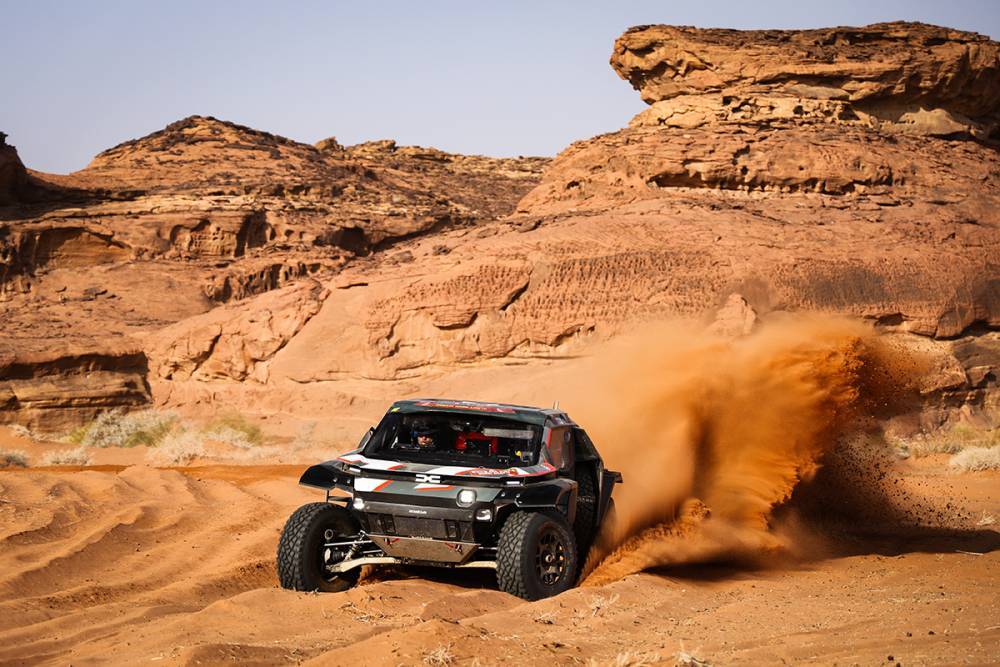

Doha, Qatar – South African driver Henk Lategan surged into the overall lead of the 2026 Dakar Rally after winning yesterday’s Stage 4, while Qatari rally legend Nasser Al Attiyah mounted a strong response, finishing second. The stage, covering a challenging 452km special, saw Lategan complete the course in 4hr 47min 08sec, gaining a significant advantage in the competition. Al Attiyah remains a strong contender, currently trailing Lategan by just under four minutes.
The fourth stage of the grueling off-road race unfolded amidst difficult conditions, including heavy dust and the risk of punctures. This shift in the standings marks a pivotal moment in the rally, which is currently being held in Saudi Arabia, and sets the stage for a competitive battle as competitors navigate the remaining stages. The event, known for its extreme terrain and endurance challenges, continues to test both drivers and machines.
Nasser Al Attiyah’s Performance and Dakar Rally Standing
Al Attiyah acknowledged the challenging conditions of the stage, citing the dust and early puncture risks as significant obstacles. He explained that observing Lategan’s pace put pressure on his team, but they successfully managed the situation and minimized time loss. According to Al Attiyah, the second-place finish could prove strategically beneficial for road position in the upcoming stage.
However, Al Attiyah emphasized a cautious approach, stating there was no need to take unnecessary risks at this point in the rally. He highlighted the importance of maintaining a calm focus, avoiding mechanical issues, and preserving the reliability of his Dacia Sandrider. The team’s consistent performance has positioned them well, with all four Dacia vehicles currently within the top twelve overall.
Dacia Sandrider Team Strength
The Dacia Sandrider team demonstrates impressive consistency, despite not yet securing a stage win in the 2026 Dakar Rally. Sébastien Loeb currently sits in eighth place, Cristina Gutiérrez in tenth, and world champion Lucas Moraes in twelfth, showcasing the team’s overall strength in the competition. This depth of talent provides a strategic advantage as the rally progresses.
The Dakar Rally is renowned for its unpredictable nature, and consistent performance is often key to success. Teams must balance speed with reliability to navigate the demanding terrain and maintain a competitive position.
Unexpected Withdrawal and Competition Dynamics
Meanwhile, the defending champion, Yazeed Al-Rajhi, experienced a setback and was forced to withdraw from the race due to mechanical problems with his Toyota Hilux. Organizers confirmed the issue occurred during the opening marathon stage, leaving Al-Rajhi without access to mechanical assistance. This unexpected development alters the competitive landscape and opens opportunities for other drivers to contend for the championship.
The marathon stage, a particularly challenging segment of the Dakar Rally, requires competitors to complete a long stage without the benefit of service crews. Mechanical failures during this phase can be particularly detrimental, as repairs are limited to what the team can carry with them. This highlights the importance of vehicle preparation and preventative maintenance.
Additionally, the withdrawal of a key competitor like Al-Rajhi underscores the inherent risks and challenges of the Dakar Rally. The event demands not only exceptional driving skill but also robust vehicle engineering and a resilient support team. The rally also tests the endurance of the vehicles, with the harsh desert conditions taking a toll on mechanical components.
The next stage of the 2026 Dakar Rally is expected to present new challenges, potentially favoring different driving styles and vehicle configurations. Competitors will need to adapt to the changing terrain and maintain their focus to avoid costly mistakes. The overall outcome remains uncertain, and the battle for the championship is likely to intensify as the rally progresses towards its conclusion in Saudi Arabia.