






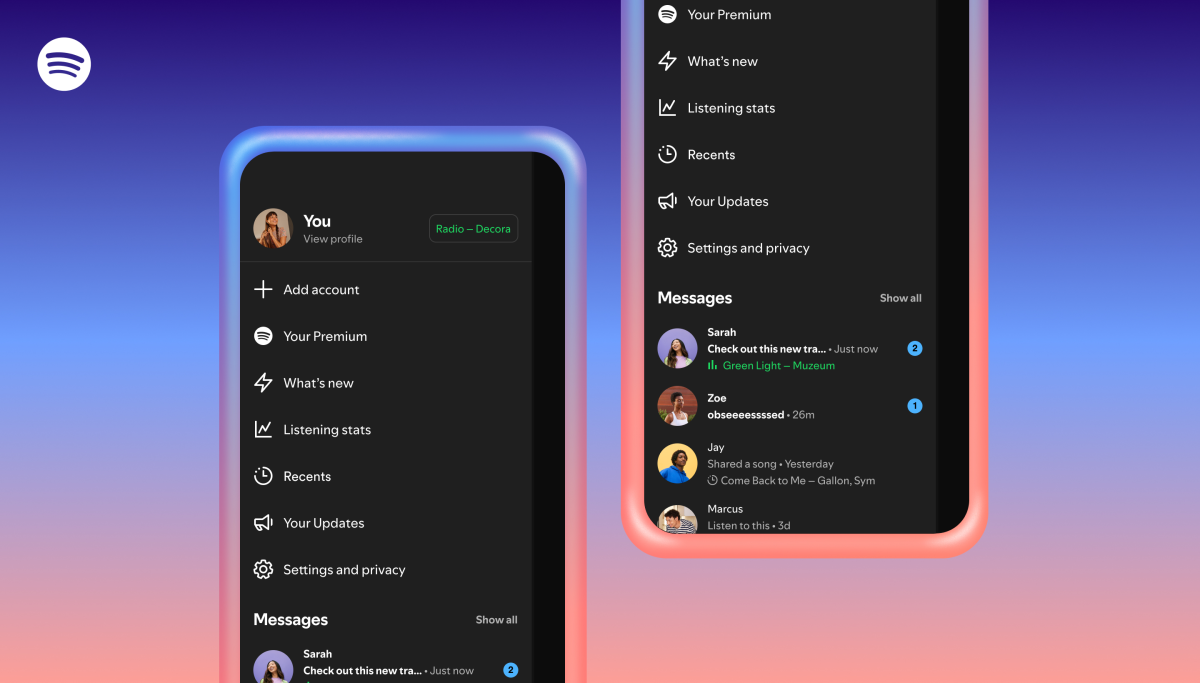

Spotify is rolling out new social features designed to keep users engaged within the platform, highlighted by a new messaging function that displays real-time listening activity and allows for easier collaborative listening requests. The company announced Wednesday that these updates, focused on enhancing connection and discovery, would be available to iOS and Android users. This move represents Spotify’s continued effort to become a more central hub for music sharing and consumption, rivaling the role of social media platforms in music discovery. The core of the update centers on enabling more Spotify social interaction.
Boosting Engagement with New Spotify Social Features
The new features will launch first to users in markets where Spotify’s built-in Messages are currently available. According to Spotify, full availability is expected by early February. The rollout includes two key components: “Listening Activity” within chats and a simplified “Request to Jam” function. These updates come a year after Spotify first launched Messages in August 2025, aiming to consolidate user activity within its ecosystem.
Real-Time Listening Activity
To utilize the “Listening Activity” feature, users must enable it within their privacy and social settings. Once activated, what a user is currently listening to will appear at the top of their direct message conversations. This provides a seamless way for friends to see each other’s musical tastes.
Recipients can interact with the displayed song directly – options include playing the track, saving it to their library, accessing the song’s menu, or reacting with an emoji. This quick interaction minimizes the need to switch between Spotify and other apps for sharing. This directly addresses a common user behavior: sharing music via links to external services like Instagram or messaging apps.
Simplified Collaborative Listening Requests
Premium Spotify subscribers can now send “Request to Jam” invitations directly through the Messages feature. Previously, initiating a collaborative listening session (a “Jam”) required more steps. With the update, tapping a “Jam” option initiates a request, and when accepted, both users gain control of a shared listening queue, adding and enjoying music together.
While users can participate in these Jams, free tier users can only join when invited by a Premium subscriber, maintaining a key benefit for paid subscriptions. This functionality builds upon existing collaborative features like Blend, which allows users to create shared playlists powered by algorithmic recommendations.
However, it’s important to note that these features are currently restricted to users aged 16 and over, as dictated by messaging regulations. Spotify’s focus on direct messaging also means these interactions are currently limited to one-on-one conversations with individuals already connected through previous shares.
These changes reflect a broader trend in the music streaming industry where platforms are attempting to cultivate community and enhance social discovery. Rivals like Apple Music have also invested in social features, recognizing the potential to increase user retention and drive subscription growth. The competitive landscape in music streaming is fierce, with companies vying for user attention and loyalty.
Spotify emphasizes the security of its Messages feature, stating that conversations are encrypted at rest and in transit. However, they clarified that Messages do not utilize end-to-end encryption, a point that may raise privacy considerations for some users. The absence of end-to-end encryption is becoming a more closely scrutinized aspect of messaging applications generally.
Further development regarding potential expansion of the Messages feature—such as group chats or wider availability and integration with other music services—remains to be seen. The platform has not indicated any immediate plans for these extensions, but will likely monitor the adoption and engagement with the current features before committing to further investments. Watching user feedback and adoption rates will be crucial in determining Spotify’s future music sharing strategy and whether it will impact the future of audio streaming.
The company will continue to assess the feature’s impact on user behavior and engagement in the coming months. Any changes to the age restrictions or encryption methods are expected to be announced directly by Spotify. The long-term success of these features in bolstering user experience and subscription rates will be key indicators of Spotify’s social ambitions.