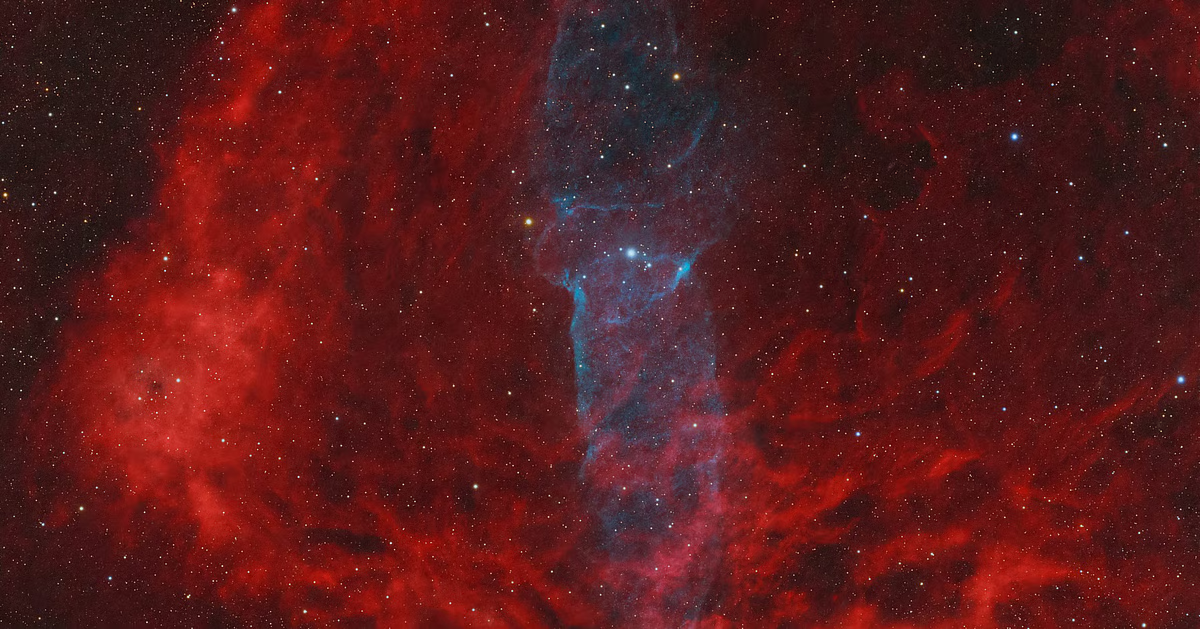

Astronomers have successfully captured the first detailed astrophotography image of the faint zodiacal light from the Middle East, a feat achieved after nearly a year and a half of dedicated observation and significant technological upgrades. The image, released this week by the International Astronomical Centre (IAC), showcases the subtle glow caused by sunlight scattering off dust particles in the solar system. This marks a significant advancement in astronomical observation capabilities within the region.
The breakthrough occurred at the IAC’s observatory in Abu Dhabi, United Arab Emirates, following initial imaging attempts that began in mid-2024. The successful image represents a culmination of persistent effort and a commitment to overcoming challenges posed by light pollution and equipment limitations. The IAC anticipates further analysis of the data will yield insights into the distribution of interplanetary dust.
Challenges and Triumphs in Zodiacal Light Astrophotography
Early attempts to photograph the zodiacal light proved unsuccessful due to the pervasive effects of light pollution common in many populated areas. The faint glow of the zodiacal light is easily overwhelmed by artificial light sources, making it a difficult target for even advanced telescopes. This prompted a substantial investment in upgrading the observatory’s infrastructure.
Equipment Upgrades and Technological Solutions
The primary upgrade involved replacing the observatory’s existing telescope with a more sensitive instrument capable of capturing extremely faint light. Additionally, the IAC implemented advanced image processing techniques to mitigate the impact of residual light pollution. These techniques included sophisticated filtering and stacking methods.
The final image wasn’t a single exposure, but rather a composite created from over 1,800 individual five-minute exposures, totaling approximately 150 hours of observation time. According to the IAC, only the clearest and highest-quality frames were selected and meticulously combined. This process demanded both technical expertise and considerable patience.
The zodiacal light itself is not a phenomenon exclusive to the Middle East, but its observation from this region has been historically challenging. It’s typically best viewed from dark locations near the equator, during specific times of the year after sunset or before sunrise. The IAC’s success demonstrates the potential for overcoming these obstacles with dedicated resources and advanced technology.
Understanding Interplanetary Dust
The zodiacal light is created by sunlight reflecting off microscopic dust particles scattered throughout the inner solar system. These particles are thought to originate from comets and asteroids. Studying the distribution and characteristics of this dust provides valuable information about the dynamics of the solar system.
Researchers believe that analyzing the astrophotography data will help refine models of interplanetary dust distribution. This, in turn, could improve our understanding of the formation and evolution of the solar system. Furthermore, the data may contribute to better predictions of space weather and the potential hazards posed by dust particles to spacecraft.
However, interpreting the data requires careful consideration of various factors, including atmospheric conditions and the precise calibration of the telescope. The IAC is collaborating with international research institutions to ensure the accuracy and reliability of their findings. The study of deep-sky objects like the zodiacal light relies heavily on international cooperation.
In contrast to brighter celestial phenomena, the zodiacal light requires specialized equipment and techniques for successful imaging. The IAC’s achievement highlights the growing capabilities of astronomical research in the Middle East and its contribution to the global scientific community. This success also demonstrates the importance of investing in astronomical imaging infrastructure.
The IAC’s work builds upon decades of research into the zodiacal light, dating back to the 17th century. Early observations were made with the naked eye, but modern astrophotography allows for a much more detailed and quantitative analysis. The ability to capture such images from a location previously hampered by light pollution is a testament to technological advancements.
Meanwhile, the IAC is planning to release the full dataset to the scientific community for further analysis. They also intend to continue monitoring the zodiacal light over the coming months to observe any variations in its intensity or distribution. The next phase of the project will focus on correlating the observed data with models of cometary activity and asteroid collisions.
Looking ahead, the IAC anticipates publishing a detailed scientific paper outlining their findings in a peer-reviewed journal within the next six months. The long-term implications of this research remain uncertain, but it is expected to contribute to a more comprehensive understanding of the solar system’s dust environment. Further observations and data analysis will be crucial to confirm these initial findings and explore new avenues of research.