






Qatar is investing in its legal professionals with the launch of the Legal and Judicial Studies Center’s Specialized Legal Training Plan for 2026. The initiative aims to enhance the skills and knowledge of lawyers, judges, and other legal personnel, aligning with the nation’s ongoing development and its 2030 vision. Approximately 110 professionals will participate in the upcoming programs, building on substantial increases in training capacity from the previous year.
The Ministry of Justice announced the plan Saturday in Doha, outlining a comprehensive curriculum designed to address current and emerging legal challenges. The programs encompass both general professional development and specialized tracks tailored to specific legal roles within the Qatari government. This focus on continuous learning is a component of broader public sector modernization efforts.
Expanding Legal Expertise Through Specialized Training
The 2026 Legal Training plan will deliver 118 specialized courses throughout the year, averaging eight per month. This substantial schedule reflects the Ministry’s commitment to providing frequent and relevant updates on legislative changes, judicial precedents, and best practices in legal writing and drafting. Participants will be divided into four groups to facilitate focused instruction.
Key Program Components
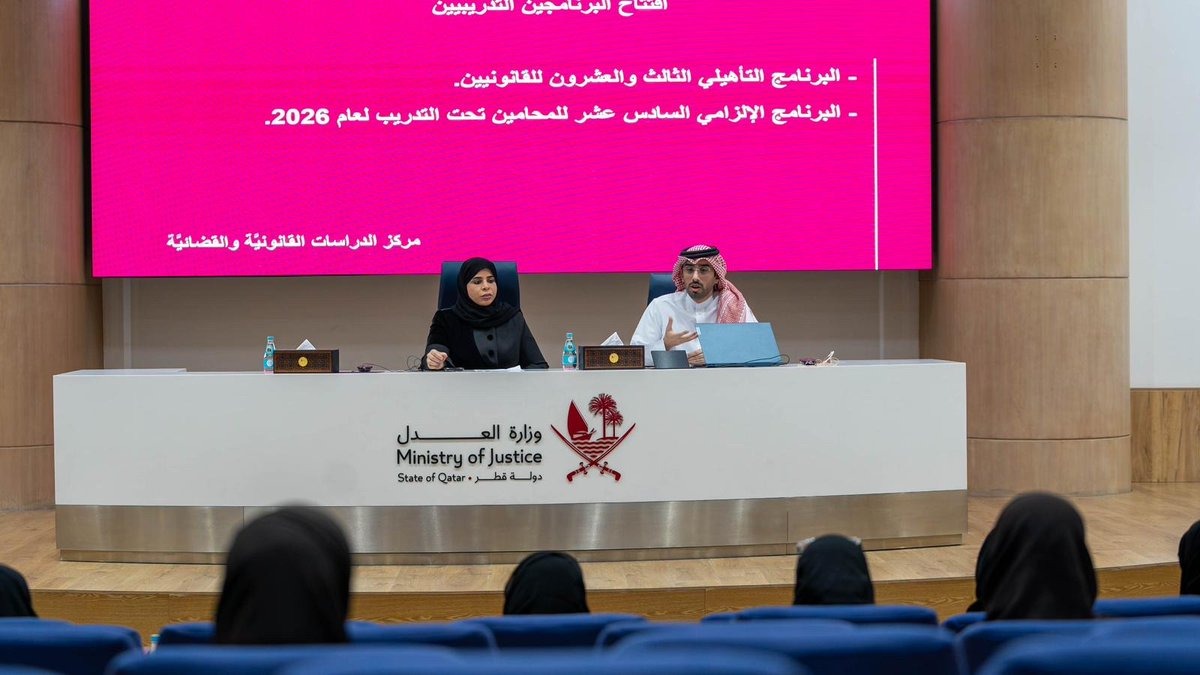
The initiative includes two primary programs: the twenty-third Legal Professionals Qualification Program, enrolling 94 participants, and the sixteenth Mandatory Training Program for trainee lawyers, with 16 attendees. Both programs combine theoretical learning with practical applications, including field visits, to ensure a well-rounded educational experience.
According to Dr. Abdullah Hamad Al Khalidi, Director of the Legal and Judicial Studies Center, the Ministry’s vision is to develop Qatari legal and judicial cadres to the highest standards of competence. He highlighted the crucial role of these programs in preparing professionals for appointment to the judiciary, public prosecution, and various legal sectors across the state. The training also supports the integration of artificial intelligence tools in the legal field.
The Ministry emphasized a structured approach to the training. Participants received detailed briefings on expectations, attendance policies, evaluation criteria, and a rewards system recognizing top performers. This level of organization aims to maximize training outcomes and ensure consistent quality across all program components.
The effort builds on a significant expansion of legal training in 2025. The Ministry reports a 14.6 percent increase in the number of training courses offered and a 24.78 percent rise in the number of legal professionals benefiting from these programs. Furthermore, legal awareness workshops saw a dramatic 250 percent increase, reaching a wider segment of the population with crucial information. Legal awareness is now reaching new audiences through video content that garnered high levels of engagement.
This investment in human capital is directly linked to Qatar’s National Vision 2030, which prioritizes sustainable development and a knowledge-based economy. The Ministry’s Strategic Plan 2025-2030 explicitly identifies the development of skilled professionals within government institutions as a cornerstone of national progress. The government believes improvements in governmental services are reliant on a well-trained legal workforce.
Looking ahead, the Ministry will continue to monitor the effectiveness of the training programs through performance evaluations and feedback from participants. The scope and content of future programs are likely to evolve based on emerging legal trends and the ongoing needs of Qatar’s legal system. Continued assessment of the impact of AI on legal practice will also be a key area of focus.