





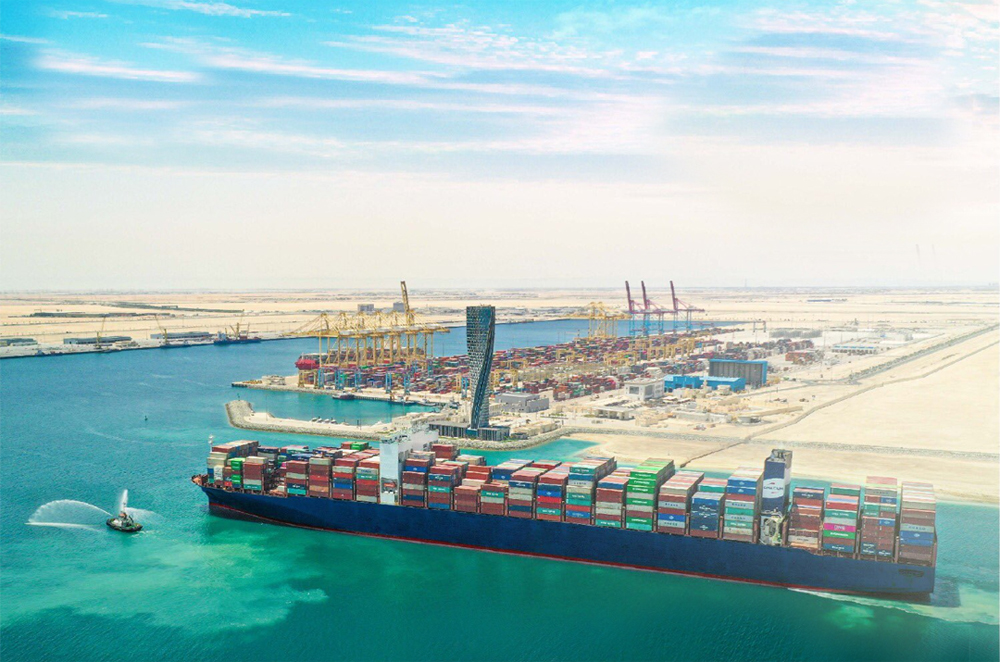

Qatar’s ports – Hamad, Ruwais, and Doha – experienced significant growth in December 2025, handling increased cargo and container volumes compared to the same period in 2024. The surge in activity reinforces Qatar’s position as a key regional trade and logistics hub. A substantial 64% increase was observed in general and bulk cargo, while container traffic reached nearly 111,000 twenty-foot equivalent units (TEUs). This positive trend underscores the nation’s expanding role in international commerce and the effectiveness of recent infrastructure investments.
According to Mwani Qatar, the port authority, nearly 226 vessels called at the three ports in December. In addition to containers, approximately 13,000 units of Roll-on/Roll-off (RoRo) cargo and over 28,500 heads of livestock were also processed. This diverse handling capability demonstrates the ports’ versatility and ability to accommodate a wide range of trade needs.
Qatar Ports See Dramatic Increase in Volume
The growth observed in December builds upon a successful 2025 for Mwani Qatar, a year marked by strategic improvements and international recognition. The Ministry of Transport has prioritized strengthening Qatar’s logistics infrastructure, and the latest figures demonstrate significant progress toward that goal. This growth has been fueled in part by a notable rise in transshipment volumes, reportedly reaching nearly 50% of total volumes handled from January to November 2025.
Infrastructure and Efficiency Improvements
Mwani Qatar highlighted significant enhancements made throughout 2025, including upgrades to digital infrastructure and the expansion of its shipping network. These improvements were designed with a focus on optimizing operational capabilities and enhancing the overall customer experience. The company also emphasized its commitment to maintaining high standards of efficiency, making Qatar’s ports increasingly attractive to global shipping lines.
Hamad Port specifically gained prominence, achieving a ranking as the top port in the Gulf region and 11th globally in the Container Port Performance Index (CPPI) 2024, compiled by the World Bank and S&P Global. This ranking reflects the port’s modern facilities and streamlined processes, crucial elements for effective regional and global trade. The supply chain has become more flexible thanks to these improvements.
The introduction of the new direct CHINOOK-CLANGA service by Mediterranean Shipping Company (MSC) in July 2025 was a pivotal development. The service provides direct weekly sailings to key ports in East Asia and the West Coast of North America, including Colombo, Shanghai, and Vancouver. This direct connection directly supports Qatar’s expanding role in international shipping.
Sustainability and Security Initiatives
Beyond commercial growth, Mwani Qatar demonstrated a commitment to environmental sustainability in 2025. The port undertook what has been recognized as the world’s largest mangrove relocation project, earning a Guinness World Record. This initiative showcases Qatar’s dedication to preserving biodiversity while facilitating economic development.
Security was another key focus, resulting in the prestigious ISO/IEC 27001:2022 certification for Information Security Management Systems (ISMS). This internationally-recognized certification validates Mwani Qatar’s robust framework for managing cyber risks and safeguarding data. The certification boosts confidence among partners and clients in the security of operations within Qatar’s port system.
Individual contributions were also recognized, with Capt Abdulla Mohamed Al Khanji, Chief Executive Officer of Mwani Qatar, receiving the ‘Personality of the Year’ award at The Maritime Standard (TMS) Awards 2025. The award acknowledges his leadership in advancing the maritime industry and enhancing port performance within the Middle East and Indian Subcontinent. This award is a testament to the effectiveness of Qatar’s logistics sector.
Looking ahead, Mwani Qatar is expected to continue investing in infrastructure and technology to further enhance its capabilities. Future growth will likely depend on global economic conditions and continued efforts to attract transshipment traffic. Monitoring the port’s performance in the coming months and years will be critical to assessing the full impact of these recent developments and their contribution to Qatar’s economic diversification plans.