






The skies above Oman are preparing for a spectacular celestial display! Tomorrow evening and into the early hours of the following day, residents will have the opportunity to witness the peak of the Quadrantid meteor shower, one of the year’s most active and visually stunning meteor events. This shower conveniently coincides with the start of the new Gregorian year, offering a beautiful astronomical welcome to 2024.
What is the Quadrantid Meteor Shower?
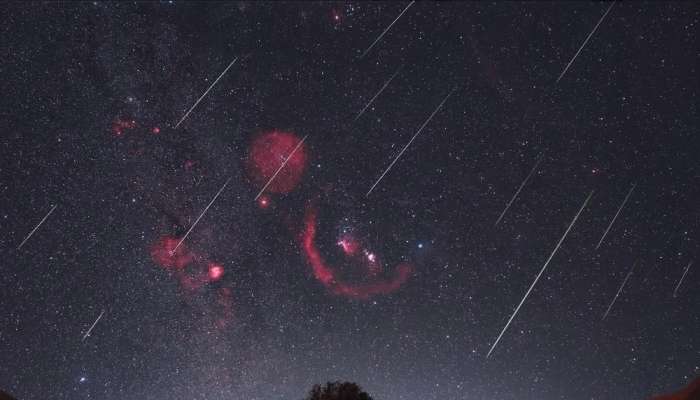
The Quadrantid meteor shower is renowned for its intensity, but also for its brief peak. Unlike some showers that linger for several nights, the Quadrantids deliver their most impressive show within just a few hours. According to Wisal bint Salem Al Hinai, Vice President of the Community Outreach Committee at the Omani Society for Astronomy and Space, under ideal conditions, observers could see up to 120 meteors streaking across the sky each hour. This makes it a truly worthwhile event for stargazers.
The Source of the Shower: 2003 EH1
Interestingly, the source of the Quadrantid meteor shower isn’t a comet, as is often the case. Instead, it’s linked to the near-Earth object 2003 EH1, which is classified as an asteroid. However, astronomers believe this asteroid is likely the remnant of an ancient comet that has gradually lost its volatile materials over millennia. Discovered in 2003, 2003 EH1 follows a highly elongated orbit around the Sun, completing a cycle approximately every 5.5 years. This journey subjects the object to dramatic temperature fluctuations.
Characteristics of Quadrantid Meteors
The particles that create the Quadrantid meteor shower are unique. Al Hinai explains that they are denser and more solid than the debris from many active comets. This density contributes to the shower’s brightness and its short, concentrated peak. The dust stream is narrow, meaning fewer, but more brilliant, meteors are visible.
These meteors are also known for their high speed and striking brightness, often appearing with a bluish-white hue. Occasionally, observers may witness short-lived, smoky trails that linger for a few seconds after the meteor itself has vanished. This adds to the visual drama of the meteor shower.
When and Where to Look for the Quadrantids in Oman
The radiant point – the area of the sky from which the meteors appear to originate – for the Quadrantid shower is located near the constellation Boötes. This constellation gradually rises throughout the night, reaching its highest point just before dawn. Therefore, the period between midnight and dawn is considered the optimal time for observation. For those interested in night sky events, this shower is a highlight of the early year.
Challenges from the Full Moon
Unfortunately, this year’s peak coincides with a full moon. This increased sky brightness will undoubtedly hinder the observation of fainter meteors. The strong moonlight reduces contrast, making it harder to spot the subtle streaks of light. However, Al Hinai assures us that observing brighter Quadrantid meteors, particularly those with longer trails, remains possible. Viewing conditions may improve when the moon is low on the horizon or when observers look in directions away from its glare.
Tips for Observing the Quadrantid Meteor Shower
Observing the Quadrantid meteor shower doesn’t require any specialized equipment. You can enjoy the show with just your naked eye! The key is to find a dark location away from light pollution. Allow your eyes at least 20-30 minutes to fully adapt to the darkness. Instead of focusing on a single point in the sky, scan wide areas. This increases your chances of catching a meteor as it streaks across your field of vision. Remember to dress warmly, as January nights in Oman can be cool.
Additionally, this year’s shower occurs alongside the visibility of several bright winter stars and planets, adding an extra layer of beauty to the celestial scene. The steady glow of stars combined with the fleeting motion of meteors creates a truly captivating experience. For those interested in astronomy in Oman, this is a fantastic opportunity to connect with the cosmos.
Don’t miss this chance to witness one of the most spectacular meteor showers of the year. Look up, and enjoy the show!