





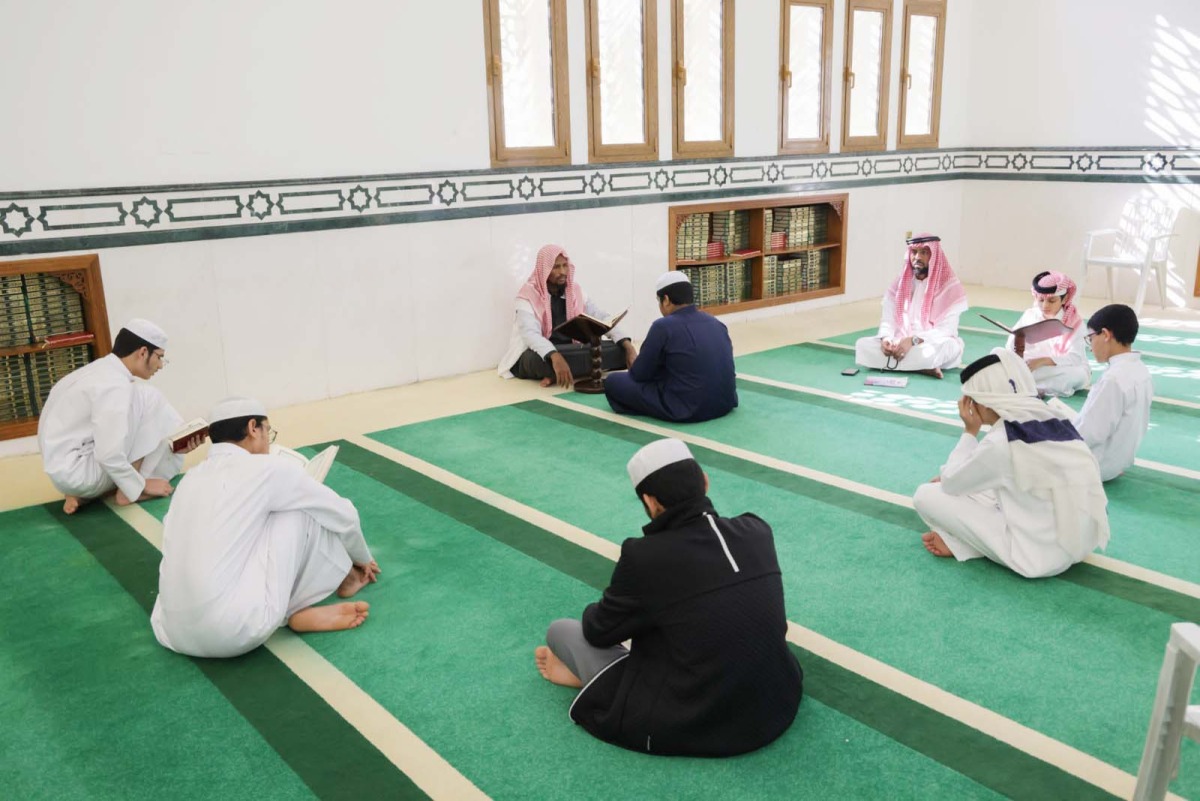

Doha, Qatar – The Ministry of Awqaf and Islamic Affairs successfully concluded its Spring Quran Memorisation and Revision Programme on January 1, 2026, providing focused religious education for 250 students during the school break. The initiative, held at multiple mosques throughout Doha, aimed to strengthen participants’ understanding of and engagement with the Holy Book. This year’s program reflects a continued effort by the Ministry to provide accessible opportunities for Quran study.
Qatar’s Ministry of Awqaf Concludes Successful Quran Memorisation Programme
The spring programme, running from December 21, 2025, to January 1, 2026, took place at three key locations: Al-Emadi Mosque in Al-Thumama, Sheikh Abdulrahman bin Mohammed Al Thani Mosque in Al-Furousiya, and Rawda bint Jassim Al Thani Mosque in Labib. According to the Ministry, this distributed approach was intended to maximize accessibility for students across the country.
The initiative’s primary goal was to provide a productive outlet for students during their spring holiday. Rather than simply recess, the Ministry sought to use this time for spiritual enrichment, according to Fahad Al-Mohammed, Head of the Quran and Quranic Sciences Section at the Department of Da‘wah.
Program Structure and Curriculum
Students were carefully categorized based on their existing level of Quran memorisation. This allowed for a tailored learning experience and ensured appropriate pacing for each group. Participants ranged from those who had already completed the entire Quran, to beginners focusing on the first five juz.
The program’s approach to revision was meticulously planned. Complete memorisers focused on reviewing 15 juz’ at a rate of 30 pages daily, while students memorizing 20 juz’ revised 10 juz’ at 20 pages a day. Students with 15 and 10 juz’ completed between 5 and 8 juz’ of revision daily, and those working on 5 juz’ revisited their entire memorization.
However, the programme extended beyond simple recitation and repetition. A comprehensive educational curriculum was included, focusing on areas like tajweed (the rules of pronunciation) and the study of classical texts. Specifically, the curriculum incorporated lessons on “Tuhfat Al-Atfal” for beginners and “Al-Muqaddimah Al-Jazariyyah” for more experienced students.
Faith-Based Learning and Student Engagement
The Ministry also integrated faith-based sessions into the curriculum, titled “Milestones from the Lives of the Ten Promised Paradise.” These sessions were designed to broaden the students’ religious knowledge and encourage personal development. The aim was to provide a holistic learning experience that combines the technical aspects of Quran recitation with its moral and ethical teachings.
Al-Mohammed emphasized the substantial turnout of 250 students as evidence of the community’s commitment to Quranic education. He indicated the Ministry plans to continue offering similar programs during school breaks in order to facilitate ongoing memorization and review.
The Ministry of Awqaf and Islamic Affairs has a long history of supporting Islamic education in Qatar. These efforts are often aligned with the nation’s broader cultural and religious objectives. The high participation rate in this program further highlights the importance placed on religious learning within Qatari society.
Looking ahead, the Ministry has not yet announced specific dates or details for future Quran memorisation programs. However, it is expected that similar initiatives will be offered during upcoming school holidays, continuing their efforts to foster a deeper understanding of the Holy Quran among students in Qatar. Future programs may also explore incorporating new technologies and pedagogical approaches to enhance the learning experience.