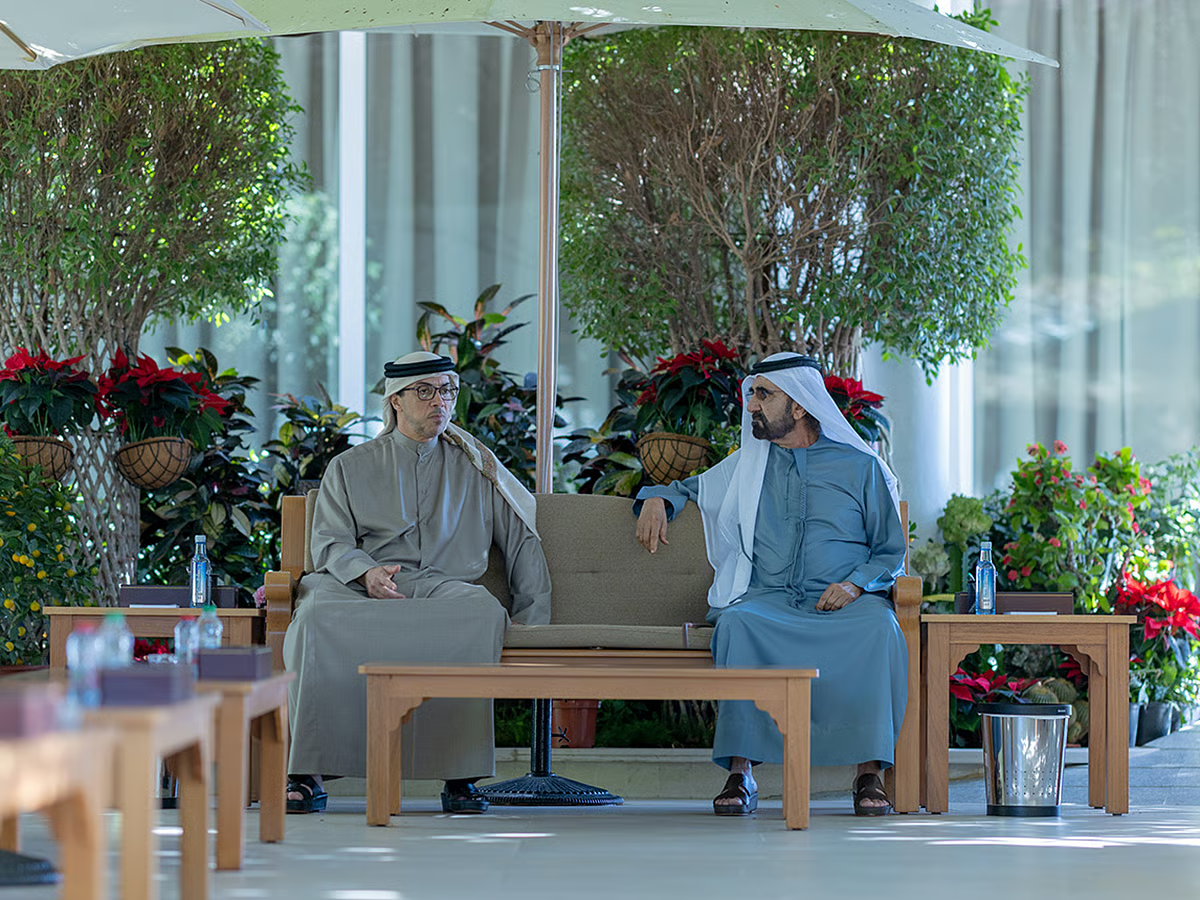

A significant meeting took place in Dubai on Thursday as His Highness Sheikh Mohammed bin Rashid Al Maktoum, the UAE’s Vice President and Prime Minister and Ruler of Dubai, convened with Sheikh Mansour bin Zayed Al Nahyan, also a Vice President, the Deputy Prime Minister and Chairman of the Presidential Court. This UAE leadership discussion, held at Al Marmoom Rest House, addressed ongoing national priorities and future development strategies. Sheikh Maktoum bin Mohammed bin Rashid Al Maktoum, First Deputy Ruler of Dubai, Deputy Prime Minister and Minister of Finance, was also in attendance, signaling a focus on economic and financial alignment.
The meeting occurred on November 2, 2023, at the Al Marmoom Rest House, a traditional meeting location used for strategic discussions among the ruling families. While the specific agenda wasn’t disclosed in official statements, the high-level participation suggests topics of national importance were central to the conversation. This gathering underscores the continued collaboration between key Emirati leaders as the nation navigates regional and global challenges.
Strengthening UAE Leadership and National Vision
The presence of Sheikh Mohammed and Sheikh Mansour represents a consolidation of power and a unified approach to governance within the United Arab Emirates. This type of direct engagement between the two prominent figures is crucial for streamlining decision-making processes and ensuring consistent implementation of government policies. The UAE places high value on cohesive leadership, particularly given its ambitions for diversification and its role on the international stage.
Sheikh Mohammed’s role as the architect of Dubai’s transformation is well-documented. His focus continuously centers on innovation, technological advancement, and sustainable economic growth. Meanwhile, Sheikh Mansour oversees the Presidential Court, which is responsible for a wide range of strategic initiatives and ensuring the smooth running of governmental affairs. These overlapping, yet distinct, portfolios make their combined discussion particularly valuable for effectively coordinating national development.
Economic Coordination and Financial Stability
With Sheikh Maktoum, the Minister of Finance, participating, it’s reasonable to infer that economic matters were a key part of the discussion. The UAE’s economy has shown resilience despite global economic headwinds, but maintaining financial stability and attracting foreign investment require continuous monitoring and strategic planning. According to recent reports from the Central Bank of the UAE, non-oil economic growth remains strong, indicating successful diversification efforts.
The UAE is currently investing heavily in sectors like tourism, logistics, and renewable energy. Coordinated policy and resource allocation among the various emirates, led by figures such as Sheikh Mohammed and Sheikh Mansour, are vital for maximizing the return on these investments. Recent initiatives focused on attracting skilled workers and promoting entrepreneurship further highlight the need for synchronization between federal and local government strategies.
Regional Geopolitics and International Relations
The meeting likely touched upon the evolving geopolitical landscape in the region, particularly concerning ongoing conflicts and diplomatic efforts. The UAE has historically played a mediating role in regional disputes and emphasizes a foreign policy centered on stability and peaceful resolution. The country’s commitment to multilateralism is evident in its active participation in international organizations.
However, the UAE also carefully balances its regional engagement with its close partnerships with global powers. Maintaining these relationships is crucial for securing its economic interests and ensuring its national security. The ongoing discussions regarding the Abraham Accords and the broader normalization of ties with Israel would feature as part of these considerations, according to political analysts familiar with the region.
The UAE also continues to prioritize its defense capabilities, and modernization efforts are regularly reviewed at the highest levels of government. This commitment to security is intended to safeguard the nation’s stability and protect its economic interests. Recent partnerships in the defense sector demonstrate the UAE’s proactive approach to maintaining a strong and modern military.
Focus on Sustainability and Future Technologies
Sheikh Mohammed has been a vocal advocate for sustainable development and climate action. The UAE is preparing to host the COP28 climate conference later this year, and ensuring a successful and impactful event requires focused leadership and coordination. This meeting provides an opportunity to discuss preparations and align national policies with global climate goals.
Furthermore, the UAE is aiming to establish itself as a global hub for innovation and future technologies like artificial intelligence and blockchain. Investing in these areas is seen as critical for diversifying the economy and creating high-skilled jobs. The country has launched several initiatives, including the Emirates AI Council, to accelerate the development and adoption of these technologies. This pursuit of technological innovation is a cornerstone of the UAE’s long-term strategy.
The nation’s commitment to developing a space program underscores its ambition to be at the forefront of technological advancement. This forward-thinking approach is intended to not only strengthen the UAE’s international standing, but also to drive economic growth and inspire future generations. These ambitious projects often rely on the coordination and support of key UAE leadership figures to overcome logistical and financial hurdles.
The frequent meetings between Sheikh Mohammed and Sheikh Mansour, particularly in the lead-up to major events or policy announcements, demonstrate a commitment to proactive governance. While the specific outcomes of Thursday’s gathering remain unconfirmed, it’s likely to have significantly contributed to shaping the UAE’s immediate and long-term agenda. The next step will likely be the dissemination of specific policy directives stemming from the discussions with a timeline for implementation.
Looking ahead, observers will be watching for any official announcements related to economic reforms, sustainability initiatives, and the UAE’s evolving foreign policy stance. The success of COP28 and the continued development of the UAE’s diversified economy will be key indicators of the effectiveness of this ongoing UAE leadership collaboration. Further details regarding how the country plans to address challenges related to economic development, national security and regional stability are anticipated in the coming weeks.