



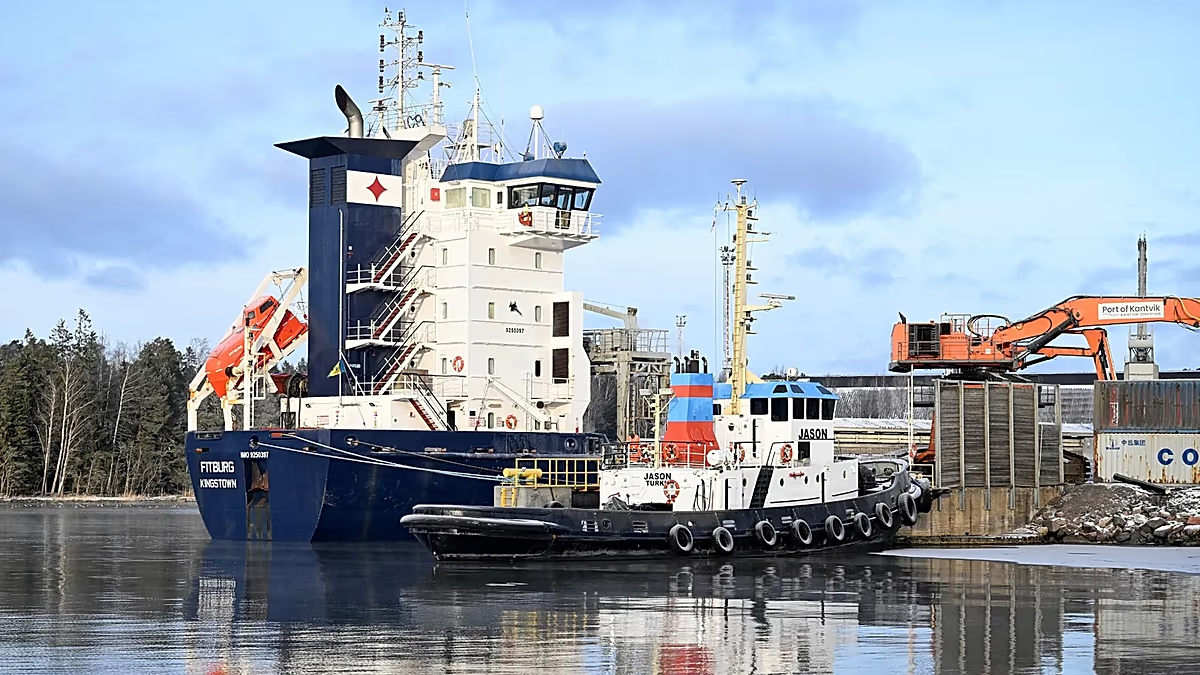

A cargo ship seized by Finnish authorities, initially suspected in the damage to an undersea cable in the Gulf of Finland, was found to be carrying Russian steel potentially violating European Union sanctions. The vessel, the Fitburg, was detained Wednesday en route from St. Petersburg to Israel, and its 14 crew members are being questioned. This incident adds to a growing pattern of activity near critical infrastructure in the Baltic Sea and raises concerns about deliberate sabotage.
Finnish customs officials confirmed Thursday that a preliminary inspection of the Fitburg’s cargo revealed structural steel originating from Russia. Import of such materials is prohibited under existing EU sanctions imposed in response to the war in Ukraine. Investigations are ongoing to determine the full extent of any sanctions violations.
Undersea Cable Damage and Suspicions of Sabotage
The Fitburg, flagged in St. Vincent and Grenadines, is currently under investigation by Finnish police regarding the damage to the telecommunications cable owned by Elisa, a Finnish telecom group. The investigation is being treated as aggravated criminal damage and interference with communications. Two crew members have been placed under arrest, and two more are subject to a travel ban, though their nationalities and specific roles haven’t been disclosed.
This isn’t the first such incident in the Baltic Sea. In December 2023, the Eagle S, another vessel linked to Russia, was investigated for damaging undersea power and communications cables. However, that case was dismissed in October due to a lack of evidence proving intentional damage.
Geopolitical Context and Regional Security
The Baltic Sea is bordered by eight NATO countries and Russia, making it a strategically sensitive region. Hybrid threats, which combine conventional and unconventional tactics, have been a growing concern for the alliance. Many see recent damage to subsea infrastructure – including cables, power lines, and the Nord Stream pipelines – as potential acts of sabotage linked to Russia, particularly following the full-scale invasion of Ukraine in February 2022.
EU foreign affairs chief Kaja Kallas stated Thursday that Europe remains vigilant, emphasizing that its critical infrastructure is at high risk. She highlighted the EU’s commitment to bolstering security measures, including investments in new cables, enhanced surveillance, and increased repair capabilities. Kallas also signaled a focus on addressing the activities of what she termed Moscow’s “shadow fleet,” reportedly used to facilitate these hybrid attacks.
According to Elisa, the damage to their cable has been rerouted without disrupting service to customers. However, the incident underscores the vulnerability of vital communication networks.
Sanctions and the “Shadow Fleet”
The EU has imposed extensive sanctions on Russia following its invasion of Ukraine, targeting various sectors including steel. These sanctions aim to limit Russia’s ability to finance the war. The alleged transport of sanctioned steel highlights the challenges in enforcing these measures.
The term “shadow fleet” refers to a network of vessels used to circumvent sanctions by transporting Russian goods. Reuters reported in September 2023 that Russia is developing a shadow fleet of tankers in an attempt to bypass the G7 oil price cap. This network poses a significant problem for Western efforts to pressure Moscow.
Finnish customs officials are continuing their investigation into whether the Fitburg’s activities constitute a violation of EU sanctions law. The steel cargo remains impounded while authorities clarify its compliance with regulations.
The incident involving the Fitburg emphasizes the ongoing security challenges in the Baltic Sea region and the importance of protecting critical infrastructure. Further investigation will be crucial to determine the full extent of the alleged sanctions violation and whether the damage to the undersea cable was intentional. Monitoring the activities of vessels in the area and strengthening security measures remain key priorities for regional and international partners.