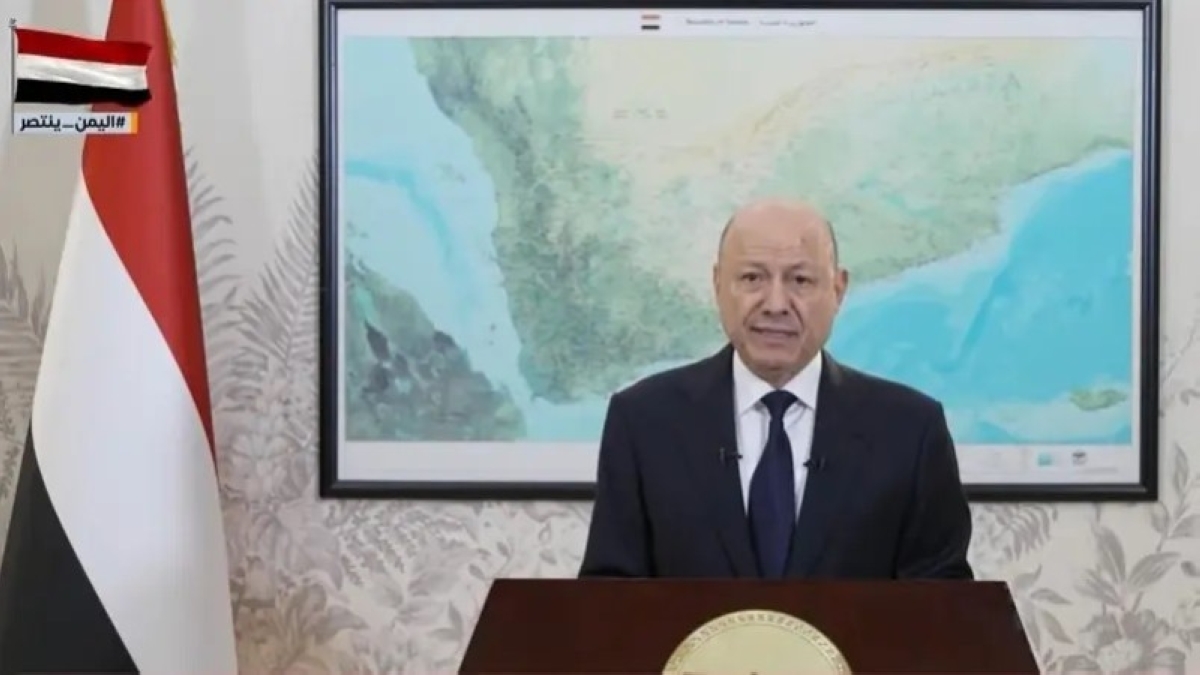

RIYADH — Rashad Al-Alimi, chairman of the Yemeni Presidential Leadership Council, affirmed the importance of continued Saudi support on Thursday, stating that maintaining the strategic Yemen conflict partnership is a national priority for the country. This comes amidst recent adjustments within the Saudi-led coalition supporting the internationally recognized Yemeni government, particularly concerning the role of the United Arab Emirates. Al-Alimi stressed the need to preserve unity and focus on restoring state institutions amid ongoing challenges.
The statements, made during an interview with Al-Arabiya, followed decisions impacting the UAE’s presence in Yemen and highlighted the ongoing instability in key governorates like Hadhramout and Al-Mahrah. According to Al-Alimi, these shifts are “course corrections” intended to better serve the shared objective of resolving the Yemen conflict, and not indicative of broader diplomatic fractures. He also addressed the sensitive issue of the south, emphasizing commitment to a unified national approach.
The Future of the Saudi-Yemen Partnership in the Yemen Conflict
The relationship between Saudi Arabia and Yemen has been central to the ongoing civil war, with Saudi Arabia leading a military coalition in support of the Yemeni government since 2015. This intervention aimed to restore the government of President Abdrabbuh Mansur Hadi, ousted by the Houthi movement, and counter Iranian influence in the region. Al-Alimi’s remarks underscore the Yemeni government’s dependency on this alliance for security and potential reconstruction efforts.
Recent Developments and UAE’s Role
Recent reports indicate a scaling back of the UAE’s direct military involvement in Yemen, particularly its presence in areas like Hadhramout and Al-Mahrah. This has led to speculation about diverging interests within the anti-Houthi coalition and potential power vacuums. Al-Alimi, however, presented the changes as a strategic realignment designed to enhance the overall effectiveness of the coalition in achieving its goals.
He clarified that the decisions were not motivated by escalation or retaliation, but by the practical requirements of the current situation. This suggests a focus on consolidating gains and streamlining operations as peace talks remain stalled. The statement aims to quell concerns that the UAE’s withdrawal will weaken the government’s position or destabilize these strategically important regions.
Addressing Southern Separatist Concerns
The southern issue remains a major point of contention in Yemen. The Southern Transitional Council (STC), backed by the UAE, has repeatedly called for self-determination for South Yemen, leading to clashes with forces loyal to the Presidential Leadership Council. Al-Alimi reiterated the commitment to resolve the southern question within a unified national framework, avoiding further armed conflict.
Additionally, he emphasized that any measures taken will prioritize national unity and the restoration of legitimate state institutions. According to analysts, balancing the demands of the STC with the desire for a unified Yemen poses a significant challenge to the Presidential Leadership Council. A delicate approach is needed to prevent further fragmentation and maintain a semblance of stability.
Meanwhile, Al-Alimi engaged in discussions with U.S. Ambassador to Yemen Steven Fagin on Wednesday. These talks focused on the latest developments in the country and their potential economic and security repercussions, particularly concerning the recent events in Hadhramout and Al-Mahrah. The involvement of the United States highlights the international concern surrounding the Yemen conflict’s impact on regional stability.
Internal Challenges and the Houthi Rebellion
Al-Alimi characterized the current difficulties facing Yemen not as political disagreements, but as an armed rebellion against the authority of the state. He argued that the Houthi movement’s actions threaten Yemen’s sovereignty and could turn the country into a haven for regional instability. This framing seeks to garner broader support for the Yemeni government and legitimize its actions in confronting the Houthi rebels.
The ongoing political instability allows groups like Al-Qaeda in the Arabian Peninsula (AQAP) to exploit the security vacuum, as has been observed in the past in areas like Hadhramout. The Yemeni government, with the support of the Saudi-led coalition, continues to battle both the Houthi rebels in the north and extremist groups in the south, creating a complex and multifaceted security landscape.
The economic situation in Yemen remains dire, with the country facing a severe humanitarian crisis. The humanitarian crisis has been exacerbated by the ongoing conflict, leading to widespread food insecurity, displacement, and a lack of access to essential services. Al-Alimi likely discussed these economic challenges with Ambassador Fagin, seeking potential avenues for increased U.S. assistance.
The Presidential Leadership Council, formed in April 2022, represents an attempt to unify the anti-Houthi forces under a single banner. However, internal divisions and competing interests continue to hamper its effectiveness. Maintaining cohesion within the Council and securing the continued support of key allies like Saudi Arabia are crucial for its success.
Looking ahead, the next critical step will be observing how the adjustments in the Saudi-led coalition’s deployment unfold on the ground, particularly in Hadhramout and Al-Mahrah. The success of the Presidential Leadership Council’s efforts to address the southern issue and engage in meaningful negotiations with the Houthis remains uncertain. Continued monitoring of the security situation, political developments, and humanitarian needs will be essential to understanding the evolving dynamics of the Yemen conflict.