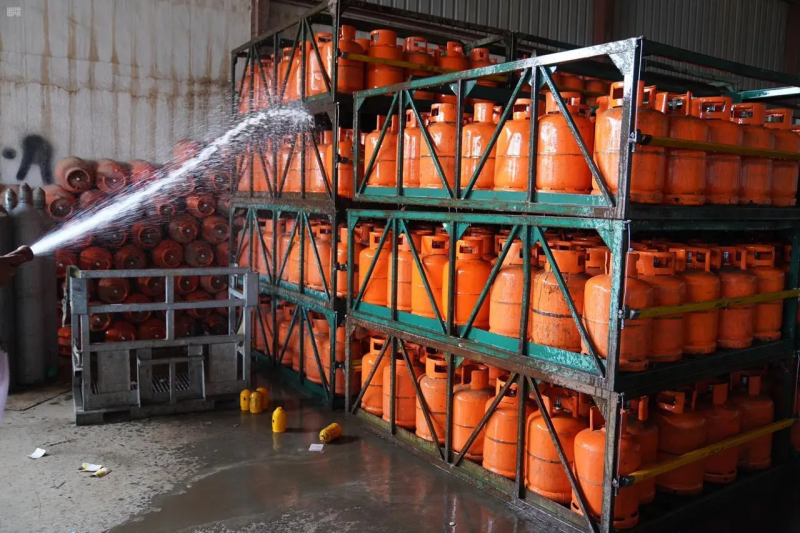

Saudi Arabia’s National Gas and Industrialization Company (GASCO) announced a standardized national pricing structure for liquefied petroleum gas (LPG), effective January 1, 2026. The new regulations unify costs for both household gas cylinders and central fuel tanks across the Kingdom, designed to improve market equity and transparency. This decision affects all consumers of LPG in Saudi Arabia, from residential users to commercial facilities.
The unified pricing sets the cost of an 11-kilogram gas cylinder at 26.23 Saudi Riyal (SR), while a 5-kilogram cylinder will be priced at 11.93 SR. For central gas tanks, the filling tariff will be 1.1770 SR per liter. GASCO has confirmed these prices are inclusive of both transportation expenses and the current Value Added Tax (VAT) rate.
Unified LPG Pricing Aims for Regional Equity in Saudi Arabia
The primary driver behind this move is the reduction of price variations observed across different regions of Saudi Arabia. Previously, logistical costs and local market dynamics contributed to cost discrepancies impacting consumers. According to GASCO, the new structure will ensure a consistent and fair price for all residents, regardless of location.
Additionally, GASCO emphasized its commitment to playing a crucial role in the nation’s ongoing development and economic integration initiatives. This national pricing strategy aligns with larger governmental objectives to optimize resource distribution and ensure essential services are readily available throughout the country.
Addressing Historical Disparities
For years, residents in more remote areas within Saudi Arabia have often faced higher costs for LPG compared to those in major urban centers. This disparity arose from increased transportation expenses and, in some cases, limited competition among local suppliers. The Ministry of Energy has been exploring solutions to standardize pricing for some time, recognizing the impact on household budgets, particularly for lower-income families.
In contrast, residents in and around major production facilities sometimes benefited from lower local costs. Standardizing the price aims to level the playing field and provide predictable expenses for all consumers. The implementation of a nation-wide standard is expected to simplify billing and enhance the overall customer experience regarding gas cylinder prices.
While GASCO has been the primary distributor of LPG throughout much of the Kingdom, the energy sector is undergoing broader reforms related to privatization and increased foreign investment. The unified pricing structure is seen by some analysts as a preparation step for potentially introducing more competition into the market.
Impact on Businesses Utilizing Central Tanks
The new tariff for central gas tanks will affect a wide range of businesses, including restaurants, hotels, and industrial facilities reliant on LPG for cooking, heating, or operational processes. The previous system of fluctuating prices, based on delivery distance and negotiated rates, created unpredictability for business planning.
A fixed rate of 1.1770 SR per liter offers greater cost certainty, which could encourage more businesses to adopt LPG as an energy source. However, businesses with exceptionally large tank capacities might experience noticeable changes in their overall fuel expenditures, depending on their prior pricing agreements.
Furthermore, the standardization of cooking gas prices will likely have a ripple effect on the overall cost of goods and services. Businesses utilizing LPG may choose to adjust their pricing based on the new, predictable fuel costs, potentially impacting consumer prices for items like food and hospitality services.
The move also intends to streamline governmental oversight of LPG distribution and pricing. A unified system simplifies monitoring and compliance, allowing authorities to better enforce regulations and protect consumer interests. This increased governance could also reduce the potential for black market activity or price gouging, particularly during periods of high demand.
GASCO stated it has been collaborating with relevant government agencies to ensure a smooth transition to the new pricing structure. The company is also implementing measures to enhance the efficiency of its distribution network, potentially mitigating any cost increases associated with the standardized pricing. More efficient logistics and economies of scale are anticipated benefits of this consolidation.
Looking ahead, the success of this initiative will depend on effective enforcement of the unified pricing and careful monitoring of its impact on both consumers and businesses. The long-term effects of the LPG price standardization on the broader fuel market – including demand for alternatives like natural gas – remain to be seen. Industry observers are also watching for any potential policy changes related to VAT, which could subsequently affect the final cost of petroleum gas.
The Ministry of Energy is expected to publish detailed guidelines and address potential consumer concerns in the coming months, prior to the January 1, 2026 implementation date. Continuous evaluation and potential adjustments to the pricing structure may be necessary to respond to shifting market conditions and evolving energy demands in Saudi Arabia.