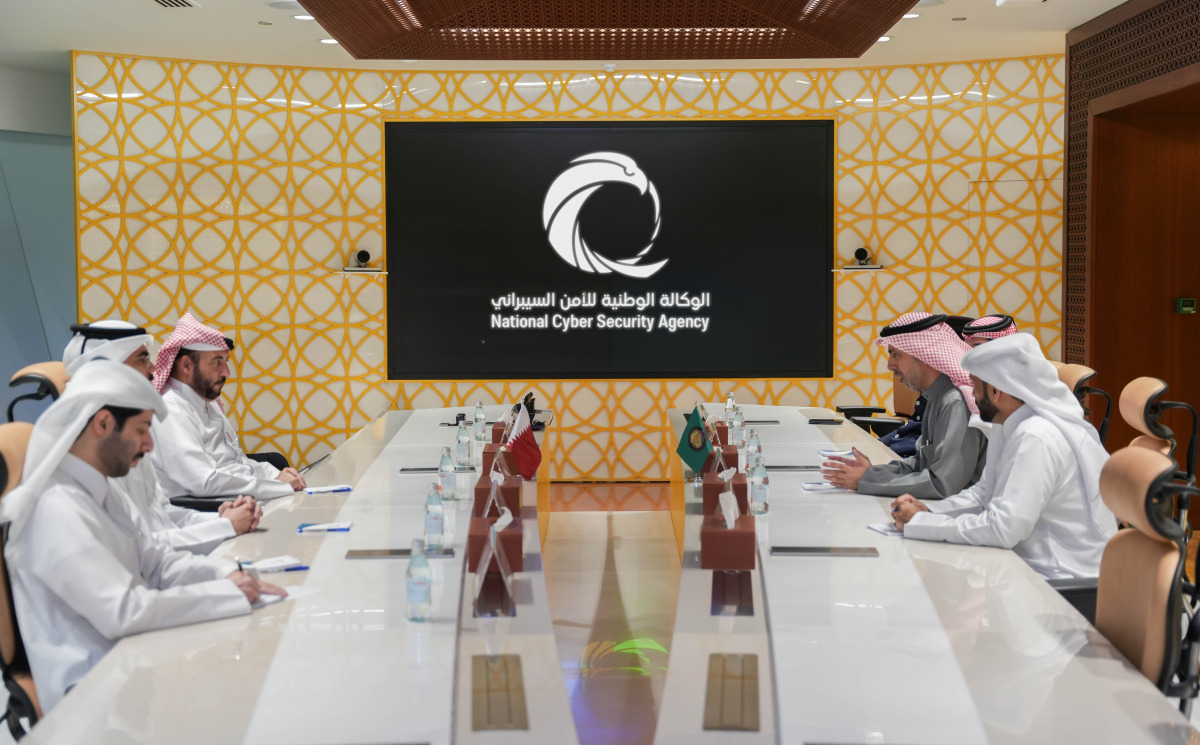

Doha, Qatar – A meeting between the President of Qatar’s National Cyber Security Agency (NCSA), Eng. Abdulrahman bin Ali Al Farahid Al Malki, and the Director of the Gulf Cooperation Council Emergency Management Center (GCCEMC), Brig. Gen. Dr. Rashid bin Mohammed Al-Marri, focused on bolstering cybersecurity collaboration and crisis preparedness. The discussions, held in Doha this week, aim to improve institutional readiness and integrate responses to potential threats across both national and GCC frameworks. This collaboration signals a growing regional emphasis on digital defense and coordinated emergency protocols.
The meeting took place as part of the NCSA’s ongoing efforts to strengthen ties with specialized GCC organizations, according to a statement released by the agency. Officials discussed exchanging expertise and developing unified strategies to address evolving challenges in the digital landscape, particularly those related to critical infrastructure. The date of the meeting was December 31st, 2023, as reported by The Peninsula Qatar.
Enhancing Regional Cybersecurity Cooperation
Qatar has significantly invested in its cybersecurity infrastructure in recent years, recognizing the increasing threat posed by cyberattacks to national security and economic stability. These investments align with the country’s National Vision 2030, which prioritizes innovation and diversification alongside strong national safeguards. The discussions with the GCCEMC represent a logical extension of these national efforts, adding a crucial regional dimension to Qatar’s defense strategy.
Areas of Focus for Collaboration
The scope of collaboration covered several key areas, including information sharing protocols, joint training exercises, and the development of standardized incident response procedures. Improving the resilience of critical national infrastructure – such as energy, finance, and transportation – against cyber threats was a particular point of emphasis. This reflects global concerns about attacks targeting essential services.
The GCCEMC plays a central role in coordinating emergency response efforts among the six member states of the Gulf Cooperation Council: Bahrain, Kuwait, Oman, Qatar, Saudi Arabia, and the United Arab Emirates. Its mandate includes disaster management, public health emergencies, and increasingly, cybersecurity incidents. This broad remit makes it a valuable partner for the NCSA in strengthening regional security.
The NCSA has been actively involved in developing Qatar’s national cybersecurity strategy, which aims to establish a comprehensive framework for protecting the nation’s digital assets. This strategy encompasses legal and regulatory aspects, technological advancements, and capacity building initiatives. Strengthening ties with the GCCEMC will help ensure alignment with regional standards and facilitate a more coordinated response to cross-border cyber incidents.
Additionally, the meeting addressed the need for consistent cyber threat intelligence gathering and analysis. Effective cyber defense relies on a clear understanding of the current threat landscape and the ability to anticipate future attacks. Shared intelligence would improve early warning systems and enable proactive mitigation measures.
Meanwhile, the threat of state-sponsored cyberattacks and ransomware continues to grow globally, as highlighted by several recent international reports. Experts believe that collaborative efforts between nations, like the one discussed in Doha, are essential to countering these sophisticated threats. Qatar’s engagement with the GCCEMC is evidence of its willingness to participate in regional security initiatives.
In contrast to solely national approaches, a coordinated regional strategy can leverage collective resources and expertise, enhancing the overall effectiveness of cybersecurity measures. The NCSA and GCCEMC are aiming to create a more robust and resilient digital ecosystem across the Gulf region.
The outcome of this meeting is expected to be a detailed action plan outlining specific areas for cooperation and a timeline for implementation. The plan will likely address the establishment of joint working groups, the development of common cybersecurity standards, and the organization of regular training exercises. However, the specific details of this plan have not yet been publicly released, and any implementation will depend on ongoing budgetary approvals and political considerations. Future developments will also hinge on the evolving nature of cyber threats and the GCC’s collective response to those challenges.
Further details and official announcements regarding the cooperative enhancements are anticipated in the coming months, potentially coinciding with upcoming GCC security summits and related policy briefings. Cyber resilience and proactive threat intelligence remain at the forefront of Qatar’s and the GCC’s security agendas.