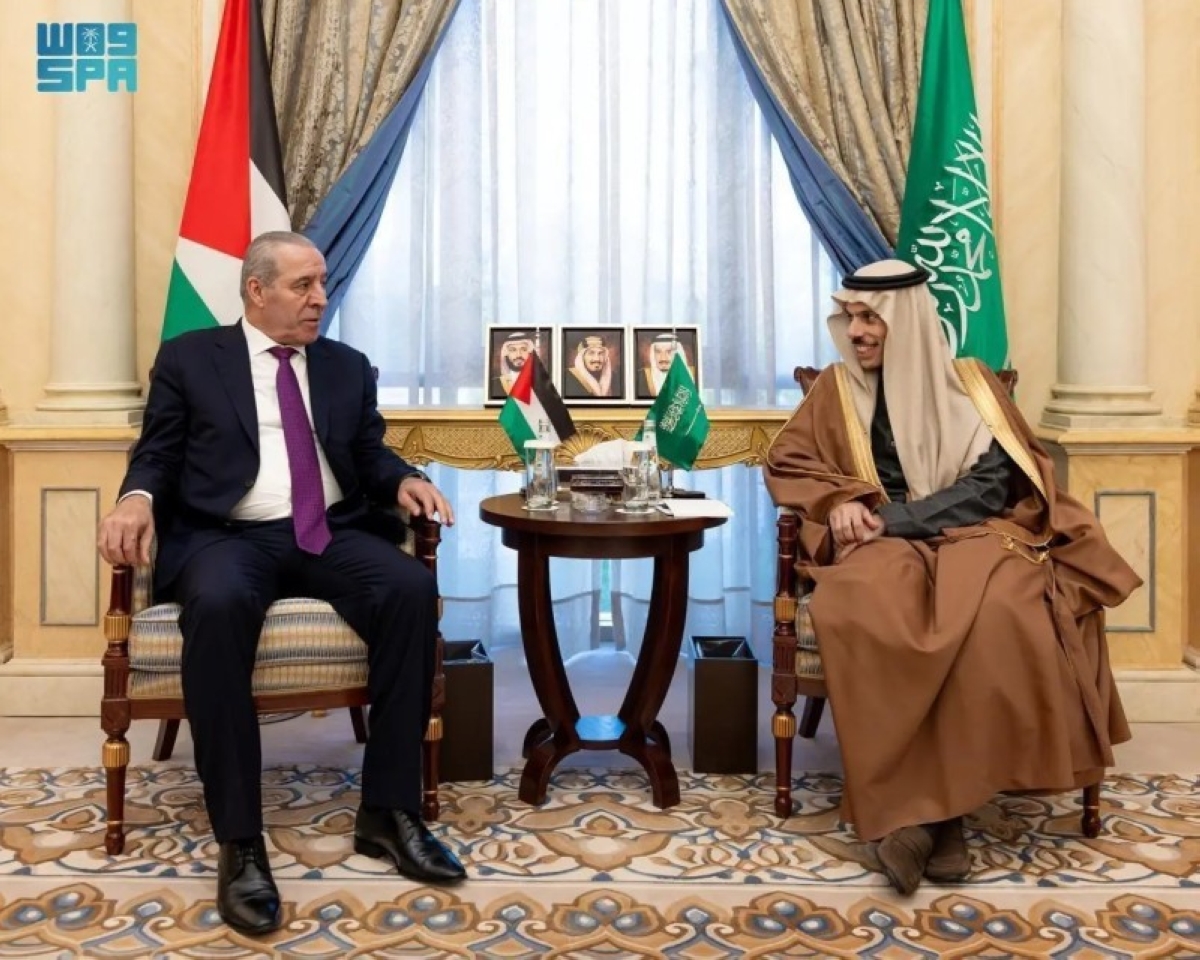

Saudi Arabia reaffirmed its support for Palestinian statehood and economic stability during a meeting in Riyadh on Wednesday between Foreign Minister Prince Faisal bin Farhan and Palestinian Vice President Hussein Al-Sheikh. Discussions centered on the escalating crisis in Gaza and the West Bank, with a particular focus on the urgent need for humanitarian aid and the resumption of financial support to the Palestinian Authority. The meeting underscores Saudi Arabia’s continued commitment to the Palestinian cause and regional peace efforts.
The meeting, held at the Ministry of Foreign Affairs in Riyadh, addressed the deteriorating conditions in both Gaza and the West Bank. According to a statement released by the Saudi Ministry of Foreign Affairs, the two leaders expressed deep concern over ongoing Israeli violations of the ceasefire and increasing tensions in the West Bank. The discussions took place amidst heightened international scrutiny of the conflict and efforts to broker a lasting resolution.
Saudi Arabia’s Role in the Palestinian-Israeli Conflict
Saudi Arabia has historically been a key player in mediating between Israelis and Palestinians, though formal diplomatic relations with Israel remain absent. The Kingdom has consistently advocated for a two-state solution based on the 1967 borders, with East Jerusalem as the capital of a future Palestinian state. This latest meeting signals a continued prioritization of this position, even as regional dynamics shift.
Humanitarian Crisis in Gaza
The situation in Gaza remains dire, with limited access to essential resources like food, water, and medical supplies. Prince Faisal and Al-Sheikh reportedly emphasized the critical importance of ensuring the unhindered delivery of humanitarian assistance to the region. The United Nations and various international aid organizations have repeatedly warned of a looming humanitarian catastrophe if aid flows are not significantly increased.
Additionally, the discussion touched upon the need to address the root causes of the crisis, including the ongoing blockade of Gaza. While Israel maintains the blockade is necessary for security reasons, critics argue it collectively punishes the civilian population and hinders economic development. The Saudi government has previously provided substantial financial aid to Gaza, and Wednesday’s meeting suggests a willingness to continue this support.
Financial Stability for the Palestinian Authority
The Palestinian Authority (PA) is facing a severe financial crisis, exacerbated by Israel’s withholding of tax revenues collected on behalf of the Palestinians. Al-Sheikh reportedly raised the issue of releasing these funds during the meeting, as well as protecting the Palestinian banking system. The PA relies heavily on these revenues to fund essential public services, including healthcare and education.
However, Israel has justified withholding the funds, citing concerns about payments made to individuals convicted of terrorism. This practice has drawn criticism from international observers, who argue it undermines the PA’s ability to govern and contributes to instability. The Saudi government has expressed its support for strengthening the PA’s financial position, viewing it as crucial for achieving a viable peace process.
The Trump Plan and Future Negotiations
Surprisingly, the two leaders also discussed the implementation of the comprehensive peace plan put forward by former U.S. President Donald Trump. The plan, unveiled in 2020, was widely rejected by the Palestinians, who criticized it for being heavily biased in favor of Israel. Despite this rejection, the Saudi government appears to be maintaining a dialogue on the plan’s potential elements.
Meanwhile, the current U.S. administration under President Joe Biden has signaled a shift in policy, emphasizing a more balanced approach to the conflict. The Biden administration has restored aid to the Palestinians and reiterated its support for a two-state solution. The Saudi government’s continued reference to the Trump plan may reflect an attempt to explore all possible avenues for negotiation, even those previously considered unfavorable.
The meeting also highlighted the importance of connecting Gaza to the West Bank, a crucial step towards establishing a geographically contiguous Palestinian state. This connection is currently hampered by Israeli restrictions on movement and infrastructure development. Both Prince Faisal and Al-Sheikh affirmed the need for continued coordination with regional and international partners to achieve this goal and ensure the legitimate rights of the Palestinian people, including the realization of an independent state with East Jerusalem as its capital. The concept of peace negotiations remains central to Saudi Arabia’s foreign policy.
Attending the meeting alongside Prince Faisal were Advisor to the Foreign Minister for Political Affairs Prince Musab bin Mohammed Al-Farhan and Minister Plenipotentiary at the Ministry of Foreign Affairs Manal Radwan. This high-level representation underscores the importance Saudi Arabia places on the issue.
Looking ahead, the immediate focus will likely be on securing increased humanitarian aid for Gaza and resuming financial support to the Palestinian Authority. The success of these efforts will depend on continued diplomatic engagement with Israel and the international community. Further developments regarding the Trump plan and potential regional stability are uncertain, and observers will be watching for any signs of renewed peace talks or a significant shift in the political landscape. The next steps will likely involve further consultations between Saudi Arabia, the Palestinian Authority, and key international stakeholders in the coming weeks.