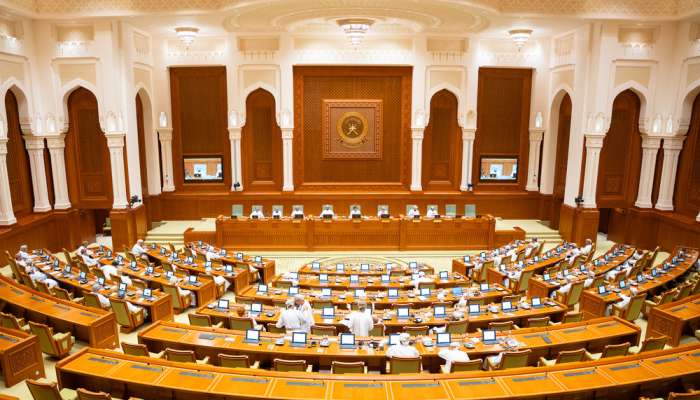

Oman’s Shura Council is gearing up for crucial deliberations next week, commencing its regular sessions 6, 7, and 8 for the third ordinary convening period of its tenth term. A central focus of these sessions will be a comprehensive review of the Ministry of Labour’s policies and initiatives, delivered directly by Minister Dr. Mahad Said Ba’awain. This significant discussion underscores the Council’s commitment to shaping effective Oman labour policy and driving the nation’s economic vision forward. The anticipated debates are critical as Oman continues to diversify its economy and prioritize its workforce.
Shura Council to Discuss Ministry of Labour’s Statement
The upcoming sessions represent a pivotal moment for the Shura Council, marking the first dedicated to examining ministerial statements during this current convening period (2023 – 2027). Sheikh Ahmed Mohammed Al Nadabi, Secretary-General of the Shura Council, emphasized the importance of these discussions, highlighting the Ministry of Labour’s critical role in Oman’s development.
Dr. Ba’awain will present his ministry’s statement publicly on January 7th and 8th, adhering to Article 69 of the Council of Oman’s regulations. This public access aims to foster transparency and encourage broader understanding of the government’s plans for the Omani workforce. The Minister’s presentation will be followed by a dedicated period of questioning and debate from Shura Council members.
Five Key Themes of the Labour Ministry’s Statement
The Ministry of Labour’s statement is structured around five core themes, designed to provide a holistic overview of its work and future direction. These themes comprehensively address the challenges and opportunities facing the labour market in Oman.
Firstly, the statement will delve into the Ministry’s policies, plans, and programmes aligning with the overarching goals of the Tenth Five-Year Plan (2021-2025) and “Oman Vision 2040“. This will include a detailed progress report on the specific programmes assigned to the Ministry, outlining completion rates and identifying any obstacles to success. Understanding these programmes is key to evaluating the government’s progress towards its long-term goals related to employment opportunities.
Secondly, the council members will discuss existing and proposed legislation governing employment in both the public and private sectors. This examination aims to ensure laws are up-to-date, equitable, and supportive of sustainable economic growth.
The third theme focuses on addressing the critical balance between labour supply and demand. The Ministry will present its efforts to bridge this gap, outlining prominent initiatives designed to create sustainable jobs in both the public and private spheres. This also includes an assessment of the current job market and future projections.
Furthermore, the statement will dedicate a significant portion to training and development initiatives. These plans are geared towards empowering Omani nationals with the skills and knowledge required to excel in a diverse range of jobs and professions. Emphasis will be placed on programmes that combine training with guaranteed employment, maximizing the impact of these investments.
Finally, and increasingly important in modern governance, the fifth theme will address the crucial topic of digital transformation and electronic linkage within the Ministry of Labour’s operations. This focus aims to streamline processes, improve efficiency, and enhance access to services for both employers and employees. Digital efficiency is vital for creating a responsive and effective labour market.
Draft Urban Planning Law Also on the Agenda
While the Ministry of Labour’s statement is a primary focus, the Shura Council will also turn its attention to the draft Urban Planning Law during its sixth regular session on January 6th. This law, referred by the government, represents a significant step towards modernizing Oman’s urban development framework.
The discussion on the Urban Planning Law illustrates the breadth of issues the Shura Council addresses, showcasing its role as a key legislative body in Oman. This demonstrates the Council’s commitment to shaping a sustainable and thriving future for the Sultanate.
This meeting regarding the Urban Planning Law will establish a precedent for the detailed consideration of legislation impacting various sectors of Omani society.
Looking Ahead: Shaping Oman’s Future Workforce
The upcoming Shura Council sessions are poised to be highly productive, offering a vital forum for debate and refinement of government policies relating to the Omani workforce. The detailed scrutiny of the Ministry of Labour’s statement, particularly its alignment with Oman Vision 2040, will contribute directly to the nation’s economic progress and enhance employment opportunities for its citizens.
The Council’s dedication to reviewing the draft Urban Planning Law alongside these labour discussions demonstrates a holistic and forward-thinking approach to national development. Citizens are encouraged to follow the proceedings of the Shura Council to stay informed about the decisions shaping Oman’s future and to engage in constructive dialogue about these critical issues.
The discussions surrounding Oman labour policy in these sessions are not just internal governmental processes, but active contributions towards a more prosperous and equitable future for all Omanis. We can expect impactful insights to emerge, paving the way for strategic improvements in the nation’s workforce and overall economic landscape.