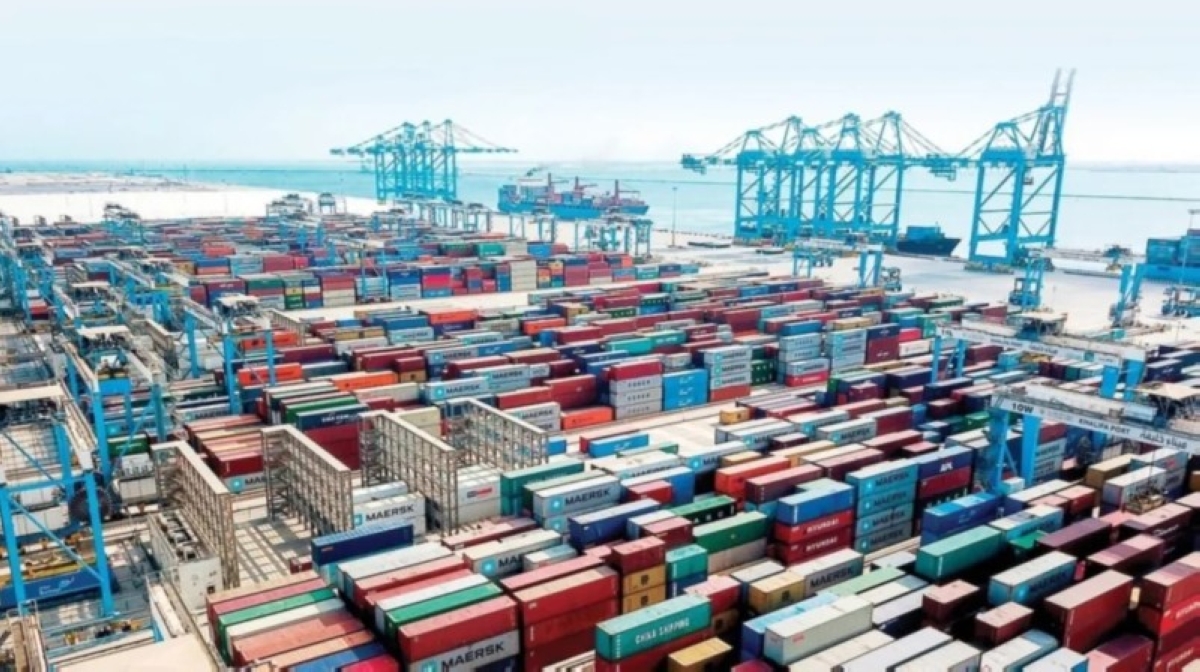

Saudi Arabia experienced significant growth in its service exports during the third quarter of 2025, increasing by 26.5 percent to SR58.2 billion, according to a recent report from the General Authority for Statistics (GASTAT). This rise indicates a strengthening of the Kingdom’s non-oil economy and its increasing role in the global services market. Simultaneously, service imports also saw an increase, though at a more moderate rate of 5.3 percent, reaching SR120.8 billion during the same period.
The data, released this week, covers the period of July through September 2025 and compares it to the same timeframe in 2024. This growth in both exports and imports reflects broader economic trends within Saudi Arabia, driven by Vision 2030 initiatives aimed at diversifying the national economy and attracting foreign investment. The report provides a detailed breakdown of the various service sectors contributing to these figures.
Growth in Saudi Arabia’s Service Exports
Travel services were the dominant driver of service exports, contributing SR33.8 billion to the total. This sector’s performance is closely tied to the Kingdom’s expanding tourism industry, fueled by investments in entertainment, cultural attractions, and improved infrastructure. Personal travel accounted for a substantial 88.6 percent of all travel exports.
Key Export Sectors
Beyond travel, air transport services represented a significant portion of the export market, valued at SR9.7 billion, or 39.6 percent of total transport exports. Maritime and land transport services followed, though with comparatively smaller shares. This highlights the importance of connectivity and logistics in facilitating Saudi Arabia’s trade.
Additionally, the report indicates a growing contribution from the technology sector, with exports of communications, computing, and information services reaching SR2.4 billion. Communications services comprised over half of this total, at 51.4 percent. Exports in other business services, government services, and construction also showed positive growth, reaching SR2.3 billion, SR2.1 billion, and SR1.9 billion respectively.
These figures suggest a diversification of the Saudi Arabian economy beyond traditional oil revenues, aligning with the goals of Vision 2030. The increasing contribution from sectors like technology and business services demonstrates a shift towards a knowledge-based economy.
In contrast, service imports were largely dominated by transportation, reaching SR32.3 billion. Maritime transport accounted for the largest share of this, at 47.5 percent, followed by land and sea transport imports. This reflects the Kingdom’s reliance on imports for goods and materials needed for its ongoing development projects.
Travel services imports also represented a substantial portion of the total, reaching SR30.8 billion, with personal travel constituting approximately 91.4 percent. This indicates significant spending by residents traveling abroad, or by visitors within the Kingdom utilizing imported travel-related services. Imports of construction services amounted to SR18.5 billion, while other business services and government services accounted for SR14.5 billion and SR6.1 billion respectively.
The increase in service imports, while smaller than the growth in exports, is consistent with the Kingdom’s ambitious infrastructure projects and its efforts to attract foreign expertise. The demand for construction and business services, in particular, reflects the ongoing development and modernization of the Saudi economy. The growth in international trade is a key component of this expansion.
However, the substantial difference between service exports and imports – a deficit of over SR62 billion – suggests that Saudi Arabia still relies heavily on imported services to support its economic activities. Addressing this imbalance will be a key challenge for policymakers.
According to GASTAT, the data collection methodology adheres to international standards, ensuring comparability with other nations. The report utilizes a combination of surveys, administrative data, and statistical modeling to generate its estimates. The accuracy of these figures is subject to ongoing review and refinement.
Looking ahead, the next GASTAT report covering the fourth quarter of 2025 is expected in early 2026. Analysts will be closely watching to see if the growth in service exports continues at the same pace, and whether the Kingdom can narrow the gap between exports and imports. The impact of ongoing geopolitical events and global economic conditions will also be crucial factors to monitor, as these could influence both demand for Saudi services and the cost of imports.
Further analysis will be needed to determine the long-term sustainability of these trends and their implications for Saudi Arabia’s economic future.