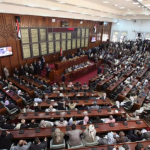

Qatar’s Cabinet, chaired by Deputy Prime Minister and Minister of State for Defense Affairs Sheikh Saoud bin Abdulrahman bin Hassan Al-Thani, approved a new measurement law and several international agreements on Wednesday. The updated legislation aims to modernize standards for weights and measures, enhance consumer protection, and foster fair market competition within the country. The decisions reflect Qatar’s ongoing efforts to align its regulations with international best practices and strengthen its economic and diplomatic ties.
Minister of Justice and Minister of State for Cabinet Affairs Ibrahim bin Ali Al Mohannadi announced the approvals following the meeting held at the Amiri Diwan. Alongside the new law, the Cabinet also endorsed amendments to the organizational structure of the Ministry of Municipality and memoranda of understanding (MoUs) with Indonesia and Egypt.
New Measurement Law to Modernize Standards
The draft law on measurement is intended to supersede Law No. 21 of 1972, which governed standards, weights, and measures. According to the ministry, the existing law is outdated and no longer adequately addresses the complexities of modern metrology. The new legislation will establish clear guidelines for accrediting measurement and calibration bodies, ensuring accuracy and reliability in commercial transactions.
Key Objectives of the New Law
The updated law seeks to achieve several key objectives. These include aligning Qatar’s measurement systems with international standards, protecting consumers from inaccurate measurements, and promoting a level playing field for businesses. The ministry stated that the law will also facilitate trade and investment by reducing technical barriers.
Additionally, the Cabinet approved a decision to restructure some administrative units within the Ministry of Municipality. This reorganization is part of a broader strategy to improve institutional performance, accelerate digital transformation, and enhance the quality of government services provided to citizens and residents. The ministry anticipates that these changes will streamline operations and improve efficiency.
Strengthening International Cooperation
Qatar continues to actively pursue diplomatic and economic partnerships with countries around the globe. The Cabinet approved a draft MoU with the Republic of Indonesia to establish a framework for regular political consultations on issues of mutual interest. This agreement aims to strengthen bilateral relations and enhance cooperation on regional and international matters.
Meanwhile, a draft MoU was also approved to facilitate joint cooperation between the Public Prosecution of Qatar and the Public Prosecution of the Arab Republic of Egypt. This collaboration is expected to enhance legal cooperation, particularly in areas such as combating crime and exchanging legal expertise. These agreements demonstrate Qatar’s commitment to multilateralism and international collaboration.
The Cabinet also reviewed reports on Qatar’s participation in the second session of the Qatari-Uzbek Joint Committee for Economic, Trade and Technical Cooperation, held in Tashkent in October 2023, and the 41st session of the Standing Committee for Economic and Commercial Cooperation (COMCEC) of the Organization of Islamic Countries, which took place in Istanbul in November 2023. The reports indicate progress in strengthening economic ties with both Uzbekistan and other member states of the OIC. Further details on specific outcomes from these meetings were not immediately available.
The approved draft law on measurement will now proceed through the standard legislative process, which includes review by the Shura Council. A timeline for its enactment has not yet been announced, and the specific details of the implementing regulations remain to be seen. Stakeholders will be watching for further announcements regarding the implementation of these new policies and agreements in the coming months, particularly concerning the impact on standards and trade within Qatar.