






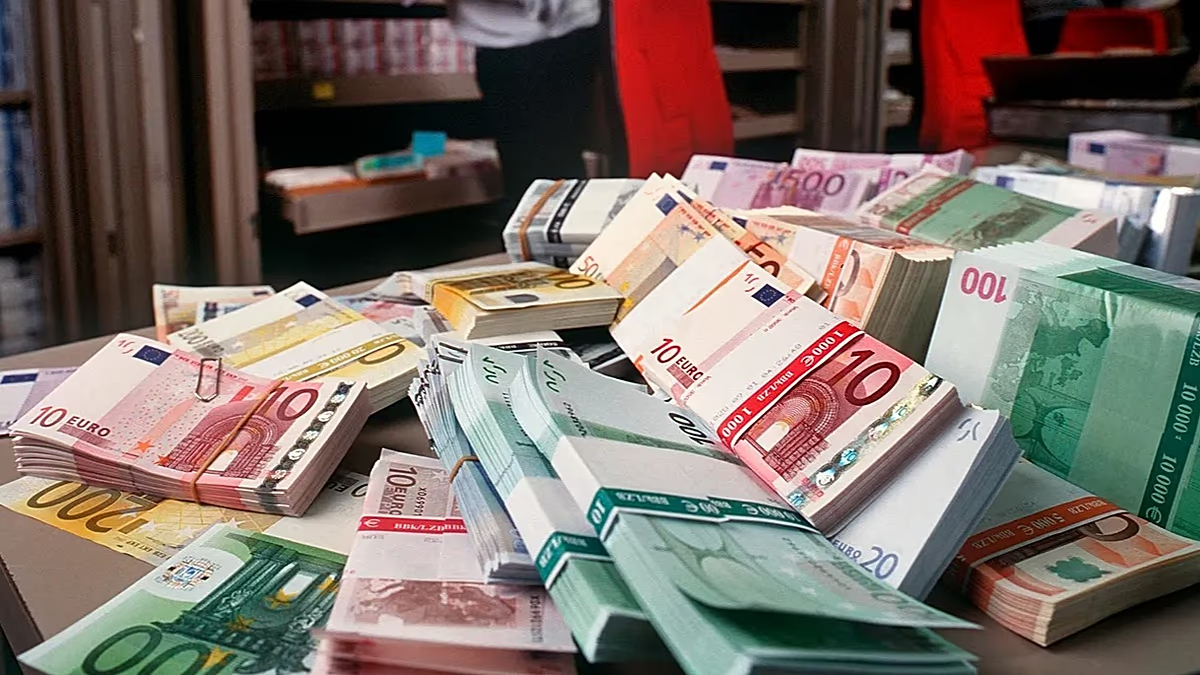

Bulgaria is set to adopt the euro as its official currency on January 1, 2026, marking a significant milestone for the Balkan nation and the Eurozone. The move, years in the making, will replace the Bulgarian lev and aims to stimulate economic growth and deepen European integration. This transition impacts 6.5 million people and represents a major shift in Bulgaria’s financial landscape.
The country formally began the process of joining the Eurozone in 2018, after being a member of the European Union since 2007. Bulgaria has now met the stringent requirements, known as the Maastricht criteria, including price stability, sound public finances, and exchange rate stability. Specifically, the nation reported an inflation rate of 2.7% in 2024, public debt at 24% of GDP, and a public deficit of 3% of GDP.
Economic Implications of Euro Adoption in Bulgaria
Brussels and Sofia anticipate that adopting the euro will provide a substantial boost to the Bulgarian economy. A key benefit is expected to be increased confidence in the currency and greater attractiveness to foreign investors. Petar Ganev, Senior Research Fellow at the Institute for Market Economics, explained to Euronews that the change will boost confidence in purchasing power and attract investment in various sectors.
The adoption of the euro is also projected to positively influence Bulgaria’s credit rating. Currently, credit agencies reportedly deduct points due to the country’s currency board arrangement, which pegs the lev to the euro. Ganev notes this deduction has persisted for 28 years and will be removed with full Eurozone membership.
However, the impact on inflation is expected to be minimal. Ganev attributes the primary drivers of inflation to increased consumption, supported by inflationary budget policies and record levels of credit, particularly in the housing market.
Political Challenges and Transition Details
Despite the economic benefits, Bulgaria faces political headwinds that could complicate the transition. The government recently resigned in mid-December following weeks of protests focused on corruption. This instability has led to frequent elections – seven in the last three years – and difficulties in timely budget approvals, with the country entering four of the last five years without a finalized budget.
The conversion rate has been fixed at 1 EUR = 1.95583 BGN. To prepare citizens and businesses, prices have been displayed in both currencies since August 2025. A dual circulation period will be in effect during January 2026, allowing both the lev and the euro to be used for cash payments.
The move comes despite Bulgaria being the poorest country in the European Union, with a GDP per capita lower than other member states. Over 21% of the population lives below the poverty line, presenting an ongoing social and economic challenge.
Future Outlook & Secondary Keywords: Economic Integration
Looking ahead, the successful integration of Bulgaria into the Eurozone will hinge on maintaining political stability and effectively managing the transition. While the euro adoption is expected to foster economic integration with the wider European economy, ongoing structural reforms will be crucial to address longstanding issues such as poverty and corruption. The International Monetary Fund closely monitors Bulgaria’s economic progress.
The coming months will be critical as businesses and individuals navigate the currency switch. Monitoring the impact on prices, trade, and investment will be key to assessing the long-term success of Bulgaria’s euro adoption. Stay updated on the latest developments concerning Bulgaria’s economy and the Eurozone expansion.