





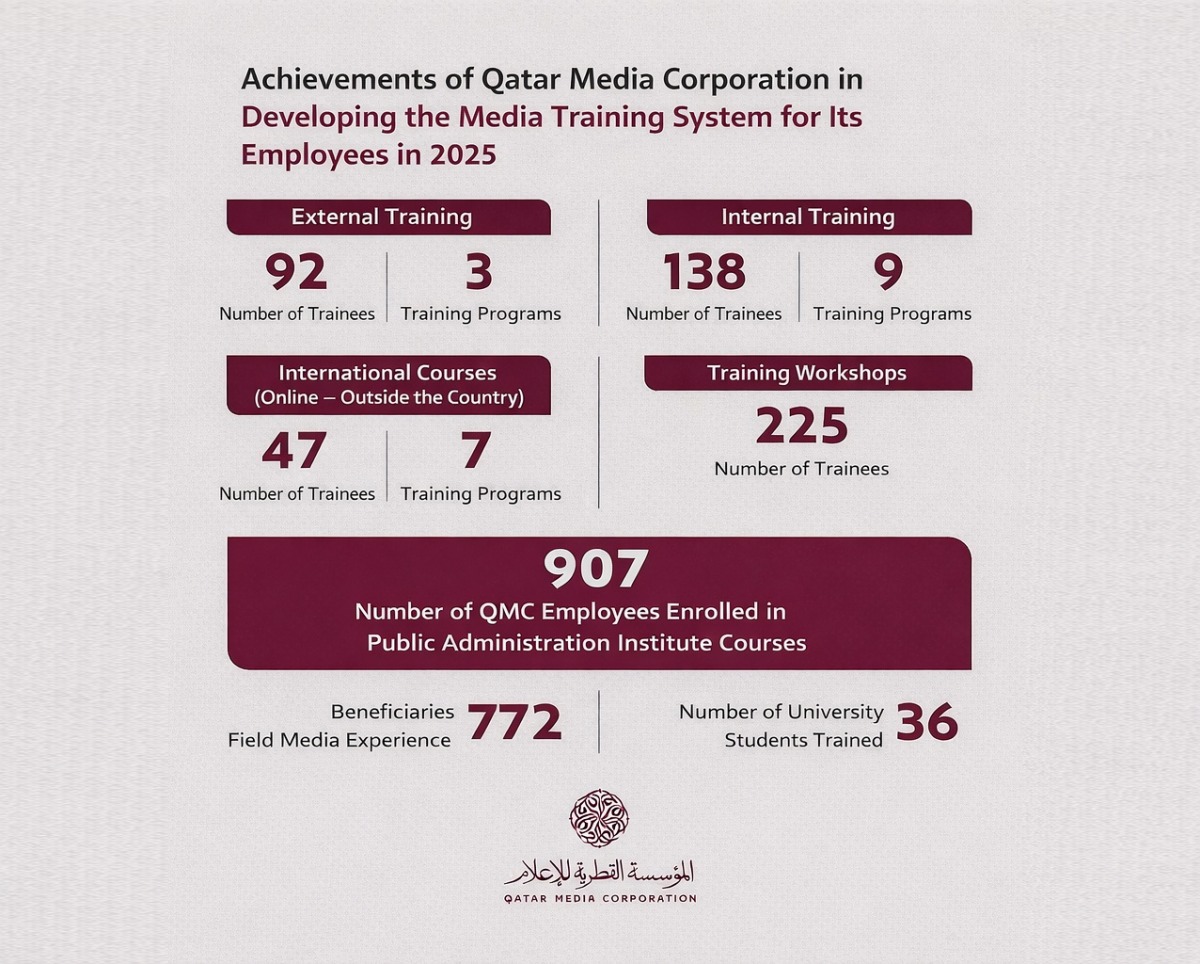

Qatar Media Corporation (QMC) has solidified its role as a key institution in the development of the nation’s media sector, with a recent report indicating 772 professionals benefitted from its training programs in 2025. These initiatives, conducted by QMC’s Human Resources Division, focused on enhancing skills and adapting to the evolving landscape of journalism and broadcasting within Qatar. The programs represent a continued investment in building a robust and competitive national media presence.
The training efforts were carried out in collaboration with various partner entities and encompassed both internal workshops and external opportunities for QMC affiliates, as well as broader participation from media practitioners across the country. Data released by QMC shows a concentrated effort throughout the year to improve professional competence in a range of areas relevant to modern media production and dissemination. These efforts are particularly important as Qatar continues to build its international communication capabilities.
Strengthening Qatar’s Media Sector Through Training
QMC’s commitment extends beyond simply offering courses; it highlights a strategic focus on building a sustainable pipeline of skilled professionals for Qatar’s growing media industry. According to the corporation, the training programs address gaps in knowledge and expertise, equipping individuals with the tools necessary to thrive in a dynamic environment.
The need for ongoing professional development within the media is driven by several factors. Rapid technological advancements, the rise of social media, and the increasing demand for multimedia content all require journalists, broadcasters, and other media professionals to continuously update their skills. Furthermore, Qatar’s role as a prominent international hub necessitates a high standard of media quality and expertise.
Focus Areas of the Training Programs
While specific course details haven’t been fully disclosed, the broad scope of the program suggests a focus on core areas of digital media. These likely include training in video editing and production, social media management, data journalism, and online content creation.
Additionally, the training initiatives likely covered traditional journalistic skills, such as reporting, writing, and ethical considerations. A strong foundation in these fundamentals remains vital even as the media landscape shifts toward digital platforms. The evolution of media requires specialized skillsets, alongside consistent reinforcement of core professional values.
However, investment in human capital isn’t limited to technical skills, and it reflects a broader strategy with cultural implications. Effective communication requires an understanding of audience needs and cultural nuances. Qatari media is uniquely positioned to provide national and regional perspectives.
The benefits of these training programs extend beyond individual professional growth. A more skilled media workforce contributes to a higher quality of news and information available to the public, fostering greater civic engagement and informed decision-making. This also strengthens Qatar’s ability to tell its own stories and project its image on the global stage.
In contrast to some nations prioritizing external media consultation, Qatar’s dedication to internal capacity building—fueled by QMC—underscores its long-term ambition for self-reliance in its information systems. This approach is fiscally and strategically advantageous as Qatar builds towards greater national visibility.
It’s worth noting that the Qatari government actively supports initiatives to enhance the media landscape. The Ministry of Culture and Sports, for example, has launched programs aimed at promoting national content and supporting local media outlets. QMC’s efforts align directly with these broader governmental objectives.
Looking ahead, QMC has not publicly articulated plans beyond 2025, but similar large-scale training initiatives are anticipated, especially given the ongoing national vision for a knowledge-based economy. The next steps for QMC will likely include evaluating the impact of the 2025 programs and identifying emerging skill gaps within the developing media sector. Monitoring future program announcements and assessing their alignment with global trends will be crucial to understanding the evolving direction of Qatar’s media development.
The success of these programs will also depend on securing continued partnerships with leading academic institutions and industry experts, ensuring that the training provided remains relevant and cutting-edge.
The Peninsula Qatar is a key source of information on this and other Qatari news events.