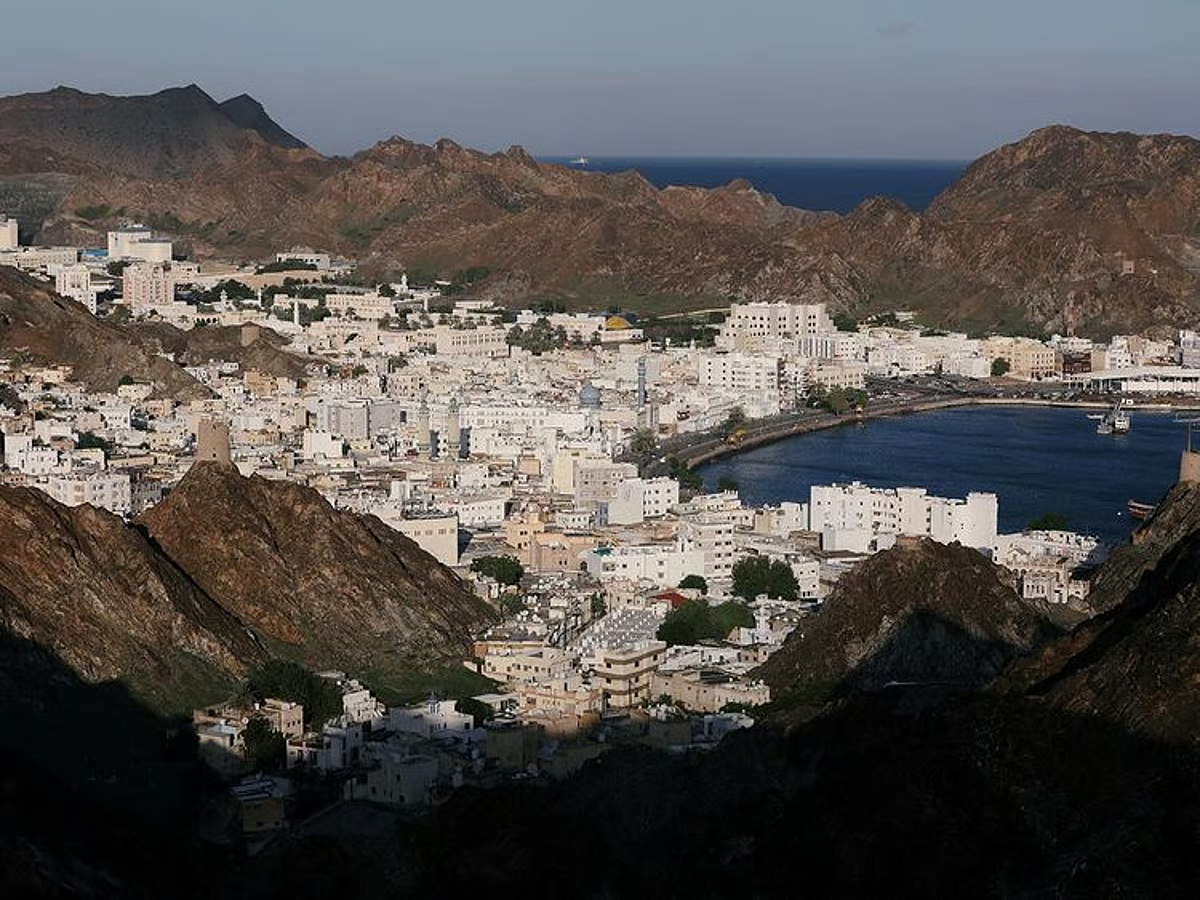

Oman’s hospitality industry is experiencing significant growth, with strong performance continuing into the end of the third quarter of 2025. Room revenues rose by nearly 21% during this period, while hotel employment increased by 5.3%, indicating a heightened demand for services. This positive trend is fueled by both domestic and international tourism, alongside strategic government investment and evolving travel preferences.
The sector’s resilience is evident in its ability to absorb new hotel supply and extend peak seasons, with average occupancy levels reaching 52.8%, a 13% increase year-over-year. According to Khalil Al Zadjali, Head of Oman at Cavendish Maxwell, these factors position the industry for continued expansion and diversification in 2026 and beyond. The growth in tourism in Oman is a key driver of this economic success.
Strong Airport Traffic Supports Hospitality Growth
Oman’s airports collectively handled 11.2 million passengers between January and September 2025, a modest 0.7% increase compared to the same period last year, data from the Civil Aviation Authority shows. Despite ongoing limitations at Suhar International Airport, total passenger volume is projected to reach 14.6–14.9 million by year-end, surpassing the 14.5 million recorded in 2024.
Muscat International Airport remains the primary gateway, accounting for approximately 87% of all passenger traffic with 9.8 million travelers. Salalah International Airport secured the second position, serving 1.4 million passengers, with over 20% of those arrivals coinciding with the Khareef season, a popular time for visitors to the Dhofar Governorate. This seasonal influx significantly boosted both air travel and hotel occupancy in the region.
Domestic Tourism Remains a Cornerstone of Oman’s Hotel Performance
Guest arrivals at 3–5 star hotels reached 1.7 million during the first nine months of 2025, representing a 9% increase year-on-year. Notably, Omani nationals comprised 38% of these guests, highlighting the importance of domestic tourism to the sector’s overall health. European visitors followed as the second-largest group, accounting for 24.7% of arrivals, with travelers from Asia (14.4%) and the Gulf Cooperation Council (GCC) (9.9%) also contributing significantly.
Government initiatives, such as the #WithinOman campaign and the Experience Our Winter program, have played a crucial role in stimulating travel demand among both local residents and targeted international markets. These campaigns aim to promote a more balanced visitor base and mitigate the impact of seasonal fluctuations. The success of these programs demonstrates a proactive approach to travel and tourism management.
Steady Room Rates Reflect Occupancy Focus
The average room rate (ARR) across 3–5 star hotels averaged OMR45.3 ($117) for the nine-month period, showing only a slight increase of 1.3% compared to the previous year. This indicates that hotel operators are prioritizing maximizing occupancy rates and optimizing room inventory management over aggressively raising prices.
Peak rates were observed in April, February, and August, aligning with public holidays and the Khareef season. This suggests a correlation between key events and travel periods and the ability of hotels to command higher prices during these times.
Expanding Hotel Supply to Meet Growing Demand
Oman’s total hotel room inventory stood at 36,300 rooms at the end of the third quarter of 2025. Approximately 1,000 additional rooms are scheduled for completion before the end of the year. Further expansion is planned, with an anticipated addition of 3,000 rooms by 2027, bringing the total to 40,300.
The Ministry of Heritage and Tourism has actively fostered sector development by signing 36 usufruct agreements valued at OMR100 million ($260 million). These agreements encompass a range of projects, including hotels, resorts, and integrated tourism complexes distributed across various governorates, contributing to a more diversified accommodation landscape. This expansion of the hospitality industry is carefully planned to avoid oversupply.
Looking ahead, analysts anticipate a continued positive outlook for Oman’s hospitality sector. This stability is expected to be supported by consistent international arrivals, a strengthening domestic tourism market, and ongoing investments in infrastructure. The market’s demonstrated ability to absorb new capacity suggests a sustainable growth trajectory. The next key indicator to watch will be the full-year passenger and hotel occupancy figures released in early 2026, which will provide a more comprehensive assessment of the sector’s performance and future potential.
Nivetha Dayanand is Assistant Business Editor at Gulf News, where she spends her days unpacking money, markets, aviation, and the big shifts shaping life in the Gulf. Before returning to Gulf News, she launched Finance Middle East, complete with a podcast and video series.
Her reporting has taken her from breaking spot news to long-form features and high-profile interviews. Nivetha has interviewed Prince Khaled bin Alwaleed Al Saud, Indian ministers Hardeep Singh Puri and N. Chandrababu Naidu, IMF’s Jihad Azour, and a long list of CEOs, regulators, and founders who are reshaping the region’s economy.
An Erasmus Mundus journalism alum, Nivetha has shared classrooms and newsrooms with journalists from more than 40 countries, which probably explains her weakness for data, context, and a good follow-up question.
When she is away from her keyboard (AFK), you are most likely to find her at the gym with an Eminem playlist, bingeing One Piece, or exploring games on her PS5.