




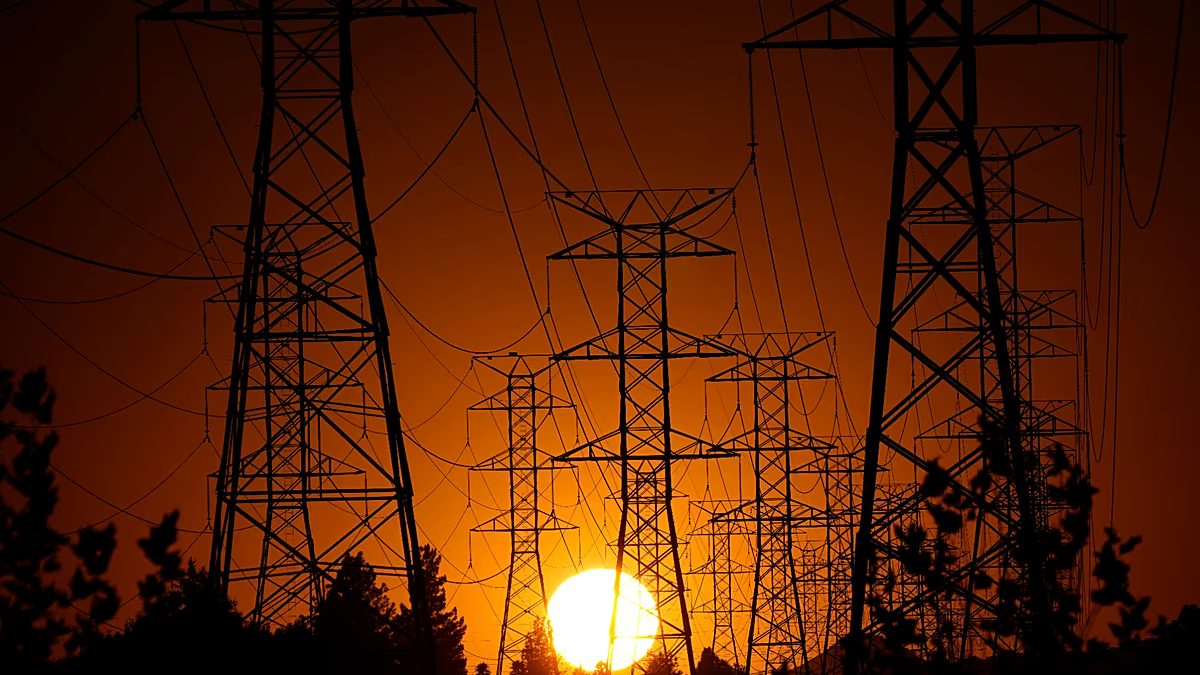

The European Commission faces increasing pressure to ensure fair competition as EU member states invest heavily in upgrading their power grid infrastructure. Portuguese Energy and Environment Minister Maria da Graça Carvalho emphasized the need for a level playing field to prevent artificial price reductions in one country from unfairly impacting industries in others, potentially destabilizing the single market. This comes as the EU plans a massive overhaul of its energy networks to boost resilience and lower costs.
Carvalho, who played a key role in negotiating the electricity market law, warned that uneven access to funding for grid upgrades could create distortions. Countries with greater financial capacity might lower electricity prices through substantial investment, giving their industries an advantage. Portugal, along with Spain, is actively advocating for policies that address these concerns and promote equitable competition within the energy sector.
The Need for Fair Competition in Power Grid Infrastructure Upgrades
The European Commission recently outlined a plan requiring an estimated €1.2 trillion in investment to modernize the bloc’s electricity grid by 2040. A significant portion of this funding is expected to come from a combination of EU funds, national budgets, and private investment. However, the allocation of these resources and the potential for state aid are raising concerns about a fragmented market.
Portugal utilizes a tariff system to fund infrastructure investments, with costs distributed among all electricity consumers. According to Carvalho, maximizing EU funding is crucial to minimize the burden on individual households. “The more we go after the European funding, the less we get into the tariff,” she stated.
The European Connecting Facility will contribute to three key projects involving Portugal – two electricity interconnections across the Pyrenees and a green hydrogen pipeline connecting Portugal and Germany. Additional funding may come from the EU’s annual budget, and the Portuguese government is exploring loan options to further support network investments.
Financial Mechanisms and Competitive Concerns
Carvalho highlighted the importance of financial tools like Power Purchase Agreements (PPAs) and Contracts for Difference (CfDs) in fostering competitiveness. These agreements, often between public and private entities, can help stabilize investment and encourage renewable energy development. However, she cautioned that the use of state guarantees within CfDs requires careful oversight to avoid violating competition laws.
The Commission is also focused on increasing the uptake of renewable energy to power the grid. Portugal is already a leader in this area, generating approximately 71% of its energy from hydropower, solar, and wind in 2024, according to the Portuguese agency for external trade and investment.
Despite progress in renewable energy, Portugal’s aging power grid has presented challenges. A recent incident in April, originating in Spain, left around 60 million people in the dark, underscoring the need for improved connectivity and resilience. The Iberian interconnection with Spain is nearing 25%, exceeding the 2030 target, but the connection with France remains significantly lower, at just 2-3%.
Following the April blackout, Portugal and Spain jointly urged France to prioritize increasing electricity interconnection. Critics suggest France’s preference for nuclear energy has historically hindered progress on these projects, a claim Paris denies. However, a recent agreement between French authorities and the European Investment Bank for the two Pyrenees interconnections offers a glimmer of hope.
Portugal’s Green Hydrogen Ambitions
Beyond electricity, Portugal is positioning itself as a key player in the emerging green hydrogen market. The H2Med project, a collaboration between Portugal, Spain, France, and Germany, aims to transport renewable hydrogen from 2032. While part of the Commission’s grid plan, Carvalho acknowledged the project may face delays due to the complexities of the technology.
Portugal’s strategy centers on producing hydrogen to attract industries, particularly those in the chemical and petrochemical sectors with high hydrogen demands. The country believes that locating industries near hydrogen production facilities will be more viable than long-distance transport in the near future. “Our goal is to show Europe…that Portugal has plenty of green renewable energy and the potential to produce green hydrogen,” Carvalho said.
As the EU moves forward with its ambitious grid modernization plans, maintaining a level playing field and ensuring fair competition will be critical. The Commission’s role in overseeing investment and preventing market distortions will be closely watched by member states like Portugal, who are eager to capitalize on their renewable energy resources and contribute to a more sustainable and resilient European energy system. The coming months will be crucial in determining the final financing structure and the pace of implementation for these vital infrastructure projects.