
Oman is rapidly embracing innovation and technology as cornerstones of its future economic growth. A key element of this transformation is the successful integration of higher education with the demands of the modern industrial landscape. Universities and colleges across the Sultanate are actively working to bridge the gap between academic theory and practical application, and artificial intelligence is proving to be a particularly potent tool in this endeavor. This shift is not just about equipping students with skills; it’s about fostering a culture of problem-solving and creating opportunities for commercialization of innovative ideas.
Bridging the Academic-Industrial Divide with Artificial Intelligence
For years, a common critique of higher education has been its disconnect from the realities of the job market. Oman’s higher education institutions are proactively addressing this concern through a comprehensive strategic vision. This vision centers on direct collaboration with industry, focusing on tackling real-world challenges, and developing specialized training programs. The emphasis on artificial intelligence (AI) within these programs is particularly noteworthy, given its pervasive impact across numerous sectors. These initiatives aim to ensure graduates possess not only theoretical knowledge but also the practical skills employers require.
The Rise of Applied AI Projects in Omani Universities
Graduation projects have emerged as a crucial component of this strategy. Rather than being purely academic exercises, these projects are increasingly designed to apply learned concepts to tangible problems faced by Omani businesses and communities. This approach allows students to gain invaluable hands-on experience and demonstrate their capabilities to potential employers. Furthermore, successful projects often have the potential to evolve into viable startups and contribute to the nation’s growing innovation ecosystem.
The focus on practical application extends beyond simply using AI tools. Students are encouraged to understand the underlying principles, adapt existing technologies to specific needs, and even develop novel AI solutions. This fosters a deeper level of understanding and prepares them for the continuous learning required in the rapidly evolving field of technology. Digital transformation is a key driver behind this demand for AI-skilled professionals.
UTAS Al Musannah: A Leading Example
The University of Technology and Applied Sciences (UTAS) in Al Musannah, South Al Batinah Governorate, is at the forefront of this movement. Several projects developed by UTAS Al Musannah students have showcased the successful integration of AI into various industrial processes. These projects aren’t confined to computer science departments; they span multiple disciplines, demonstrating the cross-cutting nature of AI’s applications.
Spotlight on Innovation: Detecting Traffic Violations with AI
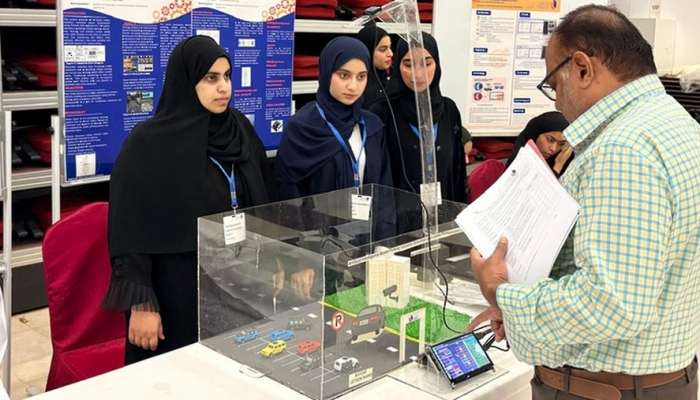
One particularly impressive project from UTAS Al Musannah, developed by Khalsa Salem Al Maqbali, Sara Khalid Al Amri, and Nusaiba Suleiman Al Maqbali, focuses on “Detecting Traffic Violations on University Campuses.” This system leverages the power of artificial intelligence to enhance safety and streamline traffic management within the university environment.
The project utilizes a sophisticated combination of AI technologies, including YOLOv8 for object detection, OCR (Optical Character Recognition) for license plate reading, and OpenCV-DNN for efficient processing. These technologies work together to create a robust and accurate system capable of identifying and recording traffic violations in real-time. The team chose NVIDIA Jetson Nano as the prototyping platform, highlighting its ability to handle complex AI tasks efficiently.
The system operates by employing cameras strategically positioned around parking lots and roadways. It automatically counts vehicles and verifies parking compliance. Upon detecting a violation – such as unauthorized parking or exceeding the speed limit – the system accurately identifies the vehicle’s license plate and prepares an automated fine notification. This eliminates the need for manual monitoring and reduces the potential for human error.
Recognition and Future Implications
The innovative nature of this project has garnered significant attention. Recently, the team was invited to present their work at an international conference organized by the prestigious Institute of Electrical and Electronics Engineers (IEEE). This recognition underscores the quality of education and research being conducted at UTAS Al Musannah and highlights Oman’s growing presence in the global technology arena.
The success of projects like this demonstrates the immense potential of integrating artificial intelligence into practical solutions. As Oman continues to prioritize innovation and technology solutions, we can expect to see even more groundbreaking applications of AI emerge from its universities and colleges. This will not only benefit the nation’s economy but also contribute to a safer, more efficient, and more sustainable future. Furthermore, the development of these skills is crucial for Oman’s long-term competitiveness in the global market.
The future looks bright for AI development in Oman. We encourage students, researchers, and industry professionals to continue collaborating and pushing the boundaries of what’s possible. Explore the opportunities available at UTAS Al Musannah and other Omani institutions to contribute to this exciting transformation. Share this article with your network to spread awareness of the innovative work being done in Oman’s higher education sector.