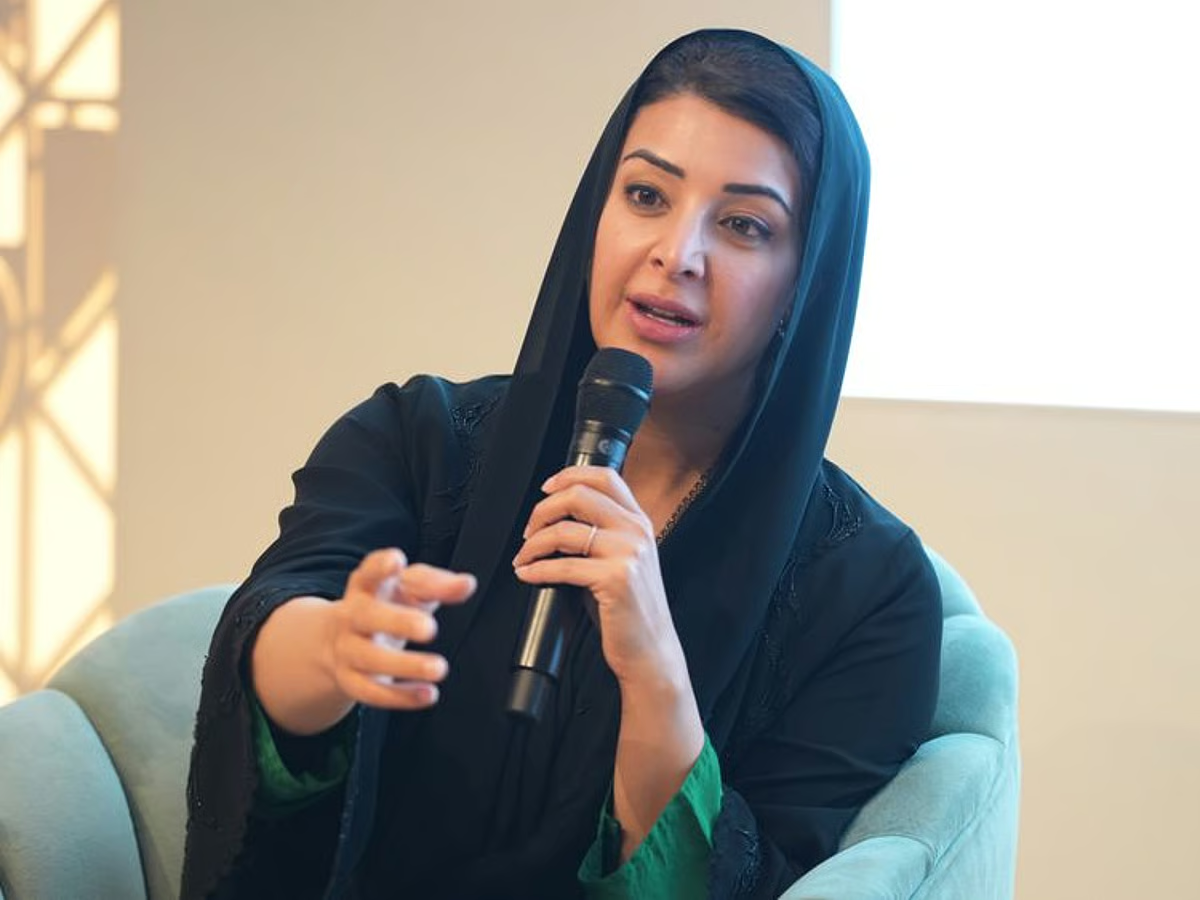

The United Arab Emirates (UAE) has voiced support for a United Nations assessment mission to El Fasher, Sudan, a city facing a severe humanitarian crisis. Minister of State for International Cooperation Reem Al Hashimy emphasized the need for sustained and predictable humanitarian access to the city, following months of siege and deprivation. The mission aims to evaluate the conditions and facilitate the delivery of aid to civilians impacted by the ongoing conflict.
The UN assessment team arrived in El Fasher, North Darfur, on June 18th, according to statements from the UAE Ministry of Foreign Affairs. This move comes after repeated calls from international organizations for improved access to the region, where a rapidly deteriorating situation threatens the lives of hundreds of thousands of people. The UAE’s statement underscores the urgency of the situation and the importance of upholding international humanitarian law.
The Crisis in El Fasher and the Need for Humanitarian Access
El Fasher has been largely cut off from aid deliveries for months due to fighting between the Sudanese Armed Forces (SAF) and the Rapid Support Forces (RSF). The conflict, which erupted in April 2023, has spread across Sudan, displacing millions and creating a widespread food security crisis. North Darfur, and El Fasher specifically, has become a focal point of the fighting, exacerbating existing vulnerabilities.
Impact on Civilians
Reports from aid organizations detail dire conditions within El Fasher, including severe shortages of food, water, medicine, and essential supplies. The prolonged siege has left the civilian population particularly vulnerable, with hospitals overwhelmed and malnutrition rates rising sharply. Access restrictions have also hindered the ability of humanitarian workers to reach those in need and provide critical assistance.
According to the United Nations Office for the Coordination of Humanitarian Affairs (OCHA), the situation in El Fasher is among the most concerning in Sudan. The fighting has disrupted agricultural production and trade routes, further compounding the humanitarian emergency. The lack of access prevents a full assessment of the needs, making it difficult to plan and implement effective aid programs.
However, the UAE’s statement highlights that simply having access isn’t enough. Al Hashimy stressed the need for access to be “sustained and predictable,” rather than a one-time event. This implies a requirement for guarantees of safety and security for aid workers and the consistent opening of corridors for the delivery of supplies.
Previous Attempts and Obstacles
Prior attempts to deliver aid to El Fasher have faced significant obstacles, including bureaucratic hurdles, security concerns, and deliberate obstruction by warring parties. The UN has repeatedly called for all sides to respect international humanitarian law and allow unimpeded access for humanitarian organizations. Negotiations to secure safe passage for aid convoys have often stalled or been unsuccessful.
Meanwhile, the broader conflict in Sudan continues to escalate, with reports of widespread human rights abuses and a growing risk of atrocities. The fighting has also triggered a massive displacement crisis, with millions of Sudanese fleeing their homes to neighboring countries or seeking refuge within Sudan itself. This internal displacement adds further strain on already limited resources.
In contrast to the challenges in El Fasher, some areas of Sudan have seen limited improvements in humanitarian access. However, these gains are fragile and dependent on the evolving security situation. The UAE has been a significant contributor to humanitarian aid efforts in Sudan, providing financial assistance and logistical support to various organizations.
UAE’s Role and International Response
The UAE has consistently advocated for a peaceful resolution to the conflict in Sudan and has urged all parties to prioritize the needs of civilians. The Ministry of Foreign Affairs stated that the country remains committed to supporting efforts to alleviate the suffering of the Sudanese people. This commitment includes working with the UN and other international partners to ensure the effective delivery of humanitarian aid.
Additionally, the UAE has been actively involved in diplomatic efforts to mediate a ceasefire between the SAF and the RSF. These efforts have yielded limited results so far, but the UAE continues to engage with both sides in an attempt to find a path towards a sustainable peace. The country’s strategic position and relationships in the region give it a unique role in facilitating dialogue.
The international community has largely condemned the violence in Sudan and has called for an immediate end to the fighting. Several countries and organizations have pledged financial assistance to support humanitarian efforts, but the scale of the crisis requires a significantly greater response. The UN has launched a revised humanitarian appeal for Sudan, seeking billions of dollars to address the growing needs.
The success of the UN assessment mission in El Fasher is crucial for determining the next steps in the humanitarian response. The mission’s findings will inform the development of a comprehensive plan to deliver aid to the city and surrounding areas. The report is expected to detail the specific challenges faced by aid organizations and recommend measures to improve access and security.
Looking ahead, the UN Security Council is expected to discuss the situation in Sudan in the coming days. A key focus of the discussion will be the implementation of the assessment mission’s recommendations and the establishment of a mechanism to monitor and ensure sustained humanitarian access. The situation remains highly volatile, and the future of the humanitarian response in El Fasher and across Sudan remains uncertain.