
The United Arab Emirates (UAE) is actively expanding its global economic footprint through a series of Comprehensive Economic Partnership Agreements (CEPAs). The recently enacted CEPA with Chile, which came into force in November 2025 after being signed in July of the previous year, represents a significant step in this strategy. This agreement aims to boost non-oil trade and encourage investment between the two nations, with a particular focus on key sectors.
The UAE’s Ministry of Economy announced the full implementation of the Chile CEPA, building on a growing network of such agreements designed to diversify the nation’s economy and strengthen its position as a global trade hub. The deal follows similar partnerships with India, Israel, and Turkey, and signals a broader push towards deeper economic integration with Latin America. Negotiations are also underway for a similar agreement with Peru, further demonstrating the UAE’s regional ambitions.
Understanding the UAE’s CEPA Strategy and the Chile Agreement
The UAE’s CEPA program is a cornerstone of its “We the UAE 2031” vision, a national strategy for economic growth. This vision prioritizes diversifying away from reliance on hydrocarbons and fostering a more resilient and competitive economy. CEPAs are designed to eliminate or reduce tariffs, streamline customs procedures, and promote investment flows, ultimately increasing trade volume and economic cooperation.
The CEPA with Chile specifically targets several strategic sectors for enhanced collaboration. These include infrastructure development, renewable energy projects, logistics services, ensuring food security, and advancements in technology. According to the Ministry of Economy, the agreement is expected to eliminate tariffs on 99% of traded goods, creating substantial opportunities for businesses in both countries.
Key Sectors Expected to Benefit
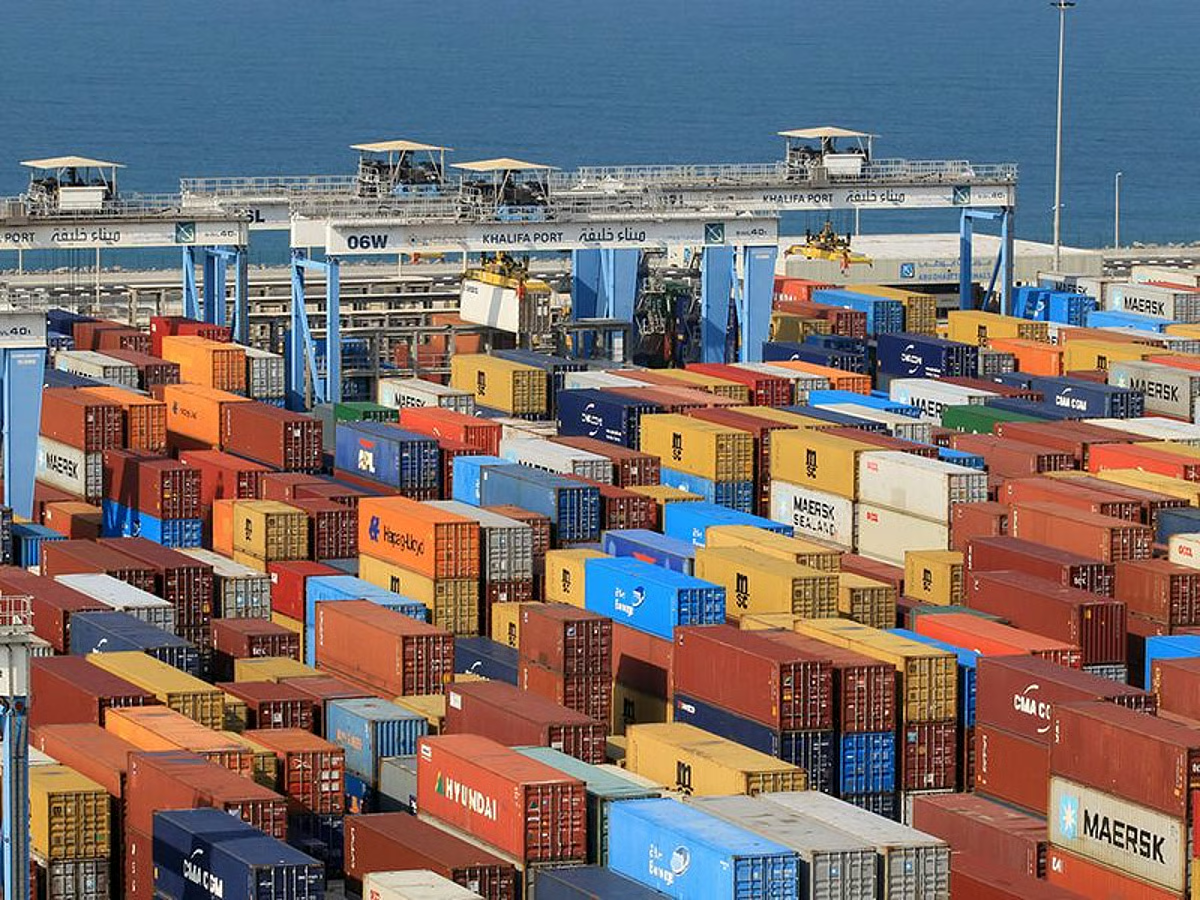
Infrastructure projects in Chile are anticipated to attract significant UAE investment, particularly in areas like port development and transportation networks. The UAE has a strong track record in large-scale infrastructure financing and expertise, making it a natural partner for Chile’s ongoing development plans.
The energy sector, with a focus on renewables, is another area of potential growth. Chile is committed to transitioning to a cleaner energy matrix, and the UAE’s investments in solar and wind power could play a crucial role. Furthermore, the agreement aims to facilitate collaboration in the development of green hydrogen technologies.
Food security is a growing concern globally, and the CEPA seeks to address this by promoting agricultural trade and investment. Chile is a major exporter of fruits, vegetables, and seafood, while the UAE is actively seeking to diversify its food sources and enhance its domestic production capabilities. Logistics and supply chain improvements are also central to this goal.
Implications for Trade and Investment
The implementation of the CEPA with Chile is expected to have a positive impact on bilateral trade, which currently stands at a relatively modest level. The UAE aims to increase its non-oil exports to Chile significantly over the next few years, capitalizing on the reduced tariffs and improved market access. The agreement also includes provisions to protect intellectual property rights and promote fair competition.
Beyond trade, the CEPA is designed to stimulate foreign direct investment (FDI) in both directions. Chilean companies may be attracted to invest in the UAE’s diversified economy, while UAE businesses are likely to explore opportunities in Chile’s resource-rich and stable political environment. This increased investment is expected to create jobs and drive economic growth in both countries.
The UAE’s broader strategy of pursuing CEPAs is also influencing its relationships with other nations in the region. The ongoing negotiations with Peru, for example, are expected to follow a similar framework to the Chile agreement, focusing on reciprocal benefits and long-term economic cooperation. This regional approach is intended to establish the UAE as a key economic partner in Latin America.
However, the success of the CEPA will depend on several factors, including the effective implementation of the agreement’s provisions and the ability of businesses to adapt to the new trading environment. Political and economic stability in both countries will also be crucial for sustaining the momentum of increased trade and investment. The impact of global economic conditions, such as inflation and supply chain disruptions, could also pose challenges.
Analysts suggest that the UAE’s CEPA program is part of a wider trend towards regionalization of trade, as countries seek to diversify their supply chains and reduce their dependence on global powers. This shift is driven by geopolitical uncertainties and a desire for greater economic resilience. The UAE is positioning itself to benefit from this trend by forging strong economic ties with key partners around the world, including through initiatives like the India-UAE CEPA.
The Ministry of Economy has indicated that it is actively pursuing further CEPA negotiations with a range of countries across Asia, Africa, and the Americas. The goal is to establish a network of agreements that will cover a significant portion of the global economy, further solidifying the UAE’s position as a leading trade and investment hub. The next major deadline to watch is the expected completion of the CEPA negotiations with Peru, currently anticipated by the end of 2025, although this timeline remains subject to ongoing discussions and potential unforeseen circumstances.