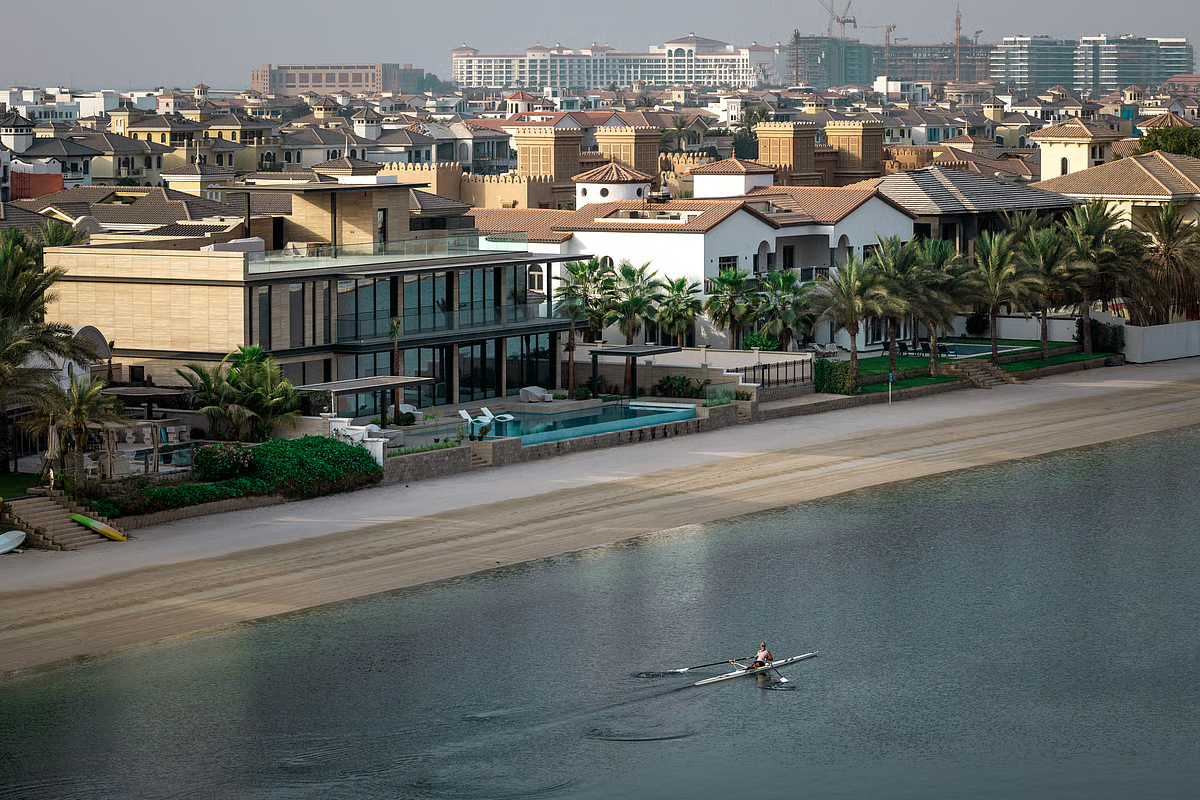

Dubai’s real estate market continues to demonstrate remarkable resilience, with average freehold villa values increasing 206% since post-pandemic levels and now exceeding 2014 peak values by 86%, according to Arabian Gulf Properties Chairman Badar Rashid AlBlooshi. This sustained growth signals a transition towards a more mature and sustainable cycle, driven by investor and end-user demand for quality properties in prime locations. The market’s performance is attracting both domestic and international investment, solidifying Dubai’s position as a global property hotspot.
Dubai Real Estate: A Shift Towards Sustainability
AlBlooshi emphasized that the scale and consistency of gains indicate a structural shift in demand, moving away from speculative investment towards a focus on enduring value. This shift is supported by data from ValuStrat, which shows annual capital growth for villas reaching 25.5% in 2025, outpacing apartment growth for another year. However, a significant milestone was reached as apartment prices have now surpassed their 2014 peak, indicating a healthier market balance and a more sustainable cycle than previous booms.
Villa and Apartment Performance
While villas continue to lead in price appreciation, the apartment sector is gaining momentum. Mid-market apartment communities, including Remraam, Dubai Silicon Oasis, The Greens, and Dubai Land Residence Complex, have experienced substantial annual gains, reflecting steady population growth and demand from both end-users and investors. This broad-based growth suggests increasing accessibility within the property market.
Prime Locations Drive Growth
Price growth has been most pronounced in established, supply-constrained villa communities. ValuStrat highlighted Jumeirah Islands, Palm Jumeirah, Green Community West, The Meadows, Victory Heights, and Mudon as top performers, all characterized by integrated master planning, mature infrastructure, and limited new development. These attributes are increasingly decisive in an increasingly selective market.
Luxury districts are also maintaining strong momentum. Palm Jumeirah, Dubai Hills Estate, Al Barari, Downtown Dubai, and Business Bay continue to attract capital from global buyers seeking long-term security. This demand is bolstering the luxury property segment and contributing to Dubai’s reputation as a safe haven for high-net-worth individuals.
Five Years of Consistent Expansion
Independent data from Knight Frank reinforces the picture of sustained strength. Dubai’s residential market has now recorded five consecutive years of quarterly price growth, with average values rising 10% year-on-year by the end of Q3 2025. Transaction volumes have reached historic levels, with over 148,000 home sales worth Dh401.7 billion recorded in the first nine months of the year, according to the consultancy.
Faisal Durrani, partner and head of research for MENA at Knight Frank, noted this extraordinary activity underscores Dubai’s growing appeal. However, the pace of growth is beginning to moderate after years of rapid acceleration. Durrani indicated this slowing is typical of a maturing cycle, rather than a sign of a market reversal.
Ultra-Prime Market Outperforms
Dubai’s ultra-prime segment continues to defy global trends. In Q3 alone, 103 homes sold for more than $10 million, generating transaction values exceeding $2 billion – a 54% annual increase. The highest sale of the quarter was a seven-bedroom mansion at Asora Bay in La Mer, which sold for Dh350 million. Will McKintosh, Knight Frank’s head of residential for MENA, stated the luxury market is now supported by long-term holders, rather than speculative activity.
Supply Considerations and Future Outlook
While demand remains robust, analysts are closely monitoring supply. Knight Frank estimates that nearly 331,000 homes could be completed between 2026 and 2030, exceeding historical delivery rates. However, this risk is not evenly distributed. There has been a 14% reduction in listings below Dh1 million, while sales in that segment have increased, while stock above Dh25 million is rising faster than transactions.
This divergence suggests any market cooling would likely surface first in specific price bands. Freehold ownership remains a key draw, offering full control, rental income potential, and eligibility for long-term residency visas, including the 10-year Golden Visa for properties valued above Dh2 million. AlBlooshi stated Dubai’s regulatory framework and economic vision continue to reinforce confidence in the investment landscape.
Knight Frank expects further moderation in 2026, not a reversal. Prime residential prices are forecast to rise around 3%, while the broader market is expected to grow closer to 1%. Analysts will be watching transaction volumes and the rate of new project launches closely in the coming months to assess the market’s trajectory and potential for further stabilization.