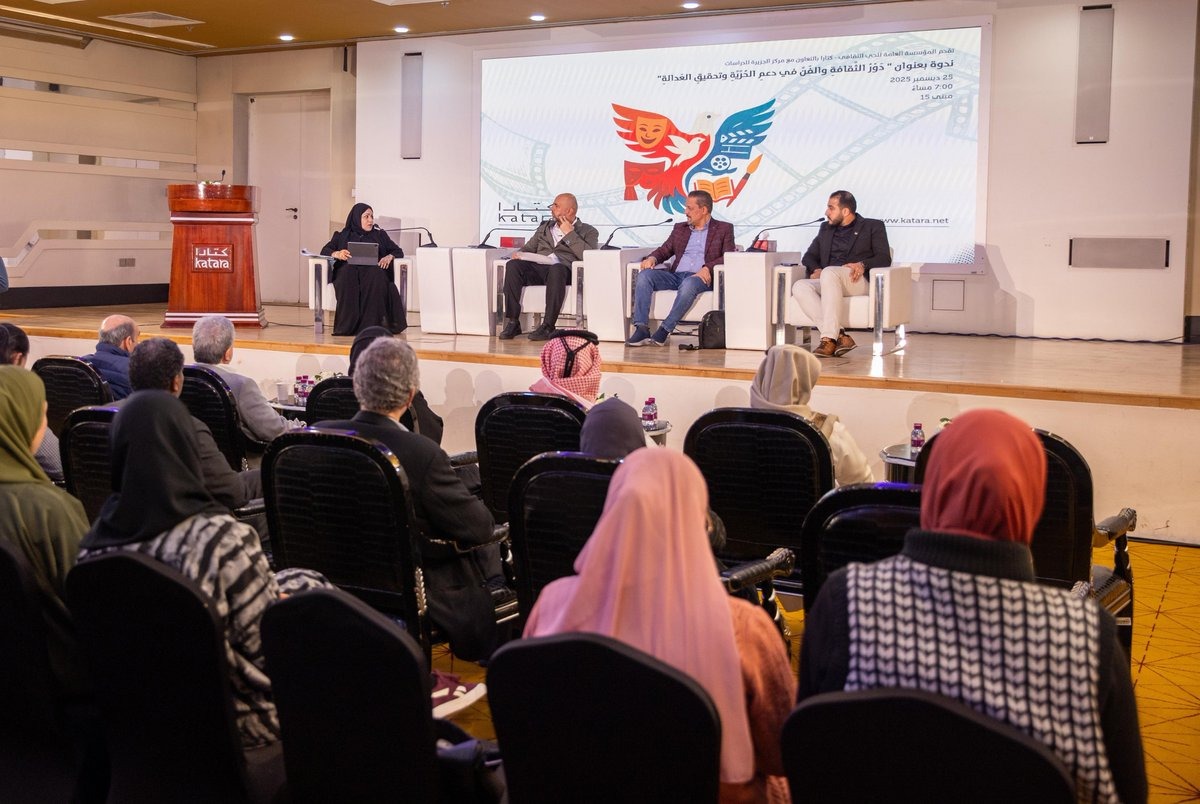

Doha, Qatar – The Cultural Village Foundation – Katara recently hosted a significant discussion on the power of culture and art to advocate for freedom and justice, particularly in the context of global humanitarian issues. The event, a collaboration with the Al Jazeera Centre for Studies, brought together intellectuals, researchers, and media professionals to explore the multifaceted role of creative expression in shaping public opinion and driving social change. The gathering underscored the importance of artistic endeavors as tools for preserving memory and promoting human rights.
Held in Doha, the “feast of reason,” as organizers described it, focused on how artistic and cultural initiatives can be leveraged to address pressing global concerns. Participants highlighted the ability of art to transcend political boundaries and connect with audiences on a human level, fostering empathy and understanding. The event took place on December 27, 2023, and featured moderated discussions led by Mona Al Kuwari, a consultant at the Ministry of Education and Higher Education.
The Role of Culture and Art in Social Justice
The core of the discussion centered on the idea that culture and art are not merely aesthetic pursuits, but essential components of a just and free society. Participants argued that artistic expression provides a vital platform for marginalized voices and allows for the documentation of historical events often overlooked by mainstream narratives. This documentation, they said, is crucial for holding power accountable and preventing the repetition of past injustices.
Additionally, the event explored how cultural institutions – including museums, publishing houses, and festivals – can amplify individual artistic initiatives into broader social movements. These institutions serve as critical spaces for public engagement, fostering dialogue and promoting shared values. Dr. Nadia Al Madahka, director of research and studies at Katara, emphasized the “knowledge partnership” with the Al Jazeera Center for Studies as a means of enhancing cultural and intellectual development.
Focus on the Palestinian Cause
A substantial portion of the event was dedicated to the Palestinian cause, reflecting the ongoing conflict and the need for increased international awareness. Discussions revolved around utilizing culture and art to humanize the Palestinian experience and advocate for their rights on the global stage. Participants examined existing artistic and literary works that portray Palestinian resilience and struggle, recognizing their potential to influence international public opinion.
The conversation acknowledged the challenges of representing complex political situations through art, but stressed the importance of maintaining authenticity and amplifying Palestinian voices directly. The event highlighted the strategic value of art in shaping perceptions and building support for the pursuit of freedom and justice for the Palestinian people. Relatedly, the discussion touched upon the broader concept of art as documentation of conflict.
However, the discussion wasn’t limited to the Palestinian cause. Participants also acknowledged the power of artistic expression in addressing other humanitarian crises and social injustices around the world, including issues of human rights and political oppression. The event served as a reminder that art can be a universal language for advocating for positive change.
The event concluded with a reaffirmation of the fundamental role of culture and art in supporting human rights, promoting freedom, and fostering constructive societal dialogue. Participants agreed that these elements are essential for sustainable intellectual and cultural development, and for equipping societies to address contemporary challenges effectively. The importance of preserving cultural heritage was also noted as a key aspect of this broader effort.
Looking ahead, Katara and the Al Jazeera Centre for Studies plan to continue their collaborative efforts through further research initiatives and public forums. The next phase of their partnership will likely focus on developing concrete strategies for utilizing art and culture to address specific social and political issues, with a potential workshop scheduled for early 2024. The success of these future endeavors will depend on securing continued funding and fostering broader participation from artists and cultural organizations across the region and internationally.