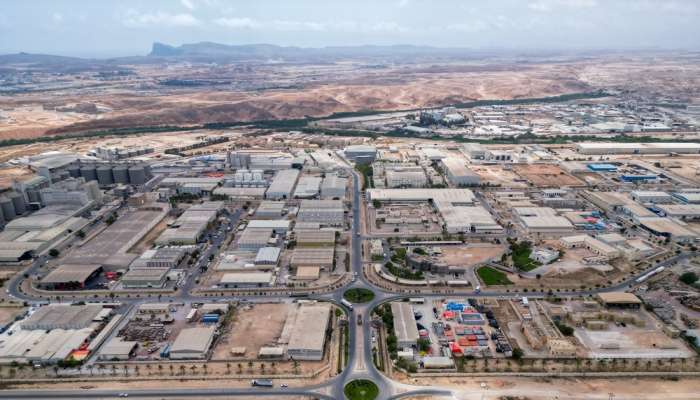

The Sultanate of Oman is making significant strides in reducing its reliance on oil revenue, with economic diversification becoming a cornerstone of its long-term financial stability and growth. Recent reports from the Ministry of Economy indicate a strengthening of non-oil sectors, contributing substantially to the nation’s Gross Domestic Product (GDP) and paving the way for a more sustainable economic future aligned with the ambitious “Oman 2040” vision. This shift is not merely a policy goal, but a demonstrable trend with positive implications for Oman’s economic resilience.
The Growing Contribution of Non-Oil Sectors to Oman’s GDP
Data released by the Ministry of Economy reveals a consistent upward trajectory in the contribution of non-oil sectors to Oman’s GDP. By the end of the third quarter of 2025, these sectors accounted for 73.3 percent of the GDP at constant prices, a notable increase from 72.5 percent in 2024. This growth is underpinned by a substantial rise in the value added of non-oil activities, reaching approximately OMR21.0 billion compared to OMR20.4 billion during the same period in the previous year. This demonstrates the effectiveness of the government’s strategic initiatives.
Real Growth and Economic Resilience
While the growth rate of non-oil activities has seen a slight moderation – recording 3.4 percent by the end of the third quarter of 2025 compared to 4.2 percent in 2024 – it remains a positive indicator. This resilience is particularly crucial given the global economic headwinds, including slower growth and increased inflation. Furthermore, adjustments to crude oil production as part of the “OPEC Plus” agreement have led to a decline in the oil sector’s contribution to GDP since 2023, highlighting the importance of the diversification efforts.
Boosting Non-Oil Revenues
The success of economic diversification is directly reflected in the growth of non-oil revenues. These revenues have increased significantly from around OMR2.7 billion in 2020 to OMR3.507 billion in 2024. The 2025 budget further reinforces this trend, allocating approximately OMR3.573 billion in non-oil revenues, representing a 1.5 percent increase over the 2024 budget.
Key contributors to this revenue growth include OMR680 million from value-added tax (VAT) and excise tax, OMR656 million from corporate income tax, and a substantial OMR800 million from dividend distributions of companies affiliated with the Oman Investment Authority. Additional revenue streams, totaling OMR1.4 billion, are generated from various government fees. This broadened revenue base strengthens Oman’s financial position and reduces its vulnerability to fluctuations in oil prices.
Attracting Investment and Enhancing Financial Sustainability
Oman is actively working to enhance its financial sustainability through several key strategies. These include improving public finance efficiency, refining the tax system, and expanding the base of non-oil revenue. Crucially, the nation is also focused on diversifying project financing sources and attracting high-value technology and investments. This proactive approach is designed to create a more robust and adaptable economy.
Foreign direct investment (FDI) has been a key component of this strategy, experiencing continuous growth in recent years. Improved economic prospects, the diversification drive, and a recent credit rating upgrade have all contributed to increased investor confidence. Cumulative FDI increased by 18 percent in 2024 compared to 2023, and exceeded OMR30.3 billion by the end of the first half of 2025, representing a 12.8 percent growth rate compared to the same period in 2024.
Key Programs Driving Diversification
Several national programs and projects are specifically designed to accelerate economic diversification. The National Economic Diversification Programme, known as ‘Tanwee’, is playing a vital role in developing production structures and maximizing added value in promising sectors such as manufacturing, transport and logistics, tourism, fisheries, and mining.
The Integrated Economic Cluster Project for cold chains in the Special Economic Zone of Duqm is a prime example of this progress. This project represents a qualitative leap in developing supply chains across five integrated economic clusters, aiming to promote balanced development throughout Oman’s governorates and attract investment into targeted sectors.
Looking Ahead: Oman Vision 2040 and Beyond
The first phase of implementing Oman Vision 2021-2025 has successfully fostered a positive transformation in the macroeconomic and business environment. This has been achieved by strengthening the state’s financial position, improving credit ratings, increasing the efficiency of public spending, and reducing public debt. The focus on attracting both local and foreign direct investment has been instrumental in financing new projects and creating employment opportunities.
As Oman enters the Eleventh Five-Year Plan (2026-2030), the prospects for continued economic diversification remain strong. The nation is well-positioned to capitalize on opportunities in renewable energy, the digital economy, logistics, and e-commerce, further integrating its economy with the global market. Continued international cooperation and strategic partnerships will also be vital in achieving these goals.
In conclusion, Oman’s commitment to economic diversification is yielding positive results, strengthening its financial sustainability and building a more resilient economy. The progress made during the Tenth Five-Year Plan provides a solid foundation for achieving the ambitious targets set forth in the “Oman 2040” vision and securing a prosperous future for the Sultanate. To learn more about investment opportunities in Oman, visit the Ministry of Economy’s website or explore resources from the Oman Investment Authority.