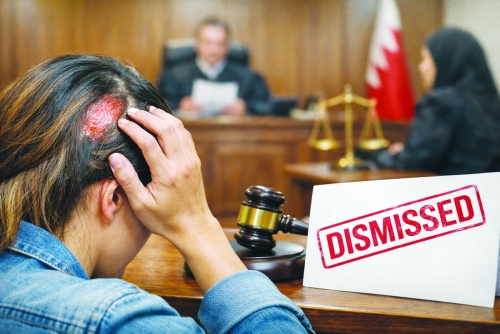

A Bahraini woman’s claim for BD5,000 in compensation following a reported adverse reaction to a hair treatment has been dismissed by the Eighth Lower Civil Court. The case highlights the importance of proving fault in personal injury claims, particularly within the beauty industry, and underscores the challenges in establishing liability when the cause of injury is disputed. This incident involving a hair dye treatment serves as a cautionary tale for both consumers and salon owners in Bahrain.
Court Dismisses Compensation Claim After Fault Not Proven
The lawsuit, brought before the Eighth Lower Civil Court, alleged that the woman suffered burns and scalp injuries after receiving a hair coloring service at a Manama salon. She claimed an immediate burning sensation upon application of a chemical substance, followed by worsening pain despite attempts by salon staff to alleviate it with ice. A subsequent diagnosis from a specialized dermatology clinic reportedly confirmed burns and damage to her scalp and hair follicles.
The Claimant’s Allegations
The woman sought BD5,000 in damages, arguing the salon’s service directly caused her injuries. She stated that despite informing a staff member of the initial burning sensation, she was told the reaction was normal. The application of ice, intended to soothe the discomfort, allegedly exacerbated the damage, leading to the need for medical intervention.
The Salon’s Defense: A Case of Mistaken Treatment?
Lawyer Fatima Al-Khabbaz, representing the salon, presented a strong defense centered around the type of treatment actually administered. She argued the injuries were more likely caused by a keratin treatment, a different procedure than the balayage hair coloring service the salon had agreed to provide.
Al-Khabbaz emphasized that balayage doesn’t involve direct scalp root contact and includes protective measures for the skin. This suggested, she argued, that the claimant may have received a keratin treatment elsewhere, thus absolving the defendant salon of any responsibility. This distinction is crucial, as keratin treatments often involve chemicals with a higher potential for scalp irritation.
Medical Report and Court Findings: Inconsistencies Raise Doubts
The court’s ruling hinged significantly on the medical report submitted by the claimant. Notably, the report itself indicated the patient had visited the clinic following a recent keratin treatment at a beauty salon – a detail directly supporting the salon’s defense. The report detailed a prescription for a topical lotion, a vitamin hair tonic spray, and a recommendation to avoid chemical or heat-based treatments for at least four weeks.
The Burden of Proof and Lack of Evidence
The court acknowledged that witness testimony confirmed the woman had indeed sustained injuries. However, it explicitly stated that this testimony failed to establish fault on the part of the salon. Crucially, the court found the medical report unreliable due to the inconsistencies regarding the actual cause of the injury.
The legal principle of burden of proof rests with the claimant – meaning it was her responsibility to demonstrate the salon’s negligence directly led to her injuries. As no such fault was established, and the medical evidence was ambiguous, the court dismissed the lawsuit, deeming the compensation claim to lack a legal basis.
Implications for Beauty Salons and Consumers in Bahrain
This case serves as a valuable lesson for both beauty salons and their clients. Salons must maintain clear records of the services provided, including detailed descriptions of the products used and any pre-treatment consultations. This documentation can be vital in defending against potential claims.
For consumers, it’s essential to be fully informed about the treatments they are receiving, including the potential risks and benefits. Open communication with salon staff regarding any discomfort experienced during a treatment is also paramount. Furthermore, understanding the difference between treatments like balayage and hair treatments like keratin can help avoid misunderstandings and ensure appropriate aftercare.
Additionally, this ruling reinforces the importance of seeking clear and consistent medical documentation to support any claim for damages. A medical report that contradicts the claimant’s allegations significantly weakens their case.
In conclusion, while the court acknowledged the woman’s injuries, the lack of evidence proving the salon’s fault led to the dismissal of her claim. This case underscores the need for clear communication, accurate record-keeping, and a thorough understanding of the treatments involved in the beauty industry, protecting both businesses and consumers alike.