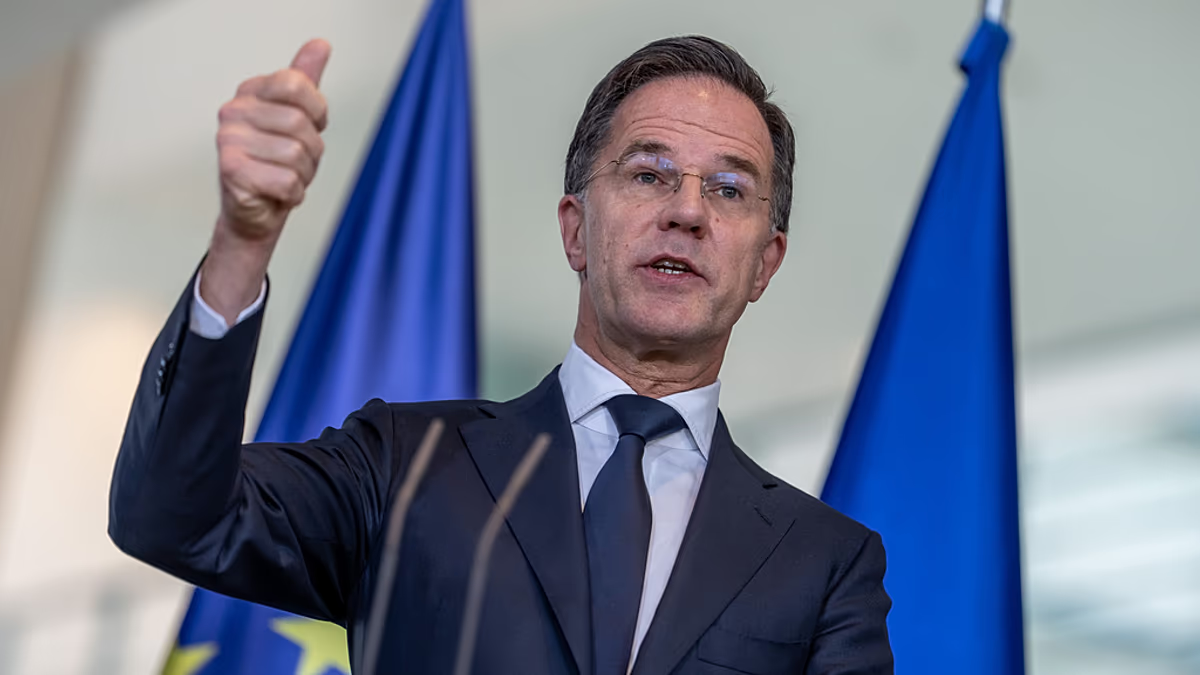

NATO Secretary General Mark Rutte has reaffirmed the importance of transatlantic defense cooperation, rejecting calls for a fully independent European security structure. The comments came in response to proposals, including one from European People’s Party leader Manfred Weber, advocating for a European army capable of independently securing peace in Ukraine. Rutte emphasized that bolstering European defence should complement, not replace, the existing NATO alliance.
Weber publicly suggested deploying troops under EU command to Ukraine, stating his desire to see “soldiers with the European flag on their uniforms” contributing to peace. However, Rutte countered this idea, asserting the continued value of the United States’ commitment to NATO and the need for increased European spending within the framework of the alliance.
The Future of European Defence and NATO
Rutte’s stance reflects a broader debate about the future of European defence in light of geopolitical shifts and evolving security threats. While acknowledging the need for Europe to take on greater responsibility for its own security, he firmly believes that breaking from the US-led NATO structure would be counterproductive. He pointed out that the 23 EU countries within NATO represent only around a quarter of the alliance’s total economic output, highlighting the significant contribution of non-EU NATO members.
The NATO chief stressed the shared strategic interests of the US and Europe, citing the Arctic and North Atlantic as key areas of cooperation. “A safe Arctic is crucial for the United States, and we can only defend that together,” Rutte stated, referencing increased activity by China and Russia in the region. This collaboration, he argues, is essential for maintaining collective security.
Concerns About Russian Aggression
Rutte also addressed the potential for renewed Russian aggression, warning that Moscow could pose a serious threat as early as 2027, based on intelligence assessments. He reiterated NATO’s commitment to collective defense under Article 5, which states that an attack on one member is considered an attack on all. Maintaining strong support for Ukraine and increasing NATO defense spending are, in his view, the best deterrents against Russian escalation.
He believes that a combination of robust support for Ukraine and increased investment in NATO’s defense capabilities will prevent any potential conflict. “If we do those two things, we are strong enough to defend ourselves, and Putin will never try,” Rutte said.
Meanwhile, Rutte praised Germany’s commitment to reaching 3.5% of GDP on defense by 2029, exceeding the 2035 target agreed upon at the NATO summit in The Hague. He described Germany’s progress as “very impressive” and positioned Berlin as a leader among European allies in bolstering their military capabilities. This increased spending is a key component of the broader effort to strengthen NATO’s collective defense posture.
The discussion around defence spending comes as several European nations reassess their security priorities. Increased investment is intended to address vulnerabilities and enhance the alliance’s ability to respond to a range of threats, from conventional warfare to hybrid attacks. NATO provides a forum for these discussions and coordinates efforts among its members.
Looking ahead, the debate over the optimal balance between European autonomy and transatlantic cooperation in defense is likely to continue. The evolving security landscape, particularly the ongoing conflict in Ukraine and Russia’s increasing assertiveness, will undoubtedly shape these discussions. Continued monitoring of European nations’ defense policies and NATO’s strategic adaptations will be crucial in understanding the future of security in the Euro-Atlantic area.
Additional sources • AP, dpa