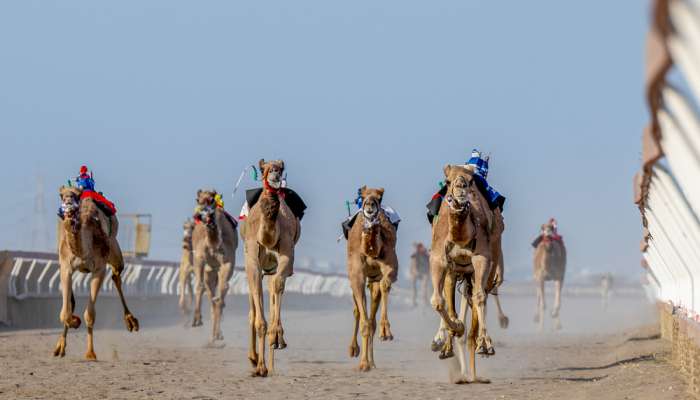

The thrill of the race and the rich tradition of Omani heritage were on full display in Barka as the 2025 camel racing competitions concluded at the Al Fuleij racecourse. The event, a highlight in the sporting calendar of South Al Batinah Governorate, drew large crowds and showcased the speed and endurance of these magnificent animals. Organized by the Royal Court Affairs through the Royal Camel Corps, the final day of racing saw fierce competition across multiple segments, solidifying Oman’s position as a leading nation in this ancient sport. This year’s event was particularly significant, demonstrating continued investment in camel racing and its cultural importance.
A Spectacular Finale to the 2025 Camel Racing Season
The closing ceremony of the 2025 camel racing competitions was held under the esteemed patronage of Sheikh Said Saud Al Ghufaili, Chairman of the Oman Camel Racing Association. His presence underscored the official support for the sport and its role in preserving Omani traditions. The atmosphere at the Al Fuleij racecourse was electric, filled with the cheers of spectators and the rhythmic beat of the traditional drums that accompany these races. The event wasn’t just about the competition; it was a celebration of Bedouin culture and a testament to the enduring bond between humans and camels.
Race Details and Segment Breakdown
A total of nine races comprised the final event, each a challenging 8-kilometer run designed to test the limits of the 6-year-old camels. The races were strategically divided into three segments: “Al Thanaya” for both male and female camels, “Al Hawl” exclusively for female camels, and “Al Zamoul” for male camels. This segmentation allowed for a more equitable competition, recognizing the different strengths and capabilities of camels at this age and gender. The Royal Camel Corps played a prominent role, both as organizers and as owners of successful racing camels.
The Al Thanaya Races
Four races were dedicated to the “Al Thanaya” segment, showcasing the rising stars of Omani camel racing. The first round saw a victory for “Munawah,” a camel proudly owned by the Royal Camel Corps and expertly coached by Hamad bin Mohammed Al Wahaibi. Subaih bin Mohammed Al Wahaibi celebrated success in the second round with his camel, “Dhann.” The third round belonged to “A’Shamkha,” owned by Saif bin Mubarak Al Habsi, while Mohammed bin Hamad Al Mashaikhi’s “Mhaidh” claimed the top spot in the fourth and final “Al Thanaya” race.
The Al Hawl Races – A Showcase of Female Endurance
The “Al Hawl” segment, featuring only female camels, provided a captivating display of strength and stamina. “Tasreeh,” another impressive athlete from the Royal Camel Corps, secured first place in the opening race, guided by the skilled coaching of Hamad bin Mohammed Al Wahaibi. Hamad bin Hamoud Al Busaidi’s “Al Wathba” triumphed in the second round. Al Bashayer Camels association experienced a win in the third round with “Al Nashmiya,” expertly prepared by Abdullah bin Tuwaresh Al Wahaibi. Finally, Sultan bin Abdullah Al Khatri’s “Nashba” crossed the finish line first in the fourth “Al Hawl” race.
The Al Zamoul Races – Male Camels at Their Peak
The “Al Zamoul” segment, reserved for male camels, delivered a thrilling conclusion to the day’s racing. Jaber bin Said Al Mubaihsi’s “Mahdi” demonstrated exceptional speed and power, winning the sole race in this category. This victory highlighted the dedication and expertise of the camel owners and trainers involved in the sport. The competition in this segment was particularly intense, reflecting the prestige associated with winning in the male camel category.
The Significance of Camel Racing in Oman
Camel racing is deeply ingrained in Omani culture, stemming from the nation’s Bedouin heritage. Historically, camels were vital for transportation, trade, and sustenance, and racing them served as a demonstration of their value and a source of entertainment. Today, the sport has evolved, incorporating modern training techniques and veterinary care, while still retaining its traditional charm. The Royal Camel Corps’ involvement is crucial in promoting and preserving this cultural asset. The continued popularity of camel racing also contributes to the local economy, attracting tourism and supporting related industries.
Additionally, the sport fosters a sense of community and pride among Omanis. Owners, trainers, and enthusiasts come together to share their passion for camels and celebrate their achievements. The Al Fuleij racecourse in Barka serves as a central hub for this community, hosting regular events and providing a platform for showcasing the best camels and riders in the country.
Looking Ahead: The Future of Camel Racing in Oman
The successful conclusion of the 2025 camel racing competitions signals a bright future for the sport in Oman. With continued investment from the Royal Court Affairs and the Oman Camel Racing Association, we can expect to see further improvements in training facilities, veterinary care, and race organization. The growing participation of both male and female camel owners and trainers is also a positive sign, indicating the sport’s increasing inclusivity. The focus on preserving traditional values while embracing modern advancements will undoubtedly ensure that camel racing remains a cherished part of Omani culture for generations to come. Fans and participants alike are already looking forward to the next exciting season of races.