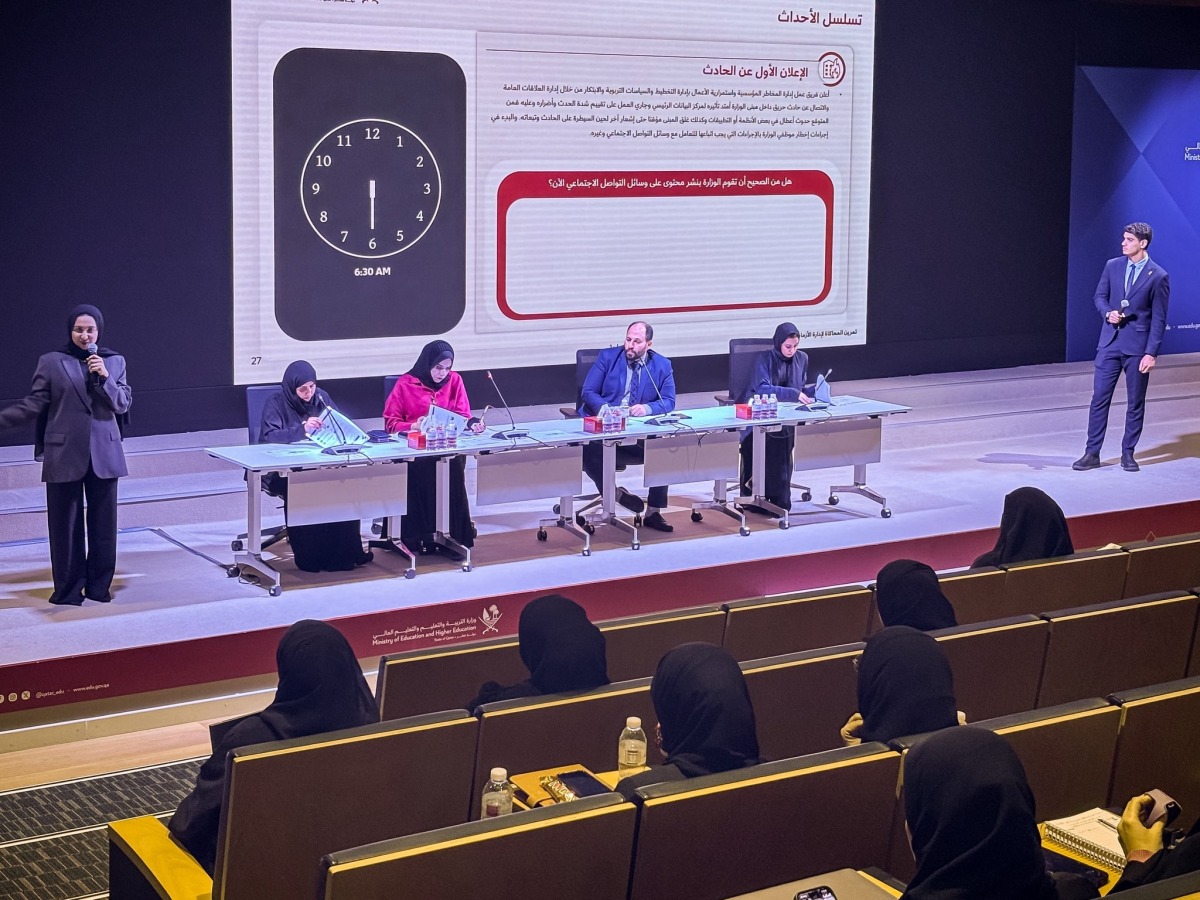

Doha, Qatar – The Ministry of Education and Higher Education (MOEHE) recently conducted a crisis management simulation exercise involving approximately 140 officials and staff. The drill, held at the ministry headquarters, focused on bolstering the nation’s educational infrastructure’s ability to respond effectively to potential disruptions and emergencies. This proactive step underscores Qatar’s commitment to safeguarding its educational system and ensuring continued learning opportunities for students.
The exercise took place this week, with the MOEHE’s Planning, Policies, and Innovation Department leading the initiative. According to a ministry statement, the simulation aimed to evaluate coordination protocols, refine decision-making processes, and strengthen collaboration between different departments within the ministry. The goal is to enhance overall crisis management capabilities and maintain operational continuity during challenging circumstances.
Strengthening Qatar’s Educational Resilience Through Crisis Management
The simulation wasn’t a response to any specific threat, but rather a planned effort to proactively identify and address potential vulnerabilities within the educational system. Qatar has been steadily investing in national security and preparedness across various sectors, and education is a critical component of that strategy. This exercise aligns with broader national efforts to build a more resilient and secure future.
Testing Coordination and Decision-Making
The exercise reportedly involved a simulated emergency scenario designed to test the ministry’s response to a complex situation. Participants were tasked with activating emergency protocols, communicating effectively, and coordinating resources to mitigate the impact of the simulated crisis. The ministry said the scenario was designed to mimic real-world challenges, forcing participants to make critical decisions under pressure.
Undersecretary of the Ministry of Education and Higher Education, Dr. Ibrahim bin Saleh Al Nuaimi, emphasized the importance of proactive preparation and institutional capacity building. He stated that enhancing comprehensive readiness is vital for effectively addressing challenges and achieving the ministry’s objectives. This focus on preparedness reflects a shift towards a more preventative approach to risk management within the education sector.
Additionally, the simulation aimed to improve integration among relevant units within the MOEHE. Effective communication and collaboration are essential during a crisis, and the exercise provided a valuable opportunity to identify areas for improvement in these areas. The ministry intends to use the findings from the simulation to refine its internal procedures and enhance inter-departmental cooperation.
However, the specific nature of the simulated crisis was not publicly disclosed. This is a common practice in these types of exercises, as revealing the scenario could potentially compromise future preparedness efforts. The focus remains on the process of response, rather than the specific event itself.
The exercise also touched upon aspects of emergency preparedness and business continuity planning. Maintaining educational services during a crisis requires careful planning and the ability to adapt to changing circumstances. The ministry is committed to ensuring that students can continue their education, even in the face of unforeseen challenges. Relatedly, the ministry has been investing in digital learning infrastructure, which could prove crucial for maintaining educational access during disruptions.
Meanwhile, the MOEHE is also working to enhance its communication strategies for disseminating information to parents, students, and the wider community during emergencies. Clear and timely communication is essential for managing public anxiety and ensuring a coordinated response. This includes utilizing various communication channels, such as social media, email, and traditional media outlets.
The results of the crisis management simulation are currently being analyzed, and a comprehensive report outlining the findings and recommendations is expected to be completed within the next month. The ministry plans to use this report to update its crisis management plan and implement any necessary improvements to its procedures. Further exercises and training programs are also anticipated in the future to maintain a high level of preparedness. The long-term impact of these efforts on the overall resilience of Qatar’s education system remains to be seen, but the initial steps demonstrate a strong commitment to safeguarding the future of learning.
Looking ahead, the MOEHE will likely focus on incorporating the lessons learned from this simulation into ongoing training programs for staff. The ministry will also need to assess the effectiveness of its communication protocols and ensure that all stakeholders are informed about emergency procedures. Continued investment in disaster risk reduction and emergency planning will be crucial for maintaining a robust and resilient educational system in Qatar.