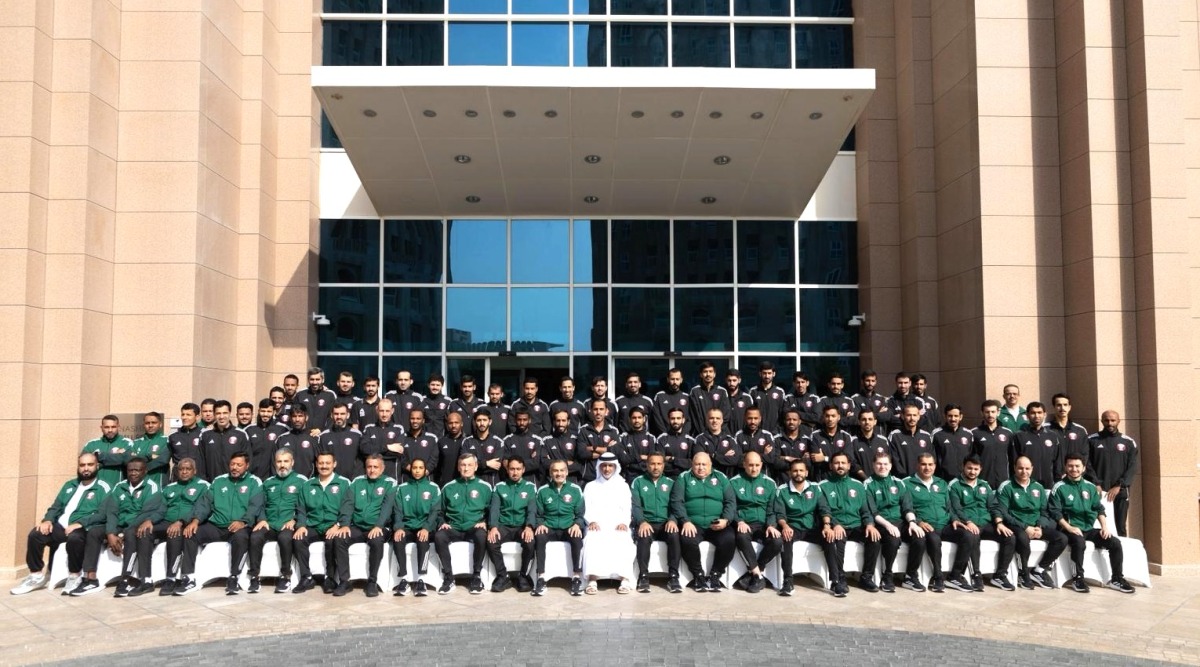

Doha, Qatar – Minister of Sports and Youth H.E. Sheikh Hamad bin Khalifa bin Ahmed Al Thani recently visited a winter training camp for elite referees, underscoring the nation’s commitment to developing a high-caliber officiating program. The camp, held at the Hilton Doha Hotel, aims to prepare officials for the upcoming resumption of local football tournaments and potential international assignments. This visit highlights Qatar’s ongoing investment in football infrastructure, extending beyond stadiums to include the crucial element of match officiating.
The Minister’s visit, which included Deputy Chairman of the FIFA Referees Committee Hani Taleb Balan, focused on assessing the physical and technical preparedness of the referees. Sheikh Hamad reviewed the camp’s curriculum and engaged with the officials, emphasizing the importance of their role in upholding the integrity of the game. The initiative comes after a successful showing by Qatari referees at the FIFA Arab Cup Qatar 2025.
Strengthening Qatar’s Refereeing Program
Sheikh Hamad expressed his satisfaction with the progress of the Qatari refereeing system, noting its transformation over the past two decades. According to the ministry, in 2003, Qatari referees oversaw only 5% of domestic matches. Today, they manage 100% of local games, with international officials now participating primarily for knowledge sharing and development opportunities.
This dramatic shift is attributed to a focused effort on training and development, supported by the Ministry of Sports and Youth. The Minister specifically acknowledged the contributions of Hani Taleb Balan, technical expert Valentin Ivanov, and the entire referees committee in elevating the standard of officiating within the country.
Recent Investments in Referee Development
The Minister’s commitment extends to providing resources for ongoing improvement. Hani Taleb Balan noted that Sheikh Hamad recently approved the allocation of additional training facilities specifically for referees, demonstrating continued financial and logistical support. This investment aims to enhance training conditions and allow for more comprehensive preparation.
Balan further stated that the Minister’s visit served as a significant morale boost for the officials. He believes the recognition motivates them to maintain the high standards expected in both domestic and international competitions. The focus on maintaining standards is particularly important as Qatar continues to host and participate in major football events.
The performance of Qatari referees at the FIFA Arab Cup Qatar 2025 was cited as a testament to the effectiveness of the current system. The officials successfully managed matches under considerable pressure, both in terms of technical skill required and the size of the audiences. This success reinforces the belief that Qatar is developing a robust and reliable pool of referees capable of handling high-stakes games.
The development of a strong domestic refereeing program is also seen as crucial for fostering the growth of football in Qatar. Improved officiating leads to fairer matches, which in turn enhances the quality of play and encourages greater participation. This aligns with Qatar’s broader vision of becoming a leading sports hub. The country is also investing in FIFA refereeing guidelines to ensure alignment with international best practices.
Looking ahead, the Ministry of Sports and Youth is expected to continue its support for the refereeing program, with a focus on ongoing training and development. The next key evaluation point will be the performance of Qatari officials during the resumption of local tournaments. Further investment in technology, such as Video Assistant Referee (VAR) systems, and continued collaboration with FIFA are also likely developments to watch. The long-term goal remains to consistently produce referees who can compete at the highest international levels and contribute to the global game.
The success of the Qatari refereeing project also provides a model for other nations in the region looking to improve their own officiating standards. Sharing expertise and best practices could contribute to the overall development of football across the Middle East, a key objective of Qatar’s sports diplomacy efforts.