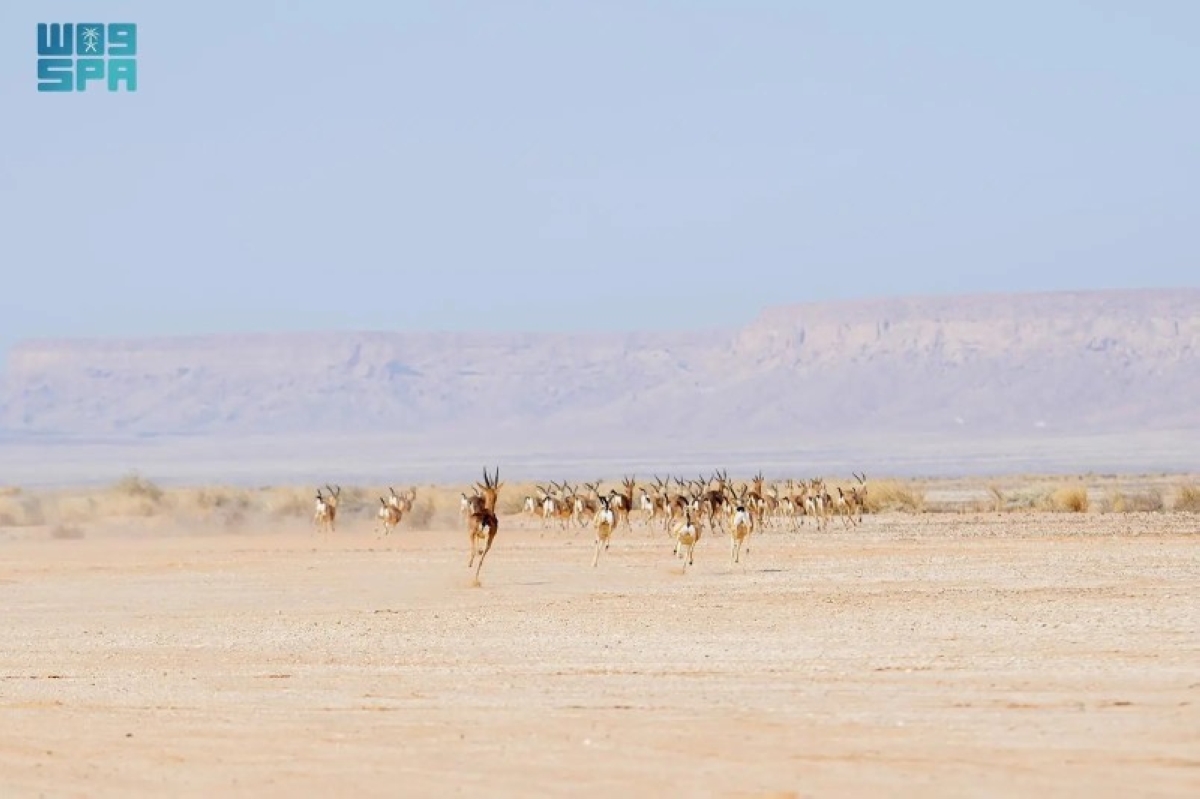

RIYADH — A significant boost to Saudi Arabia’s conservation efforts saw the release of over 60 endangered animals into the King Khalid Royal Reserve this week. The initiative, spearheaded by the Imam Abdulaziz bin Mohammed Royal Reserve Development Authority in collaboration with the National Center for Wildlife (NCW), focuses on the wildlife reintroduction of critically important species like Arabian sand gazelles and Arabian oryx. This project aims to bolster biodiversity and support the Kingdom’s ambitious environmental goals.
The release, which took place in the King Khalid Royal Reserve, included Arabian sand gazelles, Arabian oryx, wild hares, and mountain gazelles, according to a statement from the Imam Abdulaziz bin Mohammed Royal Reserve Development Authority. The animals were carefully selected and prepared for reintroduction to ensure their successful adaptation to the reserve’s ecosystem. This marks a key step in a broader national program dedicated to restoring native fauna populations.
The Importance of Wildlife Reintroduction in Saudi Arabia
Saudi Arabia has historically been home to a diverse range of wildlife, but many species have faced significant declines due to habitat loss and hunting pressures. The Kingdom is now actively investing in conservation programs to reverse these trends and protect its natural heritage. Wildlife reintroduction is a central component of this strategy, aiming to restore ecological balance and enhance the resilience of ecosystems.
National Strategies and Vision 2030
This latest release directly supports the National Environment Strategy and Saudi Vision 2030, both of which prioritize environmental sustainability and improving the quality of life for citizens. According to the Vision 2030 document, a key objective is to protect and preserve the natural environment for future generations. The National Environment Strategy outlines specific targets for biodiversity conservation and ecosystem restoration.
Dr. Talal Al-Harigi, CEO of the Imam Abdulaziz bin Mohammed Royal Reserve Development Authority, emphasized the project’s focus on creating a stable environment for the reintroduced animals. He stated that the initiative is designed to facilitate successful adaptation and long-term survival within the reserve. This includes ongoing monitoring and management to address any challenges that may arise.
The collaboration with the National Center for Wildlife (NCW) is also noteworthy. Dr. Al-Harigi highlighted this partnership as an example of effective institutional integration and the application of global best practices in wildlife conservation. The NCW provides crucial expertise in species management, habitat assessment, and post-release monitoring.
Species Selection and Preparation
The selection of species for reintroduction is based on a thorough assessment of their ecological role and conservation status. Arabian sand gazelles and Arabian oryx, for example, are both iconic species that have experienced significant population declines. These animals play a vital role in maintaining the health of desert ecosystems.
Prior to release, the animals undergo a period of acclimation to prepare them for life in the wild. This may involve providing supplementary feeding, monitoring their health, and gradually reducing human contact. The goal is to ensure that they are capable of foraging, avoiding predators, and establishing themselves within the reserve’s existing wildlife community. Habitat restoration efforts within the King Khalid Royal Reserve have also been undertaken to ensure suitable conditions for the reintroduced species.
However, reintroduction programs are not without their challenges. Factors such as poaching, disease outbreaks, and climate change can all pose threats to reintroduced populations. Ongoing monitoring and adaptive management are essential to mitigate these risks and ensure the long-term success of the project.
Meanwhile, the initiative is expected to contribute to the development of eco-tourism in the region. The presence of these charismatic megafauna can attract visitors interested in experiencing Saudi Arabia’s natural beauty and supporting local communities. This could create new economic opportunities while also raising awareness about the importance of conservation.
In contrast to past conservation approaches, this program emphasizes a holistic, ecosystem-based approach. Rather than focusing solely on individual species, the initiative aims to restore the ecological processes that support biodiversity. This includes managing grazing pressure, controlling invasive species, and protecting water resources.
The success of this reintroduction program will be measured by several indicators, including population growth rates, survival rates, and the overall health of the reintroduced animals. The Imam Abdulaziz bin Mohammed Royal Reserve Development Authority and the NCW will continue to monitor these indicators closely and adjust their management strategies as needed. Further releases of other endangered species are also being planned.
Looking ahead, the authorities anticipate expanding the species recovery program to include other threatened animals native to the Arabian Peninsula. A comprehensive assessment of potential reintroduction sites is currently underway, with a target completion date of late 2024. The long-term impact of these efforts on the region’s biodiversity remains to be seen, but the initial results are promising. Continued funding and political support will be crucial for sustaining these vital conservation initiatives.