






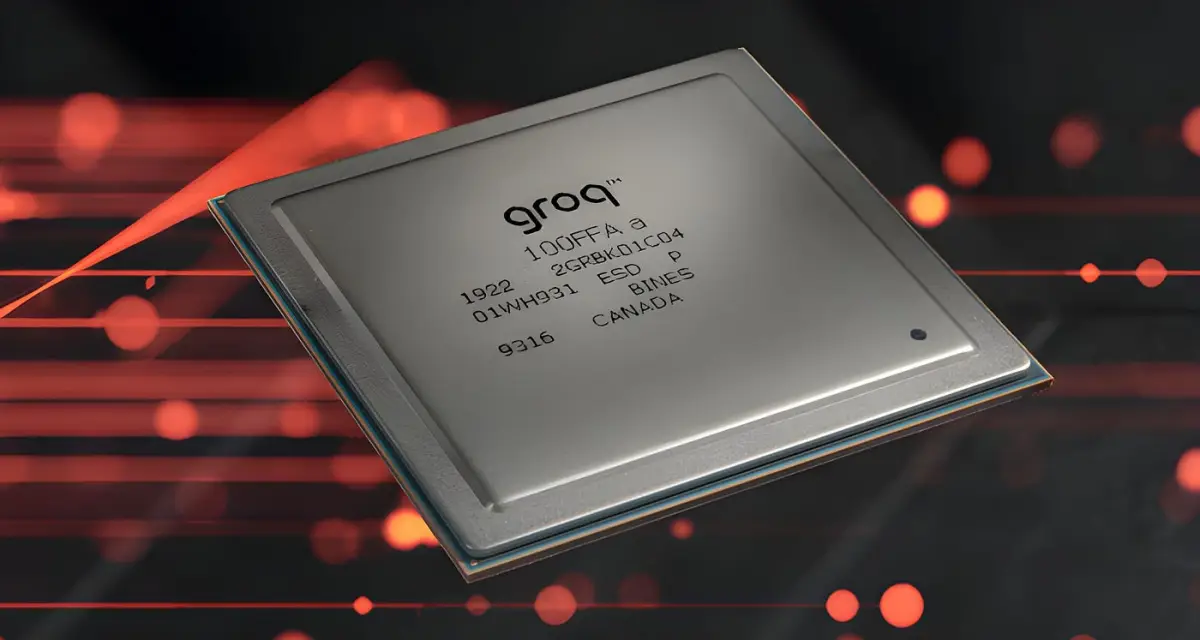

Nvidia has entered a non-exclusive licensing agreement with Groq, a competitor in the artificial intelligence chip market. The deal includes the hiring of Groq’s founder, Jonathan Ross, and president, Sunny Madra, along with other key personnel. While initial reports from CNBC suggested a $20 billion acquisition, Nvidia clarified that this is not a company purchase, but rather an asset agreement. This move signals Nvidia’s continued dominance and strategic expansion within the rapidly evolving AI landscape.
The agreement, announced in late December 2023, aims to bolster Nvidia’s capabilities in language processing and accelerate the deployment of large language models (LLMs). Nvidia, headquartered in Santa Clara, California, is the leading designer of graphics processing units (GPUs) which have become the standard for AI computation. Groq, based in Palo Alto, California, offers a distinct approach to AI acceleration.
Nvidia Strengthens AI Position with Groq Licensing Deal
This licensing agreement and talent acquisition come at a critical juncture as technology companies race to enhance their artificial intelligence offerings. Demand for powerful computing infrastructure is soaring, driven by the increasing complexity and prevalence of AI applications. Nvidia’s GPUs currently fulfill a significant portion of this demand, but the company is actively seeking to diversify and optimize its hardware solutions.
Groq has been developing Language Processing Units (LPUs), a specialized type of chip designed specifically for running LLMs. The company claims its LPUs can achieve performance levels ten times faster than traditional GPUs while consuming only one-tenth of the energy. This efficiency is a major draw, as energy consumption and cost are significant concerns for large-scale AI deployments.
The Significance of Groq’s Technology
The core innovation behind Groq’s LPU lies in its deterministic architecture. Unlike GPUs, which rely on complex scheduling and memory access patterns, LPUs are designed to execute instructions in a predictable and sequential manner. This approach minimizes latency and maximizes throughput, making them particularly well-suited for real-time AI inference.
Jonathan Ross, Groq’s founder, brings a wealth of experience to Nvidia. Prior to Groq, he played a pivotal role in the development of Google’s Tensor Processing Unit (TPU), another custom chip designed for accelerating AI workloads. His expertise in AI hardware architecture is highly valued within the industry.
Recent Growth and Investment in Groq
Groq has experienced substantial growth in recent years, fueled by increasing interest in its LPU technology. In September 2023, the company secured $750 million in funding, resulting in a valuation of $6.9 billion. This investment underscores the confidence investors have in Groq’s potential to disrupt the AI chip market.
The company reported a significant increase in its user base, growing from approximately 356,000 developers in the previous year to over 2 million. This expansion demonstrates the growing adoption of Groq’s platform and the increasing demand for its AI acceleration capabilities.
However, the exact nature of the assets Nvidia is licensing remains unclear. Nvidia has not disclosed specific details about the agreement, only confirming it is not an acquisition of Groq as a whole. This ambiguity leaves room for speculation regarding the scope of the collaboration and the extent to which Nvidia will integrate Groq’s technology into its existing product lines.
This deal is part of a broader trend of consolidation and strategic partnerships within the AI hardware sector. Companies are increasingly recognizing the importance of specialized chip designs to optimize performance and efficiency for specific AI tasks. Additionally, the demand for AI infrastructure is driving up valuations and attracting significant investment.
The move also highlights the competitive pressures facing Nvidia. While it currently holds a dominant market share, companies like AMD and Intel are actively developing their own AI accelerators. Groq’s technology represents a potential alternative that could challenge Nvidia’s leadership in the long term. The licensing agreement allows Nvidia to incorporate this alternative into its portfolio and potentially mitigate future competitive threats.
The implications of this deal extend beyond the immediate benefits to Nvidia and Groq. It could accelerate the development and deployment of more efficient and powerful AI applications across various industries, including natural language processing, computer vision, and robotics. The increased availability of specialized AI hardware could also lower the barriers to entry for smaller companies and researchers looking to leverage the power of AI.
Looking ahead, the integration of Groq’s technology and personnel into Nvidia will be a key area to watch. The success of this collaboration will depend on Nvidia’s ability to effectively leverage Groq’s expertise and incorporate its LPU architecture into its existing product ecosystem. Further details regarding the specific terms of the licensing agreement and the future development plans for LPUs are expected to emerge in the coming months. The industry will also be monitoring how this impacts Nvidia’s relationship with other AI hardware providers and the overall competitive landscape of the chip industry.
The agreement is subject to standard closing conditions, and Nvidia has not provided a specific timeline for completion. Analysts are currently assessing the financial implications of the deal and its potential impact on Nvidia’s future revenue and profitability. The long-term effects of this strategic move remain to be seen, but it undoubtedly represents a significant development in the ongoing evolution of AI technology.