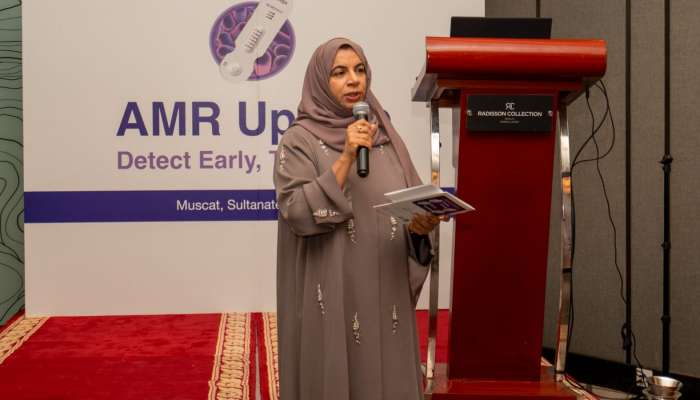

The rising threat of antimicrobial resistance (AMR) is a global health crisis, and Oman is actively strengthening its defenses. This week, over 120 healthcare professionals converged on Muscat for AMR Update 2025, a crucial scientific meeting dedicated to tackling this challenge head-on. The event underscored the nation’s commitment to protecting public health through improved detection, treatment, and surveillance of resistant infections.
Addressing the Growing Challenge of Antimicrobial Resistance in Oman
Antimicrobial resistance occurs when microorganisms like bacteria, viruses, fungi, and parasites change over time and no longer respond to medicines designed to kill them. This makes infections harder to treat and increases the risk of disease spread, severe illness, and death. Oman, like many countries, is witnessing an increase in AMR, necessitating a proactive and collaborative approach.
AMR Update 2025, held at the Radisson Collection Hotel, Hormuz Grand, provided a platform for experts to share insights and strategies. The conference theme, “Detect Early, Treat Early,” perfectly encapsulated the urgency and focus of the discussions. Participants included infection-control practitioners, microbiologists, clinical pathologists, academics, and laboratory leaders, representing a broad spectrum of expertise within the Omani healthcare system.
Key Highlights from AMR Update 2025
The one-day event featured a comprehensive agenda covering various aspects of AMR. Presentations delved into national AMR trends, providing a clear picture of the current situation in Oman. A significant portion of the conference was dedicated to exploring the latest advances in rapid diagnostic technologies, which are vital for quickly identifying resistant organisms and guiding appropriate treatment decisions.
National Surveillance and Resistance Mechanisms
Dr. Azza Al Rashdi presented the findings of Oman’s AMR surveillance programs, showcasing the nation’s progress in monitoring and combating resistance. The presentations also focused on specific resistance mechanisms of particular concern, including Extended-Spectrum Beta-Lactamase (ESBL), mecA gene (MCR-1), and carbapenemase production. Understanding these mechanisms is crucial for developing effective strategies to prevent their spread.
Emerging Pathogens and Global Concerns
The conference didn’t shy away from addressing emerging threats. Discussions centered around Candida auris, a multi-drug resistant yeast that has gained global attention due to its ability to cause severe infections and its increasing prevalence in healthcare settings. The need for heightened awareness and robust infection control measures to contain C. auris was strongly emphasized.
The Role of Antimicrobial Stewardship
Chairing the event, Dr. Amina Al Jardani, AMR Coordinator and Consultant at the Central Public Health Laboratories (CPHL), highlighted the critical importance of sustained collaboration between clinicians, laboratories, and policymakers. She stressed that rapid detection and timely clinical decision-making are “central to preserving the effectiveness of life-saving antimicrobials.” This underscores the importance of antimicrobial stewardship programs, which aim to optimize antimicrobial use to minimize resistance development.
International Collaboration and Practical Workshops
AMR Update 2025 benefited from the participation of international experts, bringing a global perspective to the discussions. Dr. Ahmad Ibrahim of NG Biotech, France, demonstrated the potential of next-generation rapid test kits to accelerate treatment decisions and ultimately improve patient outcomes. This showcased the value of incorporating innovative technologies into Oman’s AMR response.
A hands-on workshop on rapid AMR detection was a particularly popular feature of the conference. Participants gained practical experience with point-of-care tools and learned how to interpret the results effectively. This training is essential for empowering laboratory professionals and clinicians to implement rapid testing in their clinical workflows.
Commitment to Innovation and Cross-Sector Collaboration
Saju George, Managing Director of Alfarsi National Enterprises, the organizing body, expressed his satisfaction with the strong turnout at the event. He noted that it reflects Oman’s growing commitment to tackling healthcare-associated infections and AMR through innovation, education, and collaboration across different sectors. “Our goal is to bring global expertise to Oman and equip local teams with the knowledge and tools required to detect resistance early and respond with confidence,” he stated.
The success of AMR Update 2025 demonstrates Oman’s proactive stance in addressing this critical public health challenge. By fostering collaboration, embracing new technologies, and prioritizing early detection and appropriate treatment, the nation is well-positioned to mitigate the impact of antimicrobial resistance and protect the health of its population. Continued investment in surveillance, stewardship, and research will be essential to sustain these efforts and ensure a future where antimicrobials remain effective.
To learn more about Oman’s national strategies for combating antimicrobial resistance, please visit the website of the Ministry of Health. Further resources on infection prevention and control can be found through the World Health Organization and the Centers for Disease Control and Prevention.